
Badminton Betting Odds in Great Britain — Markets, Prices and Where the Value Sits
 Available in US
Badminton sits in an odd place in the British betting market. It is an Olympic sport with five disciplines, a world tour that runs most weeks of the year, and a season that runs from January to December without a long pause. It is also a sport that most high-street bookmakers carry as a thin menu of head-to-head and tournament winner lines, while the dedicated sports apps expand the list by adding game handicaps, set betting, totals and outrights into the major tournaments. The reader landing here has usually come from one of three places: a friend has tipped a player, the BWF tour is in town, or the price on the All England has caught their eye. The page below covers what comes next — what is actually on offer, what the price implies, and how a Gambling Commission-licensed bookmaker in Great Britain compares on the things that decide a long-run relationship with a brand.
This page is current as of October 30, 2026, with each operator profile and licence number cross-checked against the Gambling Commission’s public register.

This page is current as of 16 October 2026, with each operator profile and licence number cross-checked against the Gambling Commission’s public register.
Where the Game Comes From — BWF, the Tour and the Year’s Calendar
International badminton is run by the Badminton World Federation, founded in 1934 as the International Badminton Federation. The BWF owns the circuit: the BWF World Tour, the HSBC World Championships, the Thomas Cup for men’s teams, the Uber Cup for women’s teams and the Sudirman Cup for mixed teams, which started in 1989 and sits in the same biennial slot as the others. Olympic badminton has been part of the Summer programme since 1992, with mixed doubles added four years later, and the Paralympic equivalent is run under a separate federation. The All England Open is the oldest tournament on the circuit, first played in 1900; the BWF World Championships began in 1977. None of that history changes the bet, but it sets the cadence a bettor needs to know: the All England in March, the World Championships in August in odd years, the Thomas and Uber Cups in even years, the Olympics in the Olympic year and a Super Series-level event most weeks in between. A bookmaker’s outright market is filled for the next ten days of events; a brand that does not list next week’s Denmark Open is one to come back to later, not one to abandon.
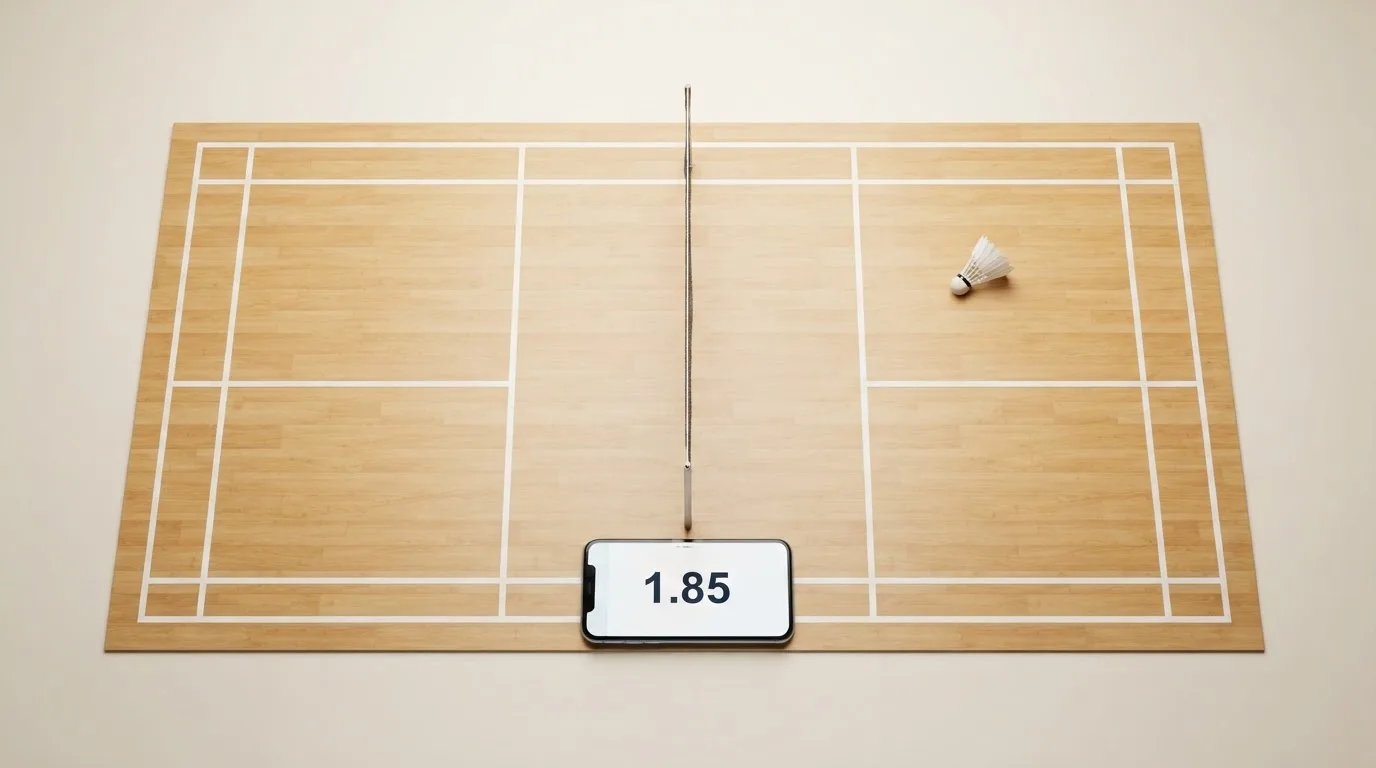
The five disciplines underwrite what the markets look like. Men’s singles and women’s singles run a fixture list of around sixty ranked players on the tour at any one time. Men’s doubles, women’s doubles and mixed doubles cut that number, but they widen the field for an outright because each pair counts as one entry and the price gaps between favourites and the rest are wider than in singles. A badminton match is played as the best of three games, each game to 21 points under rally-point scoring: every rally produces a point, the serve does not, and at 20–20 play continues until one side leads by two, with 29–29 capping the game so the next point wins. The format matters for set betting — a player who wins the first game 21–14 has not yet won the match — and for in-play markets where a two-game lead is the cue that the trade is essentially over.
The calendar is the practical reason most British punters who bet on badminton follow a narrow band of events: the All England, the World Championships, the Thomas or Uber Cup when Great Britain is in the draw, and the Olympics. Everything else is a smaller field, a thinner market and a tighter margin for the bookmaker, because the price is set against fewer bettors. A reader who treats badminton as a year-round sport finds the calendar rewarding for that reason — Super 500 and Super 750 events run most weeks from January to November — but it is also where smaller brands with the right sponsorship deals can offer a sharper line than a generalist bookie that takes badminton seriously for two weeks of the year.
The Landscape of Bookmakers That List Badminton
The British market for badminton is a market of sportsbooks first and badminton specialists by accident. Most of the bookmakers in this comparison carry badminton because it is an Olympic sport with a year-round tour, not because badminton is their reason for existing; a small number of sites with BWF sponsorship carry the sport deeper, with more markets per match and outrights further into the future. Both kinds matter to a bettor who likes the sport, because the question is not which bookmaker is “best at badminton” in some abstract sense — it is which bookmaker to use this week, for this match, at this price.

Ladbrokes is the long-established GB brand, siting under the LC International Limited licence and running a sports menu of more than thirty sports. Bet Ahoy is a newer entry, built around a sportsbook-first product; Fitzwilliam Sports is a Dublin bookmaker with capped membership, which makes it more selective about who uses it than most licensed sites. London Bet combines sports betting with a Pragmatic Play casino floor, Smarkets is a betting exchange with a sportsbook alongside the back-and-lay markets, Unibet sits inside the Kindred Group under Platinum Gaming Limited, and bet365 is the international sportsbook most UK bettors default to for any sport they follow seriously. Hollywoodbets carries badminton through the South African parentage, Kalooki Sportsbook is a smaller GC-licensed brand built around the sport, and Fafabet is a sports-and-horse-racing brand that lists Best Odds Guaranteed on UK and Irish racing from 9am.
The reader’s question is not which of the ten is licensed — they all are, and any one not on the Gambling Commission’s register would have been left out — but which one is worth opening for a badminton-only bankroll. The answer is rarely a single brand. Most bettors run two: a generalist with deep in-play and a price-boost culture for the big tournaments, and a niche bookmaker with the right outright prices and a long memory of who has won what on the tour.
A side-by-side look at the ten brands
| Brand | Licence number (account) | Licence holder | Stated position on the sport |
|---|---|---|---|
| Ladbrokes | 54743 | LC International Limited | Established GB sportsbook; badminton carried as a core Olympic sport with head-to-head and tournament winner markets on the major BWF events |
| Bet Ahoy | 100094 | Bet Ahoy Ltd | Newer sportsbook-first product; lists badminton with a free-bet structure aimed at multi-leg accas |
| Fitzwilliam Sports | 48760 | SBKI Limited | Capped-membership Dublin bookmaker; badminton covered selectively through the major BWF events |
| London Bet | 66162 | Thistle Bet Limited | Sports and casino hybrid; badminton available alongside football, tennis and a slot-led casino floor |
| Unibet | 45322 | Platinum Gaming Limited | Long-running international sportsbook under Kindred; badminton listed with tournament outrights and an acca builder |
| Smarkets | 39173 | Smarkets (Malta) Limited | Betting exchange; lay and back markets alongside a sportsbook with badminton listed for the major tournaments |
| Fafabet | 57385 | Taichi Tech Limited | Sports and racing brand; badminton included, with BOG applied to horse racing from 9am on race days |
| bet365 | 55148 | Hillside (UK Sports) ENC | International sportsbook with the deepest in-play menu on the list; Bet Builder+ on badminton where fixtures qualify |
| Hollywoodbets | 53028 | Hollywoodbets International UK Limited | Sports-led brand with a stake-back free bet on a first losing acca (3+ legs, odds 4/1 or greater, 7 days to settle) |
| Kalooki Sportsbook | 57730 | Kalooki Sportsbook Limited | Smaller GC-licensed sportsbook; badminton is a core line, with GAMSTOP membership stated on the site |
Any brand on this list is checked, refreshed through its own terms page, and confirmed against the Gambling Commission’s public register before being written here. A bookmaker that drops badminton between major events tends to relist it the week of the next Super Series; a brand that never lists it at all does not make this page.
What Betting on Badminton Actually Means
Betting on badminton is, at its simplest, picking who will win the next rally, game or match. The menus that bookmakers build around that pick are richer than the simple match result, but the foundation is the same: a price on side A, a price on side B, and an implied margin inside those two numbers.
The match result, the totals and the handicap
The head-to-head market — sometimes labelled Match Winner, sometimes 1X2 by bookmakers who use the football convention — is the price on side A, the price on side B, and the overround the bookmaker has built into those two numbers. For a match between two evenly ranked players, expect both sides to sit near 1.90 in decimal or 10/11 in fractional terms, with the bookmaker’s margin absorbed in the small gap below a fair two-way line of 2.00 each side.
Set betting is badminton’s version of correct score. A 2–0 win for the favourite pays a much shorter price than 2–1 because the favourite is expected to close out a game they have already won; a 2–1 win for the underdog pays a longer price because the underdog is being asked to take a game off the favourite. The market carries five outcomes (2–0 in either direction and 2–1 in either direction), and the margin is wider than the head-to-head because the bookmaker is asking the bettor to be specific.
Game handicap gives the favourite a fictional deficit: the favourite has to win by more than the line, and the underdog has to lose by less than it or win the match. A -1.5 game handicap on the favourite pays out only on a 2–0 win; a +1.5 line pays out whenever the underdog takes a game or wins. In doubles and in the lower-ranked singles field the handicap moves by half-games because there is no draw; in a men’s singles World Championships final the line can stretch to -5.5 or -6.5 games because the favourite is expected to win both games comfortably.
Total games is the over/under on the number of games in the match. A line of 2.5 games means the bet is on whether the match goes to a deciding game — under 2.5 wins if the match ends 2–0, over 2.5 wins if it goes 2–1. Some bookmakers offer a 3.5 games line on the longer-format formats (a defunct format in international play but still offered on lower-tier fixtures), and a 1.5 games line on shortened formats.
Each market is a different way of slicing the same match. A bettor who thinks the favourite is overrated plays the handicap against them; a bettor who thinks a set will be tight plays the under on total games; a bettor who has a strong view on the winner just backs the head-to-head and accepts the margin.
Outrights and futures
Outright markets are the futures book: the winner of next week’s tournament, the winner of the World Championships, the All England. On a Super 500 event the field is thirty-two singles players split into eight groups of four, and outrights run from the Tuesday before the event starts. On a Super 750 or a World Championships the field is bigger and the price on the favourite is correspondingly shorter. Outrights close progressively as the tournament narrows: the winner market after the quarterfinals is effectively a four-runner market priced for that stage, and a bookmaker that stages settlement through the event — paying out at each stage — is doing something different from a bookmaker that settles only on the final. The terms explain which model the brand uses.
Each-way terms are not a thing in badminton, because outrights settle on a single winner. Where each-way does appear, in the football and horse racing menus, the place terms split the stake two ways: half on the winner, half on the place positions, at a fraction the bookmaker chooses. Badminton bettors do not run into this.
Reading a Badminton Price — Where the Margin Sits
A bookmaker’s odds are never fair. The numbers on the screen already include a margin, and that margin is the bookmaker’s long-run profit on the market; the bettor’s job is to pick prices where the margin costs less than the edge they have. To see the margin, take a simple two-way market priced 1.90 / 1.90 in decimal terms — an even match where neither side is favoured.
The arithmetic is straightforward. The implied probability of each side at 1.90 is 1 ÷ 1.90, which is 0.5263 or 52.63%. Two sides at 52.63% each add to 105.26%, and the 5.26-point gap to 100% is the bookmaker’s margin, sometimes called the overround. A perfectly fair market, with no margin at all, would have both sides at 2.00 and the two implied probabilities at 50% each, summing to exactly 100%. Every price the bookmaker writes is short of that mark by some amount, and the size of the gap is the cost the bettor is paying to be in the market.
A 5.26% margin is a typical number for a major-market badminton head-to-head at a UK-licensed bookmaker; the figure drifts upwards when a market is thinly traded, when the bookmaker is uncertain about the participants, or when the bet is being run as a price-boosted accumulator leg. It drifts downwards when the bookmaker is competing hard for liquidity on a high-profile fixture. A Super Series men’s singles final between two top-ten players is the kind of match that draws the tightest margins, because the bookmaker needs both sides covered. A Challenger-level fixture priced the day before the match is the kind of match where the margin can run into double digits, because the bookmaker is less certain where the smart money sits.
What this means in practice is that the bettor’s edge has to clear the margin before the bettor makes money. If the true probability of one side winning is 55% and the bookmaker has priced it at 1.90 (an implied 52.63%), the bet is mathematically a good one — the true probability exceeds the implied probability by 2.37 percentage points. If the true probability is 52% and the bookmaker has priced it at 1.90, the bet is a bad one, because the bookmaker’s margin eats the edge. The reader does not need to run the calculation every time; they need to know that the margin is what the price has already cost them, and that comparing two bookmakers’ prices means comparing what each one is keeping out of every pound staked.
The Bet Slip Itself — Stakes, Returns and Sizing
A bet slips in two halves. The back: who is being backed, at what price, for how much. The lay, which is the bettor’s exposure on the other side: what they win if the pick lands and what they lose if it does not. On a single bet at 1.90 with a £10 stake, the return is the stake multiplied by the odds — £19.00 — and the profit is the return minus the stake, which is £9.00. A losing bet returns nothing and the stake is gone.
A combination bet — the accumulator, the acca, the multi — multiplies the prices of each leg into a single combined price. Two legs at 1.50 each become 2.25; three legs at 1.50 each become 3.375; the longer the chain, the higher the combined price and the thinner the probability of landing. The catch is that the margin compounds too: each leg carries its own overround, and a five-leg acca at 1.50 each has a combined fair price below what the bettor’s eyes see, because the margins stack. A bettor building a five-fold on badminton matches is paying the bookmaker five margins for one bet.
What this means for sizing is that staking the same amount on every leg of an acca is not the same as staking a single. A £10 single on a 1.90 match returns £19. A £10 acca of two 1.50 selections returns £22.50, which sounds better; but the probability of landing two independent 1.50 selections is roughly 44%, against the 53% implied probability of the single — and the £10 stake is the same in both cases, so the expected value differs. The bettor who treats an acca as a higher return is treating thinner probability as higher reward; the bettor who treats the acca as a higher margin for the bookmaker is closer to the mathematics. There is no right answer; there is only what the bettor can afford to lose and what they think their edge really is.
Some bookmakers offer a stake-back feature on an acca that loses by one leg — sometimes called acca insurance — which refunds the stake as a free bet if the bettor lands five of six, or six of seven. The refund softens one class of near-miss; it does not change the underlying margin. A free bet whose stake is not returned is worth less than its face value because the stake is paid only on a win; a free bet whose stake is returned is worth its face value. The distinction is the difference between a five-pound free bet that returns £9.50 at 1.90 and one that returns £10.00, and it is worth knowing before the bettor claims either.
The Legal Frame Around Betting on Badminton in Great Britain
Badminton betting is legal in Great Britain, regulated by the Gambling Commission under the Gambling Act 2005. There is no statutory list of permitted sports or markets, and there is no requirement for a separate endorsement to take bets on badminton specifically: a remote general betting standard (real events) licence covers sports betting of this kind, and every brand named on this page holds one. Northern Ireland runs under a different regime and is not part of the Great Britain licence; “GB-licensed” describes these brands and only these brands.
Since the Gambling (Licensing and Advertising) Act 2014 an operator whose remote facilities are used in Great Britain needs a Commission licence wherever it is based. A Curaçao, Maltese or Gibraltar licence does not substitute for it. The Commission’s public register is searchable by business name, trading name, domain or account number, and is the test of whether a brand holds a licence. A reader who wants to check a brand against this list should treat the licence number printed on the brand’s own terms page as a starting point, then search the register for that number; the licence holder on the register is sometimes a parent company rather than the trading brand, and a brand that names the holding company in its small print is the brand that has read its own paperwork.
Identity verification happens before the first deposit. Since 7 May 2019 name, address and date of birth are checked before a customer can deposit or place a bet, including with a free bet or bonus. The credit-card ban for gambling has been in force since 14 April 2020 and covers credit-card-funded e-wallet payments as well as direct credit-card charges; debit cards and bank-based payments are not covered. The financial vulnerability check applies once a customer’s net deposits exceed £150 in a rolling 30-day window — a public-record check rather than an income or credit check — and applies to every licensed remote operator in Great Britain.
The bonus rules in force since 19 January 2026 cap wagering requirements on bonuses at 10x and ban mixed-product promotions: an offer that requires gambling on two or more product types — for example a sportsbook bonus that unlocks casino free spins — is not permitted at a GB-licensed brand. The cap means a £10 bonus cannot require more than £100 of qualifying bets before withdrawal. The detail matters for a bettor who clicks an offer they have not read, and reading the offer is the only protection there is.
General Betting Duty is the operator’s tax on gross profits from betting, currently 15% on most categories and on remote betting specifically, with a new remote rate of 25% from 1 April 2027 announced in the HM Government policy paper of 26 November 2025. The player pays no tax on betting winnings in Great Britain: it is general information rather than tax advice, and a professional gambler should ask HMRC. Whether operators change their margins to absorb the new rate is not established; what is established is that the duty is the operator’s bill, not the customer’s.
Offshore, Unlicensed, and What a GB Licence Actually Buys
A GB licence is compulsory at the point of consumption, which means that a brand based anywhere in the world that takes bets from customers in Great Britain needs a Commission licence regardless of where its servers sit. That is the form of the law. The substance is that a GB-licensed brand is bound by the LCCP, by the player-protection duties, by the bonus cap and by the credit-card ban; an unlicensed brand is bound by whatever its own terms say, and what its own terms say is often less than what the GB rules require.
The honest framing of the difference runs in two directions. A licensed brand verifies the bettor before the first deposit, asks source-of-funds questions at higher spend levels, participates in GAMSTOP, and offers the safer-gambling tools that the LCCP lists: deposit limits, timeouts, self-exclusion, reality checks, and access to the National Gambling Helpline via GamCare. An unlicensed brand does none of these in any enforceable way. A bettor at a licensed brand has somewhere to take a complaint — the Commission runs an alternative dispute resolution referral and an enforcement route — and a bettor at an unlicensed brand has the brand’s own customer service, and not much else. A bettor at a licensed brand has GAMSTOP coverage as a backstop against their own worst impulses; a bettor at an unlicensed brand does not.
The cost of that protection is that the licensed brand will not let an underage bettor or an excluded bettor in, will run affordability questions in some cases, and will ask for proof of funds before paying out at higher stakes. None of this is comfortable. None of it is an excuse to step outside the licence.
Responsible Gambling — What Every Licensed Brand Must Offer
A licensed brand in Great Britain offers the same safer-gambling floor across the market. The features vary in polish, but the substance is identical because the LCCP requires it.
Deposit limits let the bettor set a gross ceiling on what they deposit over a fixed period — daily, weekly or monthly — and the limit applies across the betting account as a whole, not to a single sport. The bettor sets the limit; the operator enforces it; the limit can only be reduced immediately and increased after a cooling-off period. Timeouts pause the account for a chosen number of hours or days; self-exclusion closes the account for at least six months and applies across every GB-licensed brand the bettor also has an account with, because GAMSTOP does the cross-site work. Reality checks pop up at intervals during a long session to tell the bettor how long they have been playing.
The financial vulnerability check runs in the background once a customer’s net deposits exceed £150 in 30 days: a public-record check, not an income check, not a credit check. The check is the answer to the simple question “does this customer have county court judgments, an IVA or a bankruptcy on the public record?”. It is not a search of spending habits; the press coverage of “affordability checks” referred to a later phase that was announced as staged, with no start date set out in the Commission’s article of 7 July 2026.
GamCare runs the National Gambling Helpline — 0808 8020 133, free and confidential, 24 hours a day. GambleAware funds treatment and research. The NHS runs regional gambling clinics. Gamblers Anonymous runs meetings, and a brand that lists GamCare, GambleAware, GamStop and Gamblers Anonymous on its safer-gambling page has done the minimum the LCCP expects.
The harder point is that these tools do not protect a bettor who does not use them. A deposit limit set at a level that lets the bettor spend what they had planned to spend is not a limit in any meaningful sense; a self-exclusion that runs for one weekend is not exclusion. The brands on this page offer the tools. Whether the tools work for the reader who picks up this page is a separate question, and it is one the brands cannot answer for them.
Bonuses and Free Bets at a Glance
A bonus at a GB-licensed bookmaker is a marketing device that pays out under conditions, not a gift. The conditions are what determine what the bonus is actually worth, and the conditions vary across the ten brands on this page. None of the offers below is a recommendation to claim any one of them; the figures are reproduced from each brand’s own terms and the reader should read those terms before claiming anything.
Unibet’s sports welcome offer pays £40 in free bets when the new customer bets £20 at minimum odds of 2.00 (1/1) by debit card or instant bank transfer, with the free bets expiring within 7 days of issue. The free-bet stake is not returned on a win, so a £10 free bet at 1.90 returns £19 minus the £10 stake: a £9 net return to the bettor. Hollywoodbets’ sports welcome refunds the first losing accumulator’s stake as a free bet of up to £30 when the bettor deposits £10 or more by card, settles the acca within 7 days, and the acca has 3+ legs at minimum odds of 4/1 — one free bet per customer. Bet Ahoy’s welcome is “Bet £10 & Get £10 in Free Bets” split as a £5 sports bet and a £5 acca, the kind of structure that lays the brand’s intended play pattern in the offer itself.
Fafabet pays Best Odds Guaranteed on UK and Irish horse racing win and each-way bets from 9am on race days; this is a horse-racing feature rather than a badminton feature, and it is worth knowing which sport the BOG actually applies to before treating it as a brand-wide promise. bet365 layers Super Boosts, Winnings Boosts on Bet Builders and selected singles, and daily Bet Boosts on top of the standard market, which means bettors with an account there will see price boosts on selected markets each day — the boosts are usually single-line and have a maximum-stake limit.
The bonus cap of 10x wagering means a bonus’s true cost is bounded. A £10 bonus that needs £100 of qualifying bets has the same turnover burden as a £20 bonus that needs £200, and the bettor who reads the small print before claiming is the bettor who knows what they have signed up for. Mixed-product offers — sports bonuses that require casino play to unlock — are not permitted at GB-licensed brands from 19 January 2026 onward, so any welcome offer that promises free spins with a sportsbook deposit has either been reworked under the new rule or is not operating at a GB-licensed brand.
Live Betting, In-Play and Cash Out on Badminton
Live betting on badminton is offered at every bookmaker on this page, with depth depending on the brand. The minimum is the in-play head-to-head price with the margin refreshed each rally; the maximum is a multi-market in-play product with game winner, next-game winner, race-to-X-points and handicap markets during the match.
bet365 carries in-play betting and live streaming of events worldwide, with the app pitched as the most downloaded sports betting app in the UK. The streaming is the differentiator on a sport like badminton, where the BWF tour runs in markets that are not always available through British broadcast: a bettor with a bet365 account can stream the match they have bet on, on the conditions the brand sets. The breadth of in-play markets at bet365 is wider than at smaller brands, partly because the technology stack is wider and partly because the liquidity is higher. Smarkets runs in-play on the exchange, where the prices move with the back-and-lay markets throughout the match — a different price-discovery model, with margins that tighten as the match progresses and liquidity providers enter.
Cash out is a feature that lets the bettor settle a bet early at a price the bookmaker offers. The offered price is the bookmaker’s price, not the market’s; a bettor who cashes out a back-to-lay trade at one bookmaker has taken the bookmaker’s price, which is usually worse than the equivalent lay price on an exchange. Cash out on a badminton acca is a similar feature at the multi-leg level, where the bookmaker offers to settle the whole acca at a price calculated from current in-play prices; the same caveat applies.
In-play markets on badminton move quickly because rallies are short, and a one-point swing can change the market in two or three rallies. A bettor who places an in-play bet from a phone on a 4G connection should expect to miss a few rallies to latency. The professional way to bet in-play on badminton is with two screens — a stream and a betting slip — and the trade-off is between information and execution speed.
Predictions, Tips and the Limits of Forecasting
There is no such thing as a winning badminton tipster. The phrase is a contradiction in terms: the moment a tip is public, the price has adjusted to absorb it, and the bettor who follows the tip is taking the post-adjustment price. The honest framing of forecasting is that a tip is a starting hypothesis the bettor checks against the form, the conditions and the price — and discards if the price does not make the bet worth the risk.
The data a bettor can use is wide. BWF publishes a player ranking, head-to-head records between players, results from the last twelve months and career-long form. Injury reports are patchier in badminton than in football; a player coming back from injury often plays an event before announcing they are not 100%, and the line moves on the basis of the rumour rather than the announced status. Court conditions matter in a way that does not surface in the data: a slower court favours defence, a faster court favours attack; an Asian event is often played on a faster court than a European one. The Olympic Games is played on a standardised court to remove that variable.
The bookmaker’s price is itself a piece of public information. A line that opens at 1.50 on the favourite and drifts to 1.65 over a week is a market that thinks the favourite is less likely to win than it did. A line that opens at 1.50 and shortens to 1.40 is a market that thinks the favourite is more likely. The bettor who reads the line as a forecast has a forecast — it is just a forecast produced by people whose job is to balance the book rather than to predict the result.
What this means for the bettor who wants to act on a tip is that the tip has to clear three checks. The price has to make the bet worth it: a tip that says “Player A will win” at 1.20 is a tip that the bettor can verify for themselves, because Player A winning is not a question worth paying for. The bet has to clear the bookmaker’s margin: a fair true probability of 60% priced at 1.50 is a bet worth taking, because 1 ÷ 1.50 = 66.7% — wait, that is the wrong direction; 1.50 implies 66.7%, not 60%, so the bet is worse than fair; a fair true probability of 60% priced at 1.80 implies 55.6%, so the bet is fair-plus-margin. The match has to be one the bettor is willing to watch. A losing bet on a sport the bettor does not follow is not a learning experience; it is money that the brand keeps.
Bet Types, Settling and Sizing — The Mechanics
A bet type is a bet on a defined outcome, settled on a defined result. The most common type is the single, a bet on one outcome at one price, settled on the result. Then the multiple: an accumulator (acca) of two or more singles, with the prices multiplied into a single combined price, settled on every leg winning. The yankee, the lucky 15, the heinz and the goliath are full-cover accumulators — combinations of singles and multiples across a defined set of selections. The patent, for example, is seven bets across three selections (three singles, three doubles and one treble); the goliath is 247 bets across eight. The total stake on a goliath at a £1 unit is £247, and the bettor needs every leg to land for the bet to pay out.
Handicap bets give one side a fictional deficit. Set betting is the correct-score equivalent for badminton. Race-to-X-points is an in-play market that asks who reaches the named point first. Asian handicap is a half-step handicap that returns the stake on a tied handicap; it is less common in badminton than in football but appears on some brand menus.
Sizing the stake is the discipline the bettor has full control over. A common rule is to stake a fixed percentage of the bank on each bet — 1% to 5% — and to shrink the percentage as the bank shrinks, so that a losing streak does not wipe the bank before it turns. The bookmaker does not care about the bettor’s staking discipline; the bettor’s bankroll does. A £100 bank with a 2% stake per bet is a £2 stake, and a £2 stake at 1.90 returns £3.80 — a £1.80 profit on a single win. The asymmetry is that the bettor needs a 53% strike rate at 1.90 just to break even on a market with a 5% margin; a 55% strike rate produces a small long-run profit.
The settled bet is the bet that has been paid out. Most online bets settle within minutes of the result, with the exceptions being outrights (which settle when the tournament finishes) and markets that depend on a referee’s decision (which settle when the decision is logged). A bet that has not settled is one the bettor should treat as still at risk — and a bookmaker that settles badminton events the same day they finish is a bookmaker that has integrated the data feed cleanly.
The Ten Brands in Detail
What follows is a closer look at each brand on the list. The summary table above sets out the licence number, the licence holder and the brand’s stated position; the reviews below go into the structure of each brand — what kind of customer it is built for, what the welcome arrangement looks like, what the badminton menu feels like and where the brand’s edge sits.
Ladbrokes
Ladbrokes runs as part of the Entain group on the LC International Limited licence. The sportsbook has been online in Britain since the late 1990s and carries badminton with a mainstream menu: head-to-head, set betting, some handicaps and outrights for the BWF World Tour and the All England. The brand’s strength is its scale, and a scale brand is one that carries the sport without gymnastics — the menu is functional rather than rich.
The customer’s trade-off is depth for reliability. The Ladbrokes site is the bookmaker most experienced British bettors already know how to use, which is itself a value when it comes to cash-out, to bet builders, to acca insurance and to the kind of customer-service questions that involve a withdrawal rather than a complaint.
A fair price on a Super Series men’s singles match sits in line with the other generalists, with the in-play margin wider than at the dedicated in-play brands. The Ladbrokes Sports Betting App carries a 4.66 rating across 101,255 ratings in the GB App Store, which is the headline statistic most reviews lean on. The verdict: a sound second-bookmaker choice for a badminton bettor whose main account is somewhere else, less interesting as a single-brand bank.
Bet Ahoy
Bet Ahoy is built around a sportsbook-first product with a £10 back / £10 free bets welcome. The £10 comes as a £5 sports bet and a £5 acca, and the £5 acca component is itself a steer toward multi-leg betting on the sport. Badminton is on the menu; the brand is new enough that the menu depth is still building out.
The trade-off is that a newer brand is one whose scale has not been tested by a major badminton market event. A bettor with a small bank who wants the welcome structure as a low-cost introduction to the sport gets a clean way into it; a bettor who needs deep in-play markets or a long-odds outright menu will need a second brand.
The verdict: built for the bettor who treats badminton as a small piece of a multi-sport account, less so as the bettor’s main badminton book.
Fitzwilliam Sports
Fitzwilliam Sports is a Dublin bookmaker with capped membership. The cap is the point: not everyone can open an account, and the brand’s policy is to accept members selectively rather than to chase scale. The welcome arrangement is a “High Stakes Welcome” subject to compliance criteria, which is the kind of language that signals a brand used to dealing in larger stakes.
The site lists instant deposits, fast withdrawals, timeouts and deposit limits, and links to GambleAware, GamStop and Gamblers Anonymous. Badminton is covered selectively, through the BWF World Tour events and the All England.
The verdict: a brand for the bettor who qualifies and wants a higher-stakes environment with a Dublin stamp; a poor fit for the casual badminton bettor.
London Bet
London Bet combines sports betting — football, tennis, horse racing, greyhounds, darts, golf, cricket, NFL, NBA, MLB, snooker — with Pragmatic Play casino slots and live in-play betting. The mix is unusual and is the brand’s distinctive feature; the bettor who likes sports and slots in the same app has a use for London Bet that other brands on this list do not offer. Badminton is on the menu alongside the others.
The trade-off is that a casino-led app does not always carry the deepest sportsbook. The customer who uses London Bet for horse racing and slot play in the same session has a use for it; the customer who wants the deepest badminton in-play has a better fit elsewhere.
The verdict: a convenience pick for the bettor who likes the sport-and-casino mix, less attractive as a single-brand badminton book.
Unibet
Unibet has been operating since 1999 and is the longest-established international sportsbook on the list. The UK site runs on the Platinum Gaming Limited licence under Kindred Group, and the brand is built around a wide sports menu, BWF outrights and an acca builder. The welcome — £40 in free bets on a £20 qualifying bet at minimum odds of 2.00 — is among the larger welcome offers on the list. The free bets expire within 7 days, which is a deadline the bettor has to plan around.
The brand’s strength is the BWF outright markets, where Unibet has historically priced tournament winners further into the future than its UK-focused competitors. The brand’s trade-off is that the in-play product, while solid, is not in the bet365 class; a bettor whose main edge is in-play will find a narrower menu here.
The verdict: a good fit for the bettor who plays outrights on the BWF World Tour and wants a brand with a long memory of badminton outright pricing.
Smarkets
Smarkets is a betting exchange — back and lay markets on a single screen — with a sportsbook alongside. The exchange is the differentiator: prices tighten as the match approaches, and a bettor who wants to lay a favourite (bet against them winning) can do so at a price Smarkets sets by liquidity rather than by margin. The sportsbook is functional and lists badminton for the major tournaments.
Payments on the exchange side are notable: Smarkets UK takes open bank transfer from £10 up to £10,000 instantly, processes withdrawals within 6 hours up to £100,000, and accepts UK debit card deposits from £10 up to £15,000 instantly. Those are exchange-level payment terms, not sportsbook-level ones.
The verdict: a useful second account for the bettor who wants to lay favourites or trade in-play, and a perfectly acceptable sportsbook for the bettor who does not want to use the exchange part.
Fafabet
Fafabet is a sports-and-racing brand with Best Odds Guaranteed on UK and Irish racing from 9am on race days. BOG means Fafabet pays the bigger of the original price and the starting price on a horse or greyhound winning or each-way bet. The feature does not extend to badminton; the brand’s badminton menu is mainstream, with the race-day features and the price-boost culture relevant for the bettor who also bets on horses.
The verdict: a good two-brand fit alongside a horse-racing bookmaker, less so as a single badminton book.
bet365
bet365 is the international sportsbook that most UK bettors use as their primary. The app is the most downloaded sports betting app in the UK and runs Bet Builder+ (combining markets from one event into a single bet, available pre-match and in-play), Super Boosts, Winnings Boosts on Bet Builders and selected singles, and daily Bet Boosts. In-play and live streaming are international, with Bet Track, Match Live and a Live Golf Tracker for following bets. The brand is the official global betting partner of the UEFA Champions League.
For badminton, bet365 carries the deepest in-play menu of any brand on this list, with multiple markets during matches and a long-odds outright list for the BWF World Tour. The trade-off is scale: a brand at this size moves slowly to change its product terms, and the welcome structure is functional rather than headline-grabbing.
The verdict: a strong fit for the bettor whose main account is bet365 and whose badminton play is part of a multi-sport book; the de facto benchmark on in-play depth.
Hollywoodbets
Hollywoodbets carries the South African parentage and the UK licence under Hollywoodbets International UK Limited. The welcome is the stake-back free bet structure: a stake-back up to £30 on a first losing accumulator (3+ legs, minimum odds 4/1, settled within 7 days) — one free bet per customer. The structure is a good match for the bettor who already plays accas, because the refund softens a losing run.
The badminton menu is mainstream; the brand is best for a bettor who plays multi-leg accas across several sports and wants a refund cushion on the first loss.
The verdict: a strong fit for the multi-leg acca bettor who already has a primary brand, less so as a single-brand badminton book.
Kalooki Sportsbook
Kalooki Sportsbook is the smaller GC-licensed brand built around the sport, operated by Kalooki Sportsbook Limited on licence 57730 and a stated GAMSTOP member. The brand’s edge is focus: a bookmaker whose reason for existing is the sport it lists. A dedicated badminton bookmaker carries markets a generalist would not: more handicaps, more set-betting options, longer outrights.
The trade-off is scale: a smaller brand has thinner liquidity, which means prices can be slower to move and in-play depth is limited. The bettor who likes badminton enough to want a brand that lists it as a core line gets a use for Kalooki that other brands on the list do not fill.
The verdict: a focused fit for the badminton-first bettor who accepts a smaller-scale brand in exchange for the depth.
How a Bet Pays Out — Worked From the Stake
A badminton match is priced 1.90 / 1.90 in decimal terms — an even match where neither side is favoured. A £10 stake on side A returns £19.00 if side A wins: the stake multiplied by the odds. A £10 stake on side A loses £10 if side A does not win: the stake is gone, and there is no return. That is the simple single, and it is the building block of every other market on the site.
An accumulator of two 1.50 selections has a combined price of 2.25 — 1.50 multiplied by 1.50. A £10 stake at 2.25 returns £22.50 if both legs win, and returns nothing if either leg loses. Each leg of an acca carries its own margin, and the margins stack: a five-fold at 1.50 each has a combined fair price of 7.59 (1.50 to the power of five), but the bookmaker’s price is above 7.59 because the overround is built into each leg. The bettor paying the margin five times has paid more for the same probability than the bettor placing five singles.
A free bet whose stake is not returned on a win is worth its face value multiplied by the price minus one, divided by the price, multiplied by the payout share. A £10 free bet at 1.90, on a market with a 95% payout share, is worth £10 multiplied by 0.90 divided by 1.90, multiplied by 0.95 — roughly £4.50 of expected value. The face value is £10, but the bettor can expect £4.50 on average across many free bets; the difference is the stake the bookmaker keeps. A free bet whose stake is returned is worth its face value, because the stake comes back with the win.
These numbers are the arithmetic a bettor should run before claiming any offer. The brand’s headline price is the brand’s headline price; the price the bettor actually receives is the price net of the offer’s terms.
FAQ
Where can a reader check that a brand holds a Gambling Commission licence?
The Commission’s public register at the bottom of every UKGC page lets the reader search by business name, trading name, domain or account number. The licence number printed on the brand’s own terms page is the starting point; the register entry should match it, with the licence holder named on the register sometimes a parent company rather than the trading brand. A brand that does not appear on the register is one to leave alone.
How is the return on a bet worked out from the stake and the odds?
The return on a winning single is the stake multiplied by the decimal odds. A £10 stake at 1.90 returns £19.00, of which the profit is £9.00 — the return minus the stake. On an accumulator, the odds of each leg multiply into one combined price; on a free bet whose stake is not returned, the return is the stake multiplied by the odds minus the stake. The arithmetic is the same formula with different inputs.
What is the bookmaker’s margin and how can it be seen in the odds?
The margin is the gap between the sum of implied probabilities and 100%. For 1.90 / 1.90 in decimal, each side implies 52.63% — 1 ÷ 1.90 — and the two sum to 105.26%, a margin of 5.26%. A tighter margin means a smaller cut for the bookmaker and a better long-run price for the bettor; a wider margin means the opposite. Comparing two bookmakers’ prices means comparing each one’s margin, not the face value of the odds.
How do fractional odds such as 5/1 convert to decimal odds such as 6.00?
The conversion is the fractional odds’ top number divided by the bottom number, plus one: 5/1 → 5 ÷ 1 + 1 = 6.00 in decimal. Evens, written 1/1, converts to 2.00. The formula is fixed: a divided by b, plus one, where a is the top number and b is the bottom number of the fractional odds. The British betting convention is to print fractional odds first and decimal odds beside them.
Which tools for controlling play does a licensed bookmaker have to offer?
Every GB-licensed operator must offer deposit limits, timeouts, self-exclusion, reality checks and access to GamCare’s National Gambling Helpline, and must participate in GAMSTOP for online exclusion. Identity is verified before the first deposit; the financial vulnerability check applies once net deposits exceed £150 in a rolling 30-day window; the credit-card ban prevents credit-card gambling in any form. Self-exclusion runs for six months to five years plus an additional seven-year tail unless the bettor asks GAMSTOP to remove it.
Tennis, darts & cue sports – Newbookiesuk.com
Content created by the «Newbookiesuk.com» team
