
Badminton betting tips in 2026: how to read value, manage a bank and pick a bookmaker
 Available in US
Data current as of October 30, 2026 and checked against the Gambling Commission’s public register.

The phrase “badminton betting tips” pulls in two very different readers. One wants a name to back tonight. The other wants to understand what a tip is supposed to be doing in the first place — how a price is built, why the bookmaker’s margin quietly eats into most wagers, where a “value bet” actually comes from, and what an account at a licensed operator ought to look like before a single pound goes in. This page is written for the second reader. There are no picks here, no predicted results, no system that wins — only the framework a bettor needs to weigh the ones they meet elsewhere and to manage the money that follows them.
Badminton is a smaller market than football or horse racing, and that smaller size shapes everything: thinner price discovery between bookmakers, fewer in-play markets, longer gaps between televised events. It also means the bettor who does the work has more room to find an edge, because fewer people are doing the work. The flip side is that a single bookmaker’s prices can sit a few percentage points wider than they would on a Premier League match, and the temptation to bet on whatever price is in front of you is stronger. Discipline matters more here, not less.
Where badminton fits in the betting calendar
Badminton has been an official Summer Olympic sport since 1992, with mixed doubles joining the programme four years later. The Badminton World Federation, founded in 1934 as the International Badminton Federation, governs the international game. The tour runs almost year-round — BWF World Tour events of varying grade, the All England Open, first held in 1900, and the BWF World Championships, which began in 1977. Every two years the team events come around: the Thomas Cup for men’s teams, the Uber Cup for women’s teams and the Sudirman Cup, introduced in 1989, for mixed teams. For a bettor, that calendar is what decides when prices are sharpest. A Thomas Cup week or the run-up to the All England concentrates liquidity; a mid-ranking BWF 300 event in an off-week is where the overround is widest.
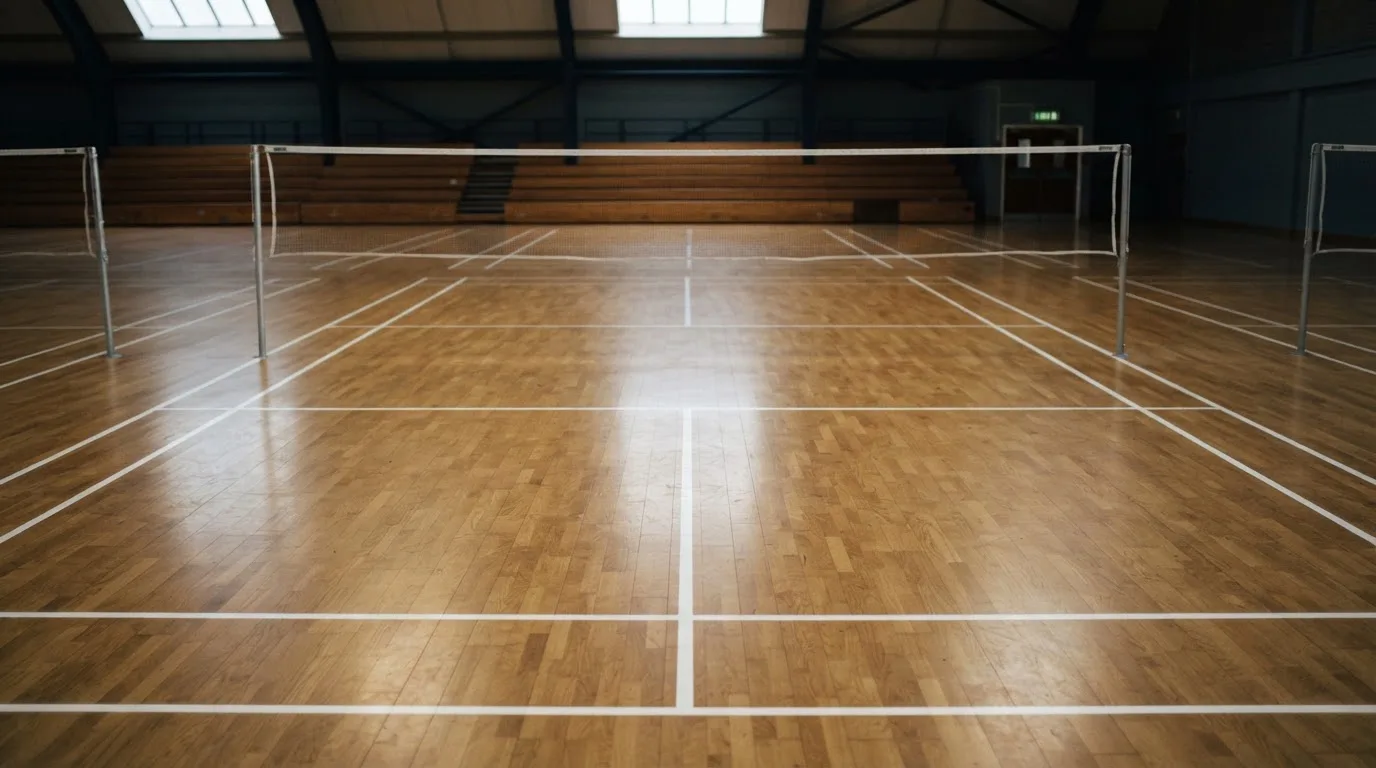
The sport itself is fast and granular. Each game is played to 21 points under rally scoring, a match is the best of three games, and at 20–20 play continues until one side leads by two; at 29–29 the next point wins. There are five disciplines: men’s singles, women’s singles, men’s doubles, women’s doubles and mixed doubles. That matters for betting because match length and the distribution of long rallies differ sharply between them — a men’s singles fixture between two tall defenders trends longer than a women’s doubles match between two aggressive net players, and that changes how a handicap or an “over games” market should be priced.
The court is fixed: 13.4 metres long, 6.1 metres wide for doubles and 5.18 metres wide for singles, with a net 1.55 metres high at the edges and 1.524 metres at the centre. None of that moves during a match, but it shapes the kind of player who wins on it, and player style is the variable that opens or closes the door on a tip.
The fundamentals a tip actually rests on
A tip is not a name. It is a view on probability, dressed as a stake. The work behind it is unglamorous and worth doing in this order.

Form is the starting point. Recent results carry more signal than season-long records because the badminton tour is dense and injuries are common; a player returning from a hamstring problem may still show strong results on paper and yet be moving poorly in the third game. Head-to-head records help only at the margins — players evolve, coaches change, and a record that goes back more than a couple of seasons usually tells you more about the era than the match.
Surface is a misnomer in badminton; the court does not change. What does change is altitude, indoor humidity and shuttle speed, which vary by venue and which some players tolerate far better than others. A BWF event in Jakarta plays differently from one in Basel, and the same pair of players can split their meetings venue by venue.
Schedule matters. The BWF World Tour is congested in the first quarter of the year and again in the autumn. A player contesting a deep run at one event on Sunday and a first-round singles on Wednesday is a tired player. Tournament congestion is the single most reliable predictor of an upset in the early rounds of a follow-up event.
Statistics are useful but partial. The BWF publishes match statistics that include rally length, unforced errors and winning shots. These reward patience: ten matches of data per player is the minimum before the signal is cleaner than the noise. Stats software exists that scrapes these feeds, and it is the kind of tool that pays for itself only if the bettor has the discipline to ignore what it produces on a small sample.
Line-ups are the variable bettors miss most often. Doubles pairs change frequently — a top mixed doubles partnership may be split across two events to manage fatigue, and a replacement partner can move the price by 10% or more. A singles withdrawal announced an hour before the off is a trading opportunity the bigger bookmakers will react to in seconds; the smaller ones may not.
Finally, the market. A tip is only as good as the price it finds. Build a probability view first, then look at the bookmaker’s odds. If the implied probability is lower than your own, the bet has positive expected value at that price — that is what a value bet actually is, stripped of jargon. If the implied probability is the same or higher, the tip is not a tip, it is a preference.
Badminton betting sites: the licensed set in Great Britain
A bookmaker taking bets from customers in Great Britain needs a Gambling Commission licence. That is the only test of legality that matters in this market, and the Commission’s public register is the only place to confirm it. Operators hold licences in categories; for badminton the relevant one is “remote general betting standard (real events)”. Several trading names can run under one licence — Ladbrokes and Coral under LC International Limited, for example — and the register shows the trading names, the licence holder and the account number.
The ten operators below are all on that register. They are listed alphabetically by trading name and not ranked; being on the list is not a recommendation. Each entry says what the operator actually offers on badminton-relevant features — in-play pricing, cash out, bet builders, accumulators, live streaming where it covers racket sports — and what the operator’s own terms say about the feature.
The columns of the comparison below give the Gambling Commission licence number and licence holder beside what each operator’s terms or app listing states on a badminton-relevant feature. Where the operator’s own material does not address the feature, the cell is left as a dash; the absence is a signal in itself, and is why the prose around the table describes what a reader needs to verify before staking.
| Brand | Gambling Commission licence | Licence holder | What the operator’s terms say on badminton-relevant features |
|---|---|---|---|
| Bet600 | 044731-R-323941-016 (account 44731) | Tyche Tech Limited | Best Odds Guaranteed on horse racing: bets paid at the starting price if it is bigger than the price taken; badminton coverage not addressed in the app listing |
| Betmaster | 065699-R-339929-002 (account 65699) | BM Solutions GB Ltd | Licence and operation stated on the home page; badminton-specific markets not described in the operator’s own material |
| BetTom | 064959-R-339314-003 (account 64959) | Bet Tom Limited | Sports welcome offer: 50% back as a free bet up to £50, with a matching 50% back up to £50 as free slot funds for casino; full terms apply |
| BoyleSports | 039469-R-319383-025 (account 39469) | Boylesports Enterprise | Acca Insurance: opt-in required, minimum stake £5, minimum odds 1/2, refund up to £20 as a free bet expiring in 7 days, bets must be placed and settled on the same day |
| Copybet | 053774-R-330743-010 (account 53774) | Copybet UK Limited | Best Odds Guaranteed all day, every day on UK and Irish racing; pays first past the post on horse racing even if the winner is later disqualified |
| Fitzdares | 000400-R-103839-030 (account 400) | Fitzdares Limited | App offers cash out, accumulators, Lucky 15s, specials and antepost markets on horse racing, football, tennis, rugby, cricket, golf and American football, with in-play live odds |
| Ladbrokes | 054743-R-330863-014 (account 54743) | LC International Limited | Odds boosts on horse and greyhound bets, Best Odds Guaranteed on UK and Irish horse races, in-play betting and Acca Boosts |
| Swifty Sports | 058957-R-334734-006 (account 58957) | Swifty Global (UK) Ltd | Best Odds Guaranteed, Cash Out on markets including horse racing and football, daily price boosts, live streaming and in-play betting; Bet Builder listed as coming soon |
| Tote | 054779-R-331321-008 (account 54779) | TDCO Limited | Pool betting operator; sport-by-sport feature list not addressed in the terms cited |
| bet365 | 055148-R-331498-002 (account 55148) | Hillside (UK Sports) ENC | In-play betting and live streaming of events worldwide, plus Bet Track, Match Live and a Live Golf Tracker for following bets in play |
What the table does not show is the daily price for a given badminton match — research carries no quoted odds for any specific operator on any specific fixture in this snapshot, and printing one would be invention. A reader comparing prices should open two or three of these sites on the morning of an event and check the head-to-head match winner price themselves. The gap between the best and the worst price on a tight match is the bookmaker’s margin doing its job; the gap on a one-sided match is where the operator is hedging the line.
The bookmaker’s margin, in one worked example
Every price on a betting market carries the bookmaker’s take, baked into the odds. The standard way to read it is to ask: of every pound wagered on this market, how much would be returned if every outcome won in proportion to its implied probability? The shortfall from a full pound is the margin.
Take an illustrative two-way market — who wins the first game of a fixture — priced at 1.90 and 1.90 in decimal odds (9/10 in fractional form). The implied probabilities are 1 ÷ 1.90 = 0.5263 on each side, so 0.5263 + 0.5263 = 1.0526 of “probability” for a market that should sum to 1.000. The excess, 0.0526, is the margin — about 5.3% on this market. That is the bookmaker’s take on this two-way line.
The same arithmetic, applied to a three-way market such as a match winner in a singles game with no draw, would produce a wider margin because the overround has to be spread across three outcomes rather than two. Three at 1.80/1.80/1.80 implies 0.5556 each, summing to 1.667 — a margin of around 40%. Real-world prices are nowhere near that wide; a bookmaker’s three-way margin on a tight match is typically in the 5–10% band, with the operator taking more on second-tier events where liquidity is thinner.
A punt on this 1.90/1.90 market that wins returns stake × odds. A £10 stake at 1.90 returns £19 — £9 net profit on the stake. The odds themselves already include the margin, so the price a tipster calls “value” has to be calculated against the true probability, not against the price alone. The mechanics of that calculation are in the section on returns below.
The margin is the bookmaker’s edge on every market, every match, every bet. It is the reason no tip is ever certain. A tip that prices a win at 70% probability when the market says 60% — implied by 1.667 in decimal odds — is a value bet only if that 70% is right; if the true probability is 60% the bet is a long-term loser regardless of how often it wins.
How a return is worked out from stake and odds
The arithmetic is simple and worth knowing cold. A return is stake × odds. A net profit is stake × (odds − 1). That is the whole thing for a single bet.
For a combination bet the odds of the legs multiply into one price. A double at 1.90 and 2.20 has combined odds of 1.90 × 2.20 = 4.18; a £10 stake returns £41.80, of which £31.80 is profit. A treble adds a third leg; an accumulator with four legs adds a fourth. The price grows fast, which is why accumulators are popular, and the probability of every leg landing falls at least as fast, which is why accumulators are the market the bookmaker’s margin loves most. Every leg adds a slice of margin; an accumulator with a 5% margin per leg and four legs carries an effective margin that compounds, not adds.
For a free bet whose stake is not paid back, the value is the free-bet amount × (odds − 1) ÷ odds × the payout share of the market. At 4.00 with a 95% payout share, a £10 free bet is worth about £10 × 3 ÷ 4 × 0.95 = £7.13 of expected value. That is what the free bet is worth on average, not what it wins on any single occasion, and the figure assumes the bet is placed at a price where the bettor has an edge.
Each-way bets double the stake — one bet on the win, one on the place — and the place terms vary by event and operator. The each-way fraction on a handicap badminton match is usually a fifth of the win odds, sometimes a quarter; check the operator’s terms before staking.
Live badminton betting and what cash out actually does
In-play badminton is offered by the larger GB-licensed operators. The market depth is thinner than football — match winner, sometimes the next game, occasionally a handicap on games — and the odds move fast because the rallies are short. A 10-point run in a men’s singles game can flip a 1.70 favourite into a 2.20 underdog in two services. That volatility is the live product, and it is also where discipline goes to die.
Cash out is the operator’s offer to settle a bet before the match is over. It looks like a kindness — the bettor can lock in a profit or cap a loss — and it is, on the operator’s terms. The price the operator offers is its own, set against the live market it is also offering, and the gap between them is the operator’s edge in the running market. A bettor who cashes out regularly is paying a premium on every trade.
What a live bet is worth is the same arithmetic as a pre-match bet, applied to a moving line. The expected value of a bet placed at the 15-point mark of a game where one player is up 12–3 is a function of the implied probability the live price encodes, not the visual lead on the screen. Visual leads in badminton are not what they look like: the side that led 11–2 at the mid-game interval can lose the game from there, and the side that trails 3–8 can run the next ten if the conditions flip.
The legal frame: a Great Britain licence is the only test
The Gambling Commission licenses the whole commercial market under the Gambling Act 2005, which covers Great Britain — England, Scotland and Wales. Northern Ireland runs on its own older legislation, and a GB licence does not extend to it. Since the Gambling (Licensing and Advertising) Act 2014, an operator whose remote facilities are used in Great Britain needs a Commission licence wherever the operator is incorporated; a Curaçao, Maltese or Gibraltar licence is not a substitute. There is no state monopoly and no cap on the number of licences; a GB-licensed brand simply meets the Commission’s conditions.
The licence categories that matter for badminton are remote general betting standard (real events) and, for exchanges, remote betting intermediary. A brand on the Commission’s public register, under either of those categories, may take bets on badminton from customers in Great Britain. A brand not on the register may not. The register can be searched by business name, trading name, domain or account number, and is the whole test of who holds a licence; no count of licensed operators should be quoted without its access date because that figure moves.
Minimum age is 18. Identity verification — name, address and date of birth — has been required before a customer can deposit or gamble since 7 May 2019, including with a free bet or bonus. There is no anonymous play at a licensed site, and that is the price of the consumer protections that come with the licence.
Financial spread betting on sports is a different product, regulated by the Financial Conduct Authority, not the Commission. Spreadex, for example, is regulated by the FCA for spread betting and by the Gambling Commission for fixed-odds betting, and notes that spread betting losses can exceed the deposit. The rest of this page is about fixed-odds betting, where the worst a bettor can lose is the stake.
Betting exchanges run under a betting intermediary licence. Back and lay are different acts — a back bet is the conventional bet, a lay bet is the offer to underwrite someone else’s back — and the rates and rules are stated by the exchange, not the Commission. The maths is different from a fixed-odds bookmaker and is not covered here.
Bonuses and free bets: what they really are
A welcome offer is a marketing spend. The bookmaker pays the bonus as the cost of acquiring a customer, and the bettor pays the cost of clearing it in time, stake and lost margin. Reading the small print is the only way to know which side of that trade the bettor is on.
A 50% back as a free bet up to £50, like BetTom’s sports welcome offer, looks like £50 of value. The free bet is paid back only on the winnings — a £50 free bet at 3.0 returns £100 of which the £50 stake is not paid back — so the headline figure is the maximum stake, not the maximum payout. The full terms set the qualifying bet, the minimum odds, the expiry window and which markets qualify.
Wagering requirements are capped at 10x the bonus amount at GB-licensed operators since 19 January 2026, and mixed-product promotions — an offer that asks a customer to bet on two or more product types, such as betting plus casino, to clear a single bonus — are banned. The cap is a real protection: a £10 bonus at 50x needed £500 of bets to clear, and under the cap no more than £100. Free bets with no wagering condition are not affected by the cap, and whether the cap applies to them at all is not established.
Acca insurance, like BoyleSports’ offer, refunds a losing accumulator as a free bet up to a cap — £20 in that case — when one leg lets the bet down. The conditions are the substance: opt-in is required, the minimum stake is £5, the minimum odds per leg are 1/2, the refund expires in 7 days, and the qualifying bets must be placed and settled on the same day. Each clause cuts the population of bets that qualify, and the headline number is the ceiling rather than the typical outcome.
Best Odds Guaranteed, offered by Ladbrokes, Copybet, Bet600, Swifty Sports and others, pays a horse racing bet at the starting price if the SP is bigger than the price taken. It is a horse racing product, not a badminton one; mentioning it here because the same operators carry badminton and the term turns up wherever racing and other sports share a brand. On badminton the equivalent market function is simply a competitive match winner price.
Odds boosts are price enhancements on selected markets. A “boosted” 2.50 to 3.00 looks like a gift; it is a marketing offer on a market where the operator believes its margin can absorb the increase. The boost is a function of the bookmaker’s pricing, not the bettor’s edge.
Free bets, free slot funds, free spins and other “free” elements are not free in any meaningful sense: the customer has deposited, has staked at the qualifying terms and has spent time clearing them. The honest framing is that a bonus is a discount on the first bet, in exchange for the discipline to clear it.
Responsible gambling: the tools a licensed operator must offer
The Gambling Commission sets the social responsibility code as part of every licence. A licensed remote betting operator must offer deposit limits, time-outs, product restrictions and self-exclusion, and must direct customers to help services. The framework is not optional, and the audit of compliance is continuous.
Deposit limits are the customer’s tool, not the state’s. The Commission does not set a maximum stake or a maximum deposit for an individual; it requires the operator to give the customer the means to set one for themselves. The first changes under the Commission’s Remote Technical Standards applied from 31 October 2025, and a second phase was postponed to 30 September 2026; whether a particular phase is live at any moment is not a settled fact and should be checked on the operator’s site.
GAMSTOP is the national multi-operator online self-exclusion scheme and a mandatory licence condition for online operators since 31 March 2020. The minimum exclusion is six months; periods run to one year, five years, or five years with auto-renewal, and after the minimum period the exclusion remains in place for a further seven years unless the customer asks GAMSTOP to remove it. It covers online sites and apps; betting shops use a separate service. GAMSTOP is the most consequential single tool in the responsible-gambling framework, and a customer who has self-excluded cannot reverse the decision on a whim.
Financial vulnerability checks apply at licensed remote betting operators when a customer’s deposits minus withdrawals exceed £150 in a rolling 30 days. The check is a public-record search — bankruptcy, county court judgments and the like — not an income check and not a credit reference check. It is one of the conditions under which the operator is required to ask where the money is coming from. The financial risk assessments described in the press as “affordability checks” have been announced in a staged plan by the Commission, with no start date at the time of writing; describe them as announced and staged, not as in force.
The help services are not part of any operator’s licence, but every licensed operator links to them. GamCare runs the National Gambling Helpline. GambleAware funds treatment and education. The NHS runs gambling clinics in several regions. Gamblers Anonymous runs peer-support meetings. These are the routes for a customer who feels the betting has gone past a point they can manage themselves.
Predictions, forecasts and the honest answer about tips
No tip is ever certain. That is the headline and the rest of this section is the working out.
A prediction is a probability statement dressed as a name. The probability is built from form, conditions, head-to-head, the market’s reaction to team news and a thousand smaller inputs. The probability is right or wrong against the result, not against the price, and the price is right or wrong against the probability. A tip is a bet at a price, and the price is the only thing the bettor controls.
What the tipster sells is the probability work — the modelling, the data feeds, the line-up watching — wrapped in a one-line call. What the tipster cannot sell is the certainty, because certainty is not on sale. A tipster with a 55% strike rate at average decimal odds of 5.00 has, over a large sample, a positive expected return; the same tipster at 55% at average odds of 1.80 is a long-term loser. The strike rate alone is not the story; the price is.
Bankroll discipline is the part of betting no tipster can supply. The stake is set by the size of the bank and the bettor’s appetite for risk, not by the bet’s conviction. A flat stake of 1–2% of the bank on any single bet, with no increase on a “sure thing”, is the conventional starting position. The bookmaker’s edge on every bet means the bank slowly shrinks without a real edge; a bettor without an edge should bet for entertainment and treat the stake as the price of it.
Staking plans — Martingale, Fibonacci, level stakes, percentage staking — are tools for managing variance, not for generating an edge. Martingale doubles the stake after every loss to recover the previous loss on the next win; it works until a losing run longer than the table wipes out the bank. Fibonacci increases the stake along a fixed sequence. Each has its place in a serious bettor’s toolkit, and none of them changes the underlying probability of the next leg.
A forecast is a prediction with a time horizon. “Player A to win the title” is a forecast; “Player A to win the next match” is a prediction. Forecast markets carry more uncertainty, and the price the bookmaker offers reflects that. A forecast at 6.00 on a 16-player field implies a 16.7% chance; if the bettor’s model says 25%, the bet has positive expected value at that price. The work is the same as for a single match: build a probability, look at the price, decide.
The honest answer about tips is that the market is full of them, the price is usually the only thing worth buying, and the discipline to skip the bet when the price is wrong is the single most valuable skill a bettor can learn. No system wins. No tip is certain. The bettor who bets anyway does so for the entertainment, with a stake they can afford, on a price that pays them to take the risk.
Strategy: the practical order of a betting decision
The order of operations is worth writing down, because the temptation is to start at the end.
Read the fixture. Player, opponent, venue, time, surface conditions, schedule load. Build a probability view in your head before you open a bookmaker.
Open two or three bookmakers. Compare the match winner price on each. Note the best price and the worst price. The gap between them is the market’s spread and is one signal of how confident the bookmakers are about the line.
Calculate the implied probability of the best price. Decimal odds of 2.50 imply 40%; 1.80 implies 55.6%; 5.00 implies 20%. That is the market’s view of the player’s chance.
Compare to your own view. If your probability is meaningfully higher than the market’s, the bet has positive expected value at the best price. If it is lower, no bet. If it is the same, no bet — the margin is your enemy on a coin-flip.
Size the stake. 1–2% of the bank on a single bet is the conventional starting position. A bet with a stronger edge can carry a slightly larger stake; a bet with a weaker edge should be smaller or skipped.
Place the bet. Read the slip carefully before confirming. The wrong selection or a stake entered in decimal odds that should have been entered in pounds is the kind of error that happens to everyone once and is not recoverable.
Record the bet. Spreadsheet or notebook, with the date, the match, the price, the stake, the closing price on the match and the result. The closing price — the last price the bookmaker offered before the off — is the most informative single data point a serious bettor collects. The difference between the price taken and the closing price is the bettor’s own market-beating or under-performance, and is the variable a tipster can be measured against.
The strategy is unglamorous and repetitive. It is also the only strategy that compounds.
Bet types and odds: what each market pays
The match winner market is the standard: back Player A or Player B. The price is a function of the bookmaker’s view and the margin on top.
The handicap market, sometimes called the games handicap, gives one player a fictional lead. Player A −2.5 games means Player A starts the match a game and a half up in the bettor’s ledger, and the bet is on Player A to win by more than that margin. The handicap is the standard way to back a strong favourite without paying a short price.
The over/under on total games is a count market: will the match finish in two games or three? A men’s singles match between two attacking ten-allers trends to three games; a women’s singles match between a clear favourite and an out-of-form opponent trends to two. The price reflects the model.
Set betting is the precise score market: 2–0 or 2–1 in games. It pays more than the match winner because the bettor is asking the bookmaker to call the exact game count. The bookmaker’s margin on this market is wider than on the match winner, and the bettor’s edge has to be sharper to overcome it.
The next-game winner is a micro market, settled on the result of the next game rather than the match. Live only. The price moves as the game moves, and the in-play dynamics are described above.
Player props on badminton are thin at most bookmakers. A book on total points in a specific game, or a book on which player wins the longer rally, exists at the bigger operators. The liquidity varies; the margin tends to be wider than on the headline markets.
Accumulator insurance, where offered on badminton, refunds a losing acca as a free bet when one leg lets the bet down. The mechanics are described in the bonuses section; on badminton specifically, the relevant clause is whether a leg voided by a walkover counts as a “losing leg” for the purposes of the insurance.
Each-way betting on badminton is unusual at most operators. The market is the match winner, not a field event with a place finish. Where each-way is offered on a tournament outright, the place fraction is set by the operator and should be checked before placing.
Spread betting on badminton is offered by Spreadex and a handful of other FCA-regulated firms, on indices such as total points in a match or the margin of victory. Spread betting is a different product from fixed-odds betting, with a stake that can become larger than the deposit; losses can exceed the deposit. That risk profile puts spread betting outside the scope of this one.
How to verify a Gambling Commission licence
Open the Commission’s public register. Search by the brand’s trading name — Ladbrokes, Bet365, BoyleSports, and so on — or by the domain. The register entry shows the licence holder’s legal name, the account number, the licence type and the trading names the licence covers. A brand on the register under “remote general betting standard (real events)” may take bets on badminton from customers in Great Britain; a brand not on it may not.
A .co.uk domain proves nothing — licensed operators use .com and .co.uk interchangeably — and a brand’s own statement that it is licensed is a starting point, not a conclusion. The register is the conclusion.
An account number is the cleanest single fact to check. The ten operators in the comparison above carry account numbers 44731 (Bet600), 65699 (Betmaster), 64959 (BetTom), 39469 (BoyleSports), 53774 (Copybet), 400 (Fitzdares), 54743 (Ladbrokes), 58957 (Swifty Sports), 54779 (Tote) and 55148 (bet365). Each can be entered into the register’s search and matched against the licence holder. The list is a snapshot and not a permanent fact: account numbers and trading names change, and the register is the only durable source.
A licence holder and a brand are not always the same legal entity. LC International Limited holds the Ladbrokes licence; Platinum Gaming Limited, Gibraltar, runs Unibet’s UK site under Commission account 45322. The register shows both the licence holder and the trading names the licence covers.
The ten operators, reviewed
What follows is a closer look at each of the ten licensed operators on the comparison table. Each entry says what the operator offers that is relevant to a badminton bettor, what its own terms say about the offer, and what to check before staking.
Ladbrokes
Ladbrokes sits under LC International Limited, the licence holder for both Ladbrokes and Coral; one licence covers two trading names. The relevant badminton features are in-play betting, Acca Boosts on multiples and odds boosts on selected markets. Best Odds Guaranteed on UK and Irish horse races is a horse racing product and does not apply to badminton. The standard set of safer-gambling tools is present, as required for the licence.
The verdict: a mainstream bookmaker with a deep in-play product on football and horse racing and a thinner badminton product at most times. Worth it for the bettor who already holds a Ladbrokes account and wants the convenience, less compelling for the bettor picking a new home for badminton specifically.
Copybet
Copybet’s licence is held by Copybet UK Limited. The standout feature in its terms is Best Odds Guaranteed all day, every day on UK and Irish racing, with first past the post paid even if the winner is later disqualified — both horse racing features rather than badminton ones. On badminton specifically, the operator’s own material does not describe a feature beyond a standard fixed-odds book.
The verdict: the racing proposition is unusual and worth attention from horse racing bettors; the badminton proposition is conventional and is best judged by the price on the day.
BoyleSports
BoyleSports’ licence is held by Boylesports Enterprise. The Acca Insurance offer — opt-in, minimum stake £5, minimum odds 1/2, maximum refund £20 as a free bet expiring in 7 days, bets placed and settled on the same day — is the headline term. Each clause matters: the minimum odds floor rules out very short favourites; the £5 minimum stake rules out tiny accumulators; the same-day rule rules out placing a multi-leg acca across two days.
The verdict: a strong accumulator insurance product for the bettor who builds small accas on tight favourites, and a standard fixed-odds book elsewhere. Read the clauses before staking; the refund is a free bet, not a cash refund.
BetTom
BetTom’s licence is held by Bet Tom Limited. The sports welcome offer is 50% back as a free bet up to £50, with a matching 50% back up to £50 as free slot funds for casino play. The free-bet stake is not returned on winning bets, as is standard; the headline £50 is the maximum stake, not the maximum payout. Full terms apply, as the operator’s own listing states.
The verdict: a smaller-brand welcome offer, and the kind of offer that rewards careful reading of the small print. The free-bet value at typical odds is around 70–80% of the headline figure; the slot funds are governed by their own terms.
Tote
Tote is the pool betting operator; its licence is held by TDCO Limited. Pool betting on horse racing is its home market, and the sport-by-sport feature list is not the same as a fixed-odds bookmaker’s. Tote’s product on badminton is a question to put to the operator rather than an assumption to make.
The verdict: Tote is the right home for a bettor who plays pool betting on racing. On badminton specifically, the operator’s offering is thinner than the fixed-odds bookmakers’, and a bettor interested in Tote should confirm the markets available before staking.
Swifty Sports
Swifty Sports’ licence is held by Swifty Global (UK) Ltd. The app listing names Best Odds Guaranteed, Cash Out on markets including horse racing and football, daily price boosts, live streaming and in-play betting, with Bet Builder listed as coming soon. Live streaming of badminton is offered by the bigger sports books; the listing does not commit to a badminton stream specifically.
The verdict: a newer entrant with a feature set typical of a contemporary sportsbook, and the live streaming is the most useful single feature for any in-play bettor. Bet Builder’s arrival is the next milestone worth watching.
Fitzdares
Fitzdares’ licence is held by Fitzdares Limited. The app lists cash out, accumulators, Lucky 15s, specials and antepost markets on horse racing, football, tennis, rugby, cricket, golf and American football, with in-play live odds. Badminton is not listed in that set, which is the honest statement: Fitzdares’ published feature list names the sports it covers, and badminton is not among them.
The verdict: a premium brand with a narrower menu. A bettor who bets across the listed sports and wants a higher-touch product has reason to look; a bettor focused on badminton has less reason to.
Betmaster
Betmaster is operated by BM Solutions GB Ltd, registered in Malta, with Gambling Commission account 65699. The home page states the licence; the operator’s own material does not describe badminton-specific features. Like Fitzdares, the published feature set is the honest statement.
The verdict: a licensed operator whose badminton offering is not described in its own material. The licence is real and the operator can take bets on badminton; the question is whether the price is competitive on the day.
Bet600
Bet600’s licence is held by Tyche Tech Limited. The standout term is Best Odds Guaranteed on horse racing, paying at the starting price if the SP is bigger than the price taken. On badminton, the operator’s own listing does not describe a feature beyond a standard fixed-odds book.
The verdict: a horse racing brand at heart, with a standard badminton product. The price on the day is the test.
bet365
bet365’s licence is held by Hillside (UK Sports) ENC. The headline features are in-play betting and live streaming of events worldwide, plus Bet Track, Match Live and a Live Golf Tracker for following bets in play. Live streaming of badminton is offered at bet365 where broadcast rights permit, and the in-play product on badminton is among the deepest in the market.
The verdict: the strongest single offering for the live badminton bettor because of the streaming and the in-play product, with the caveat that live streaming is subject to broadcast rights and is not a permanent feature of every fixture. The price on the day is still the test.
The decision tree, written out
Start with the bet. A bet is a stake at a price on a defined outcome, settled by the operator’s terms. The price encodes the bookmaker’s view of probability plus the margin; the stake is the bettor’s view of expected value at that price; the terms settle the bet.
A value bet is the case where the bettor’s view of probability is meaningfully higher than the market’s. A tip is not a value bet by itself; it is only a value bet at the right price. A tip at 1.80 on a player the tipster rates at 70% (implied 55.6%) is not a value bet; the same tip at 2.50 (implied 40%) is.
A bookmaker’s margin is the operator’s take on every market, expressed as the excess of implied probabilities over 100%. The margin on a 1.90/1.90 two-way line is around 5.3%; the margin on a 3-way match winner is wider and is the layer a bettor is paying for the privilege of selecting the right outcome.
A return is stake × odds. A net profit is stake × (odds − 1). A combination bet’s odds are the product of the legs. A free bet’s expected value is the free bet amount × (odds − 1) ÷ odds × the payout share of the market. An expected cost of clearing a bonus is the required turnover × the margin of the qualifying market.
No tip is certain. The bookmaker’s margin is in every price. The bettor’s edge is the gap between the bettor’s probability and the market’s, and the bettor’s discipline is the stake at which the gap is exploited. The rest is execution.
Frequently asked questions
How do you bet on badminton?
Pick a licensed bookmaker from the Commission’s public register, open an account, pass the identity verification (name, address, date of birth — required before the first deposit at any GB-licensed operator), deposit by debit card or bank transfer — credit cards are banned for gambling in Great Britain — and choose a market. Match winner, handicap or total games are the headline markets; in-play markets are offered at the bigger operators. Stake 1–2% of the bank on any single bet. Read the operator’s terms on settlement, voided matches and walkovers before staking.
What is a value bet, and why is no tip ever certain?
A value bet is a stake at a price where the bettor’s own probability is meaningfully higher than the market’s implied probability. If the bettor rates the player at 60% and the market implies 50% (decimal odds of 2.00), the bet has positive expected value. No tip is certain because every price carries the bookmaker’s margin, every probability estimate is wrong some of the time, and every result has variance. A tip that wins 55% of the time at average odds of 5.00 makes money over a large sample; the same tip at 1.80 loses money over the same sample.
What is the bookmaker’s margin, and how does it show in the odds?
The margin is the bookmaker’s take on every market, calculated as the excess of the implied probabilities over 100%. On a 1.90/1.90 two-way line the implied probabilities are 0.5263 on each side, summing to 1.0526; the margin is 5.3%. On a three-way match winner at 1.80/1.80/1.80 the implied probabilities sum to 1.667 and the margin is 40% — far wider than any real price because real books do not price evenly across a three-way market. The margin is the layer the bettor is paying for the privilege of selecting the right outcome, and is the reason the market has a long-term edge over the bettor without a counter-edge.
How is the return on a bet worked out from the stake and the odds?
Return = stake × odds; net profit = stake × (odds − 1). A £10 stake at decimal odds of 2.50 returns £25 — £15 net profit. For a combination bet the odds of the legs multiply into one price. For a free bet whose stake is not paid back, the expected value is the free-bet amount × (odds − 1) ÷ odds × the payout share of the market. The arithmetic is the same for every market, and the calculation is the same whether the bet is a single, a double, a treble or an accumulator.
How can a reader check that a bookmaker holds a Gambling Commission licence?
Open the Commission’s public register, search by the brand’s trading name or its domain, and read the register entry. A brand on the register under “remote general betting standard (real events)” may take bets on badminton from customers in Great Britain. The licence holder’s legal name, the account number and the trading names covered are all shown. A .co.uk domain proves nothing; a brand’s own statement that it is licensed is a starting point, not a conclusion. The register is the conclusion.
Which tools for controlling play does a licensed bookmaker have to offer?
Deposit limits, time-outs, product restrictions and self-exclusion are required as part of the social responsibility code at every licensed remote betting operator. GAMSTOP is the national multi-operator online self-exclusion scheme and is mandatory at every GB-licensed online operator; minimum exclusion is six months. Financial vulnerability checks apply when deposits minus withdrawals exceed £150 in a rolling 30 days. Help services such as the National Gambling Helpline (GamCare), GambleAware, NHS gambling clinics and Gamblers Anonymous are linked from every licensed operator and are the routes for a customer who feels the betting has gone past the point they can manage themselves.
Tennis, darts & cue sports – Newbookiesuk.com
Content created by the «Newbookiesuk.com» team
