
AI betting predictions: a guide to the tip, the price and the regulated bookmakers behind them
 Available in US
Current as of October 30, 2026 · licensing and offer details verified against the Gambling Commission’s public register and each operator’s own terms page
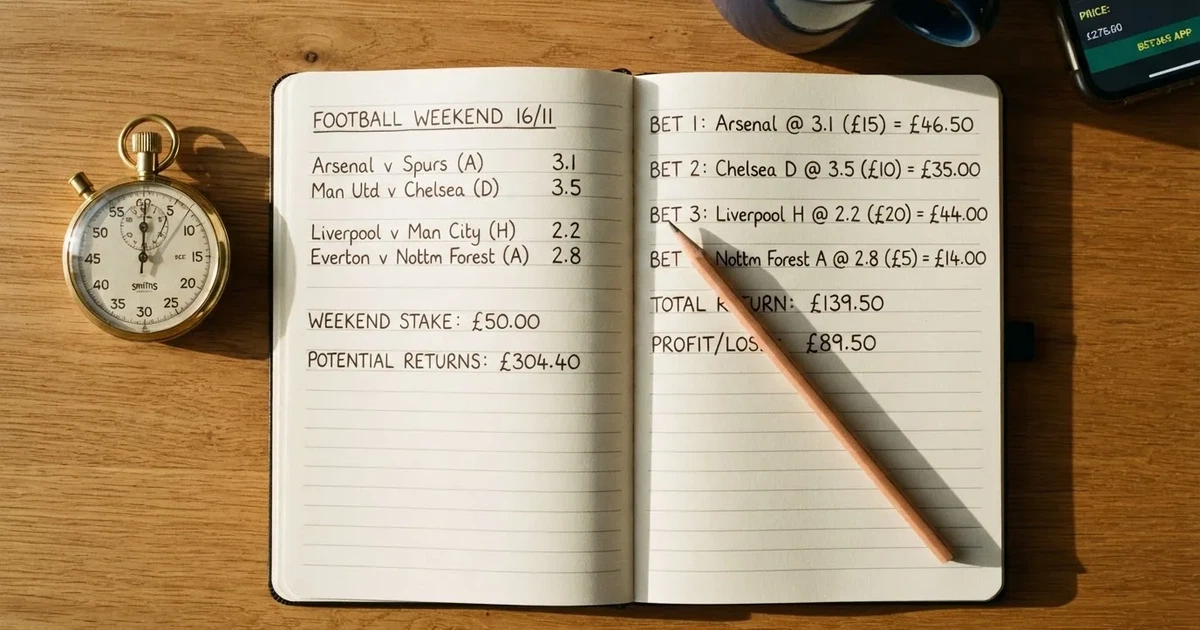
The marketing around AI betting predictions in 2026 leans on a tidy picture: a model reads the numbers, picks a winner, the punter follows. The picture is cleaner than what it sits on. A prediction is a probability dressed as a tip, and a price is the same idea dressed as a number — both of them are wrong more often than the people selling them admit. This guide is what survives that admission. It walks through how an AI-style tip is built, what “value” really means, how the bookmaker’s margin sits inside every price, and which licensed bookmakers in Great Britain are worth a look when the reader wants to place the bet. No picks, no winners, no system — just the mechanics and the cost.
How an AI-style prediction is built and why no tip is ever certain
A betting prediction is, in its cleanest form, an estimate of how likely something is to happen. Form, head-to-head history, expected goals, injuries, line-ups, the venue, the weather, the referee’s card pattern, the model’s own priors — every input is weighted and turned into a probability. The output looks like a number between 0 and 1: a 0.62 probability that Arsenal beat Brighton at home, say, or a 0.41 chance of a draw. That number is the spine of the tip. Everything else — the recommendation, the stake, the “confidence” label — is commentary on it.

Where machine learning genuinely changes the picture is in the plumbing. A neural net trained on a million past matches can hold a wider set of features in working memory than a human can, and it doesn’t forget which side of a split the corner kicks came from. That makes it useful for one specific job: turning noisy data into a probability the reader can act on. It does not change the other job, which is to turn that probability into a tip that beats what the market has already priced in. The bookmaker’s traders use their own models, their own data feeds and their own margin, and they are quicker than the bettor. An AI that pulls data from the same feeds the traders use, no faster, gives the bettor nothing the traders don’t already have.
The shape of the value bet. A “value bet” is the one idea every tip sheet returns to, and it has a clean definition: a price higher than the true probability deserves. If a model thinks Arsenal–Brighton at home is a 0.62 win and the bookmaker prices it at 2.10 (decimal) — which implies 1 ÷ 2.10 = 0.476 — there’s no value. The market has offered 0.476 for an event the model prices at 0.62, which is a worse price than a coin. If the same match is priced at 2.50, the implied probability is 0.40 and the model’s 0.62 says the bet is worth taking. The bigger the gap between the model’s estimate and the implied probability, the more the bet is “value” in the textbook sense. The catch is that the gap exists for every match every day, and the next event either closes the gap (the bet wins) or extends it (the bet loses). On a small sample a tip sheet can run hot. On a season-long sample, the gap closes or the tip sheet wasn’t pricing with anything real in the first place.
What no model can do. A prediction engine cannot read a dressing room, cannot tell you whether a key player slept on a stiff neck on the team bus, cannot tell you whether the referee has a quiet evening in him. It cannot tell you the weather changed mid-match, or that the centre-back rolled his ankle in the warm-up and the manager lied about it. It can weight the things that show up in data and ignore the things that don’t, and a quarter of football — the part that decides tight matches — lives outside data. That isn’t a reason to ignore AI tips. It is a reason to size them like the uncertain things they are.
Form, statistics, line-ups. The classical inputs of a tip — recent form, head-to-head, the named line-up, whether the striker has scored in his last four — still earn their place inside an AI workflow. What an AI workflow does is refuse to forget them, refuse to overweight the most recent result and refuse to lose the left-back’s injury when three other events get added to the watchlist. None of that is mystical. It is bookkeeping done on a larger scale and at a steadier hand.
Why no tip is ever certain. Even a 0.95 probability tip loses one in twenty. A 0.70 tip loses three in ten. The phrase “the model says” is short for “the model estimates”, and estimates err. The bettor who treats a high-probability tip as a near-certainty is the bettor who gets surprised by the ten percent, and the surprise compounds because the stake was sized for certainty.
How the bookmaker’s margin sits inside every price — and how to see it
Every price a bookmaker offers contains an overround, and the overround is the operator’s edge. On a two-way market priced at 1.90 (9/10 fractional) and 1.90, the true probability of each outcome would be 50–50 if the operator charged nothing for taking the bet. With the prices as listed, the implied probabilities are 1 ÷ 1.90 + 1 ÷ 1.90 = 1.0526. The two sides sum to more than 100 per cent, and the excess — 5.26 per cent — is the bookmaker’s margin on that market. The bet is paying back, on average over a long run, 1 ÷ 1.0526 = 95.0 per cent of what is staked.

A worked example illustrates the consequence. On an illustrative two-way market at decimal odds 1.90 and 1.90 (fractional 9/10) — a clean, level example, not a price quoted by a bookmaker — the implied probabilities add up to 105.3 per cent. The true fair return, before the operator’s cut, would be 100 per cent. The difference, around 5 per cent of every unit staked, is the overround and it lands at the bookmaker. On a market priced tighter than 1.90 — a tennis favourite at 1.35 with the underdog at 4.50 — the implied probabilities still add to more than 100 per cent, and the overround is held the same way, just distributed unevenly between the two outcomes. The 5 per cent on the level 1.90 example is the cheapest case; British and European sportsbooks commonly run 5–8 per cent on soccer 1X2, more on smaller leagues and combination markets, and considerably more on novelty and outright markets. The reader who logs into an account every weekend and treats the prices as “the odds” is, in effect, paying a fee every time the slip is placed, and the fee rises with the market’s structure.
Reading a margin on the page. On its own, 5 per cent is fine. Beside another number, the same 5 per cent tells a sharper story. The “best odds guaranteed” promotion on horse racing is worth whatever price movement the bookmaker would have eaten — at 5–8 per cent margin on the market, a 10–25 per cent price drift on the morning of the race is meaningful and sometimes larger than the offer itself. The welcome bonus of £40 for a £20 first bet is, at the most generous reading, around a £40 free-bet credit; the £40 is worth roughly £40 × (1.90 − 1) ÷ 1.90 × 0.95 = £17.94 in expected return at a typical 5 per cent margin market and 1.90 odds, which is less than half its headline. Two numbers read side by side each explain the other.
The take-away is a discipline, not a formula. Always express the price as the implied probability, sum the outcomes across the market, and treat the gap to 100 per cent as the fee. Match the bet to a market with a margin the bettor can live with; treat a price offered on a minor league at 12 per cent margin as a price offered after 12 per cent has already been deducted.
Bankroll discipline and staking
A “bankroll” is the amount of money a punter has set aside specifically for betting — not the household budget, not the rent money, not the holiday fund. The discipline is simple: stake a fixed percentage of the bankroll on each bet, and never vary the percentage because one bet feels “more confident” than another. The classic stake is 1 to 2 per cent of the bankroll per bet, and it has the unromantic property of surviving losing streaks that flatten enthusiasm-based staking plans inside a fortnight.
A worked example illustrates the consequence. A £1,000 bankroll, staking 2 per cent per bet, means £20 per selection. After ten losses, the bank is £200 lighter and the stake drops to £16. After twenty losses, the bank is £342 lighter and the stake drops to about £13. The losing streaks hurt, but the stake never hollows the bank out in one go. The bettor who raises the stake after losses (“I’m due one”) turns the losing streak into the bankrupting event. The bettor who raises the stake after wins, often credited with “confidence”, rides the same current in reverse: the win tends to come at an above-average stake, the loss comes at an above-average stake, and the average stake catches up.
The point of bankroll discipline is not to win more often. It is to keep playing long enough that the math — the gap between the model’s probability and the implied probability — has time to come good. A model that is 2 per cent better than the market over 1,000 bets needs those 1,000 bets. A staking plan that burns out at bet 60 never lets the math arrive.
No staking plan changes the margin. Stop reading any guide that says otherwise. The bookmaker keeps its edge on every bet, and the bettor’s job is to find value, not to invent a sequence of bets that talks the bookmaker out of his.
What AI “predictions” mostly do, in practice
A model calling itself an AI prediction product usually falls into one of three buckets. The first is the stats feed: form, expected goals, shots on target, ratings, all of it cleaned and weighted. This is useful, it is also the layer the bookmaker’s own traders already use, and it is the layer where the edge lives or doesn’t. The second is the natural-language summary: a written tip with a recommended stake. This is mostly a presentation layer over the stats. The third is the betting bot: software that scans a bookmaker’s prices and fires bets automatically. A bot is fast, not wise, and the speed does not move the underlying probability. It moves the time of entry. Whether time of entry matters depends on the market; on Premier League 1X2 it is largely indifferent by kick-off, and on fast-moving in-play markets it can shift the price by a tick or two.
What the reader pays for, in any of the three, is closer to a curation cost than to a probability. The stats feeds at the top of the market are largely commodified — Opta-style data shows up on the bookmaker’s own site. The differentiator is the curation: which features the model keeps, which it drops, which weight it gives a home advantage, whether it strips the bookmaker’s margin before it tells the bettor the price is “value”. The generalist tip sheet that just lists picks is doing the second job without disclosing how the first was set.
The honest reading: a tip is a probability. The reader’s job is to compare it to the implied probability in the price and stake the gap, sized as a percentage of the bank. The rest is presentation.
The 10 GB-licensed bookmakers to consider and how they line up on the AI-tip workflow
Ten brands hold a remote general betting licence from the Gambling Commission and take part in GAMSTOP. The order below follows the comparison’s working order — betting licence, offer, the AI-tip workflow’s anchor features. The reader’s task is the sharper one: match the brand to the kind of bet the AI workflow recommends, not the other way around.
| Brand | Commission remote licence number and licence holder | What the operator’s own terms state on AI tips and the data layer |
|---|---|---|
| BetGoodwin | 002927-R-327985-008 — Goodwin Racing Limited (account 2927) | Best Odds Guaranteed on UK and Irish horse and greyhound racing up to £1,000 |
| Betway | 039372-R-319367-029 — Betway Limited (account 39372) | Welcome credit of £40 in free bet tokens for new UK and Ireland customers after a £10 first bet at minimum odds 2.0, expires in 7 days, debit card deposits only |
| bet365 | 055148-R-331498-002 — Hillside (UK Sports) ENC (account 55148) | In-play betting and live streaming of events worldwide, plus Bet Track, Match Live and a Live Golf Tracker for following bets in play |
| William Hill | 039225-R-319373-015 — WHG (International) Limited (account 39225) | Best Odds Guaranteed on UK and Irish horse racing from 8 AM on the day, on single and multiple bets; WHTV streaming requires a funded account or a bet in the last 24 hours |
| Lottoland | 038991-R-319408-020 — EU Lotto Limited (account 38991) | UK app combines sports betting with casino, lottery and scratchcards under a GB licence |
| VBet | 044662-R-324273-022 — SCGO Limited (account 44662) | Bet Builder, pre-match and in-play betting, live streaming and a live calendar with results and stats |
| Midnite | 101839-R-342850-001 — Midnite Limited (account 101839) | Welcome offer of £25 in free bets and 50 free spins for a £5+ bet on pre-match odds of 2.0 or greater within 14 days, expires in 7 days |
| Sky Bet | 067370-R-341330-005 — SBG Sports Limited (account 67370) | Welcome offer of £30 in free bets as three £10 tokens after a deposit of at least £5 and a first bet of at least 5p at odds of 1/1 or greater |
| Tote | 054779-R-331321-008 — TDCO Limited (account 54779) | GB-licensed pool-betting brand with deep racing coverage through the Tote pool product |
| Paddy Power | 039439-R-319330-013 — PPB Counterparty Services Limited (account 39439) | Bet Builder+, Popular Bet Builders, Super Sub (a bet rolls over to the replacement if a selected player is substituted), expanded Win More markets, player and ACCA stats |
The order of the names says nothing about which is the better fit for an AI-tip workflow. The fit is set by what each brand actually has on the page, and that varies. A model that lives by soccer 1X2 needs the deepest in-play offering, the best stats overlay and the cleanest bet builder for the same-game multi the model will often recommend. A model that lives by horse racing needs the BOG product, the form pages, the live streaming and the SP comparison. The reader’s choice follows from there.
A small caveat on the data layer. Several of these brands publish their own form, expected-goals or head-to-head tiles inside the bet card. The reader who runs a private AI workflow already knows that, of course — the tile is the bookmaker’s view, the model is the bettor’s view, and the price is the meeting point. A brand that publishes its own stats cleanly is a brand that lets the bettor check the model without leaving the slip. It is the convenient case, not the better tip.
Where AI-driven betting sits in British law
The framework that governs betting in Great Britain is the Gambling Act 2005, policed by the Gambling Commission (UKGC), a non-departmental public body sponsored by the Department for Culture, Media and Sport. The Act covers England, Scotland and Wales; Northern Ireland sits outside it and runs on its own older law, so a GB licence does not extend across the Irish Sea. Since the Gambling (Licensing and Advertising) Act 2014, the rule is the point-of-consumption test: an operator whose remote facilities are used by customers in Great Britain needs a Commission licence wherever it is actually based, and a Curaçao, Maltese or Gibraltar licence does not stand in for a Commission one.
That rule is short, and it is the only rule a reader needs to settle who is licensed. Brands come and go on a register, and the register itself is the answer. The Commission’s public register can be searched by business name, trading name, domain or account number and it lists who holds what, which sites are covered, and which licence categories the holder is allowed to operate. A brand with a register entry means the Commission has issued it a licence; a brand without one does not have a GB licence, however loudly it advertises one. The check is free, takes a minute, and saves a punter from finding out, six months in, that the dispute-resolution body was never going to read the complaint.
The register is also where the limits of the GB licence live. A licence for “remote general betting standard (real events)” is not a licence for casino games, lottery products or bingo. Pool betting on horse and dog racing runs under a separate licence category. A betting exchange runs under a betting intermediary licence. Spread betting on financial markets is regulated by the Financial Conduct Authority. A reader who treats each licence category as the operator’s full product list will end up surprised at the gaps, and the surprise is expensive at 2 AM. The fix is the register.
No statutory list of permitted bets exists. The reader will not find a passage in the Act that says football is allowed and politics is not. What an operator offers is set by its licence category and its own rules, policed against the Licence Conditions and Codes of Practice (LCCP). In-play betting is offered by every GB bookmaker of any size and is policed by the same LCCP controls as pre-match — never a free-for-all. Esports sit alongside other sports under the same betting rules. Bets on politics, TV shows and novelty events are also offered, and there is no statutory prohibition to point at.
Bonuses and the 19 January 2026 cap. Two rules changed the welcome-offer market in 2026. First, the wagering requirement on a bonus is capped at 10x — a £10 bonus cannot require more than £100 of qualifying bets to clear, and a £40 bonus caps at £400. Second, mixed-product promotions are banned: “bet on football to get free spins” is the kind of offer the rule explicitly catches, and any GB-licensed bookmaker running one is breaking the rule. Whether the 10x cap reaches a free bet with no wagering condition, and whether there is a money-value cap on a bonus, are questions not pinned down in the rule — no number on either side of that fence.
Advertising of gambling falls under the CAP Code (non-broadcast) and the BCAP Code (broadcast), enforced by the ASA alongside the Commission’s LCCP marketing conditions. The CAP Code rule on imagery is widely misread: it bans imagery of under-25s appearing in gambling advertisements in the main, not the betting of anyone under 25, and the gambling age remains 18 in Great Britain. The “whistle-to-whistle” rule is industry self-regulation rather than law — since 1 August 2019 betting ads have not been shown on TV from five minutes before a live sporting event until five minutes after, before the 9pm watershed, with horse and greyhound racing excluded. The Premier League’s voluntary withdrawal of front-of-shirt gambling sponsorship from 2026/27 is a sponsorship decision by the clubs, not a new statute. None of this is the betting law. The betting law is the Gambling Act 2005 as amended, the LCCP, the Commission’s published social responsibility code and the payment rules.
Tax and winnings. A punter in Great Britain pays no tax on betting winnings. General Betting Duty is the operator’s tax on its gross profits from non-remote and pool betting, currently 15 per cent, and from 1 April 2027 a new remote betting rate of 25 per cent applies within it while remote bets on UK horse racing, self-service betting terminal bets, pool betting and in-person bets stay at 15 per cent. The Commission levy is a separate charge to the regulator, not a tax on the customer. Whether the operator passes the duty on through its prices is not established from any single source — never write that the customer pays duty, and a professional gambler should take their own tax advice.
Identity, age and verification. The minimum age to bet is 18. A licensed operator verifies name, address and date of birth before a customer can deposit or stake — the rule has been in force since 7 May 2019, and it applies to free-bet and bonus play as well, so there is no anonymous play at a GB-licensed site, “no deposit” offers included. The “anonymous bet” sold as a feature on offshore sites is one of the things the verification rule is for; it is not on offer at any brand listed on the Commission’s register.
The financial vulnerability check (LCCP condition 3.4.4, in force since 30 August 2024) is a different matter. It kicks in when a customer’s deposits minus withdrawals cross £150 across a rolling 30-day window, and it is a public-record check — bankruptcy notices, county court judgments and similar — rather than an income check or credit check. The “financial risk assessment” — the affordability checks that show up in the press — was announced in a Commission article of 7 July 2026 as part of a staged plan, with no start date; describe it as announced, staged and without a confirmed start, never as in force. The deposit-limit rules under RTS 12 have a first phase in force since 31 October 2025 and a second phase postponed to 30 September 2026; whether that second phase is live is not established from a single source.
Spread betting, the FCA, and one brand that crosses a line. Spread betting on financial markets is regulated by the Financial Conduct Authority, not the Commission, and the loss on a spread bet can be larger than the deposit that funded it. Spreadex, which holds an FCA licence for spread betting and a Commission licence for fixed-odds betting, makes that fact plain on its home page. The lesson for the AI-tip workflow is that a model built on price movement over a season is not the same thing as a model built on price movement in a single afternoon; spread betting instruments operate at the second timescale and the risk is on the position, not on the result.
What a GB-licensed bookmaker offers that an offshore one doesn’t
A bookmaker licensed by the Commission in Great Britain takes part in GAMSTOP, the national multi-operator self-exclusion scheme (mandatory for online operators since 31 March 2020). GAMSTOP periods run six months, one year, five years, or five years with auto-renewal, and once the minimum period ends the exclusion stays in place for a further seven years unless the customer asks GAMSTOP to remove it. Coverage is online only; betting shops run a separate service. A self-excluded customer cannot deposit, place a bet or open a new account with any participating bookmaker for the period, and the system survives the customer closing individual accounts, because the next one will face the same check.
A second consequence is the complaints route. A GB-licensed operator is bound by an approved dispute-resolution scheme, and the Commission’s enforcement team is the back stop. A dispute with an offshore brand runs into the operator’s own terms, the operator’s preferred jurisdiction and the cost of cross-border enforcement, which most customers never recoup. A £40 dispute over a voided selection is not worth £40 of effort, but a disputed balance running into four figures is not refundable at the Commission’s request because the operator is not on the register.
A third consequence is the bonus cap and the verification regime in force since 7 May 2019. An offshore bookmaker is not bound by the 10x cap introduced on 19 January 2026, and its welcome offer can be more elaborate than any GB bookmaker is allowed to advertise. The same goes for the £150 vulnerability check: an offshore operator is not obliged to run one. These are the licensed-side rules the reader is paying for with a worse headline bonus.
And the fourth consequence is enforcement, which works against the operator rather than the customer. The Commission has issued cease-and-desist notices, referred unlicensed brands to search engines, and worked with payment providers and registrars. Court-order DNS blocking powers are part of the toolkit; ISP-level blocking is not in operation as a general measure. The customer of an unlicensed brand has committed no offence found in research, but their funds are at the operator’s discretion.
A reader who values the protection should verify the licence on the Commission’s public register and bet only at a brand that appears on it. A reader who values the wider bonus and the wider market and accepts the loss of protections knows what they are doing and should know it in those terms. There is no third reading.
Safer gambling and the AI-tip workflow
Betting is entertainment, not a way to make money, and a tip sheet is not a forecast. The arithmetic in the section on margin shows why. The bookmaker keeps its edge on every bet, and a model that is 2 per cent better than the market still loses on the majority of individual selections. A bankroll discipline sized for the variance keeps a reader playing long enough for the math to come good; it does not turn the math into a wage.
The protection the GB framework builds around the customer starts inside the operator’s own safer-gambling tools. These include deposit limits, time-outs, product restrictions (the option to switch off casino or slots while leaving sports betting available, say), reality checks and self-exclusion via GAMSTOP. The Commission’s customer-protection ruleset — social responsibility code and LCCP conditions — is the floor under every GB-licensed operator’s safer-gambling pages, and the more visible of them are deposit limits (set by the customer, with a 24-hour cooling-off period before any increase applies) and the GAMSTOP exclusion. The operator also has a duty of care around the markers of harm — chasing losses, going over a self-set limit, deposit spikes — and the LCCP expects the operator to interact with a customer whose play shows those markers rather than wait.
Help exists outside the operator. GamCare runs the National Gambling Helpline and provides one-to-one counselling. GambleAware funds research, treatment and information. NHS gambling clinics offer specialist support in England, with regional services delivered through the NHS system. Gamblers Anonymous runs peer-support meetings. Each line is independent of the operator. The customer who calls GamCare does not tell their bookmaker, and an operator with a duty of care will hold off interventions while the customer is in active treatment.
For the AI-tip workflow specifically, the protections matter more than for casual betting. A model emitting a recommendation three times a day is a model inviting frequent play, and frequent play compounds the variance that bankroll discipline is sized against. A customer who finds themselves placing bets their model advised against, increasing stakes to “win it back”, or hiding the account history from someone they live with is past the line that the safer-gambling tools were built for. The path back from that line is straightforward: deposit limits to zero, a GAMSTOP exclusion for the minimum period, and a contact with the National Gambling Helpline to plan the next seven years.
The Sports Betting & Wellbeing Survey published earlier in the decade identified the segment most at risk as the high-frequency, mid-stake punter who treats the betting account as another hobby. A model with daily recommendations runs the same profile. The arithmetic does not save the customer from the gambling; it sharpens it. A reader who treats the AI-tip workflow as a hobby rather than a forecast is the right reader for the rest of this guide. A reader for whom it has become a forecast should stop reading and call GamCare.
Mobile and app patterns for the AI-tip workflow
The AI-tip workflow runs on a handset or in a browser tab, and the workflow’s convenience matters more than the betting product’s brand. The bets are placed in seconds, often in the moments after the model’s alert, and the slip needs to load, the price needs to lock, and the wallet needs to be one tap away. The app patterns that matter are not the screenshots on the marketing page but the operational ones: how fast the in-play screen refreshes, how cleanly the bet builder opens without first re-rendering the coupon, whether the cash-out button is on the same screen as the bet, whether the deposit screen offers a face-ID confirmation rather than a password. A bookmaker whose app slips on any of those is a bookmaker that adds seconds to a workflow already operating inside narrow windows.
The brands in this guide all publish iOS and Android apps alongside their websites, and the licence holder on the Commission’s register covers the app under the same licence as the desktop site. The Commission’s Remote Technical Standards (RTS) require the app to identify the player at the device level and to keep the verification, payment and self-exclusion flows consistent across platform — there is no “lite” verification for a mobile-only bettor, and there is no app shortcut to bypass GAMSTOP. The same identity that opens the website opens the app, the same limits apply, the same safer-gambling tools are reachable from the menu. The reader who moves from desktop to handset without changing the workflow is the reader the framework was designed for.
Two feature details separate the apps in this guide. The first is the in-play tile stack and the live-data refresh rate, which is most visible on football and most consequential on basketball and tennis. The second is the bet builder, which on the same-game multi converts the AI’s player props into a single wager without leaving the game. The bet builder is largely the same workflow in product terms across the ten brands. The execution — how many legs are allowed, which markets combine, whether the price updates as the legs are added — varies, and the variation is enough to matter on the kind of bet the AI workflow recommends most.
Offline use is an edge case the Commission’s rules address by the device check. A user logged out cannot place a bet. A user locked out by GAMSTOP cannot log in on a second device, and the device check is not fooled by reinstalling the app. A user who has set a deposit limit on the website hits the same limit on the app, and the same is true for time-outs. A reader who lives on the app rather than the website is not trading safety for speed, and the audit of an app’s safer-gambling tools is part of the audit any GB-licensed brand should pass before the first deposit.
The bookmakers, end to end
BetGoodwin — Best Odds Guaranteed and a racing-shaped product
Goodwin Racing Limited holds a Gambling Commission remote licence under account 2927. The product’s centre of gravity is horse and greyhound racing, where Best Odds Guaranteed applies to UK and Irish racing up to a £1,000 cap. The cap matters at the long-priced end of the betting slip: a 25/1 shot whose price drifts to 33/1 on the morning of the race pays £2,500 of extra return on a £100 stake, and the BOG product is what funds the move. For a soccer-oriented model, the brand is light on the depth an AI-tip workflow expects from a modern sportsbook; for a racing-oriented model, the BOG cap and the racing depth are the relevant features. The licence is current and the brand is a member of GAMSTOP.
A reader with a racing-led AI workflow — one whose tips come pre-form-filtered for the morning’s meetings — gets the cleanest fit here. A reader with a soccer-led workflow looks elsewhere.
Betway — large brand, conventional welcome credit, debit-card-only
Betway Limited holds Commission account 39372. The UK and Ireland welcome offer is £40 in free bet tokens, four tokens of £10 each, credited on settlement of a first bet of £10 or more at minimum odds of 2.0, with the tokens expiring seven days after credit and deposits through debit card only. The minimum-odds rule excludes accumulators priced just below the threshold; the seven-day expiry is short enough that a token left untouched is a token never used. Debit-card-only rules out a small share of bank-based payment options the brand does support in other markets. The licence is current.
A reader who wants a large, conventional bookmaker with a token-based welcome credit should weigh the seven-day expiry before settling in. A reader who prefers an instant-deposit e-wallet finds the deposit rule already does the weighing for them.
bet365 — the in-play reference
Hillside (UK Sports) ENC holds Commission account 55148. The brand’s in-play product and the live-streaming catalogue are the reference point the rest of the industry describes itself against. Bet Track, Match Live and the Live Golf Tracker are the features an AI-tip workflow uses to watch the bets it has already placed; live streaming of events worldwide is the eyeballs-on product that fills the gaps the data feeds leave. The brand’s edge is depth across leagues, markets and settlement speeds; the price is the same kind of competitive-but-not-cheapest offer the in-play category runs at. The licence is current.
A reader whose AI-tip workflow leans on in-play markets and on live following gets the deepest product on the page. A reader whose workflow runs pre-match only will not use the in-play half and might prefer a brand whose price is sharper on the markets that matter to them.
William Hill — Best Odds Guaranteed on racing, WHTV for live racing
WHG (International) Limited holds Commission account 39225. Best Odds Guaranteed applies to UK and Irish horse racing from 8 AM on the day of the race, on both single and multiple bets, and does not cover ante-post, tote or pari-mutuel bets. WHTV streaming requires a funded account or a bet placed in the last 24 hours, with a £1 minimum bet on the qualifying race for live racing; Betting TV shows selected UK and US horse racing and UK greyhounds free. The 8 AM trigger is one of the harder ones on the racing strip — most major brands trigger at the same time, some go earlier, and the differences show up on early races. The licence is current.
A reader with a racing-led AI workflow gets the BOG contract and the streaming depth that go with it. The WHTV rule is the cost: the £1 qualifying bet on the day’s race is the price of entry. A reader who follows in-play more than ante-post gets the cleaner fit.
Lottoland — GB-licensed multi-product app
EU Lotto Limited holds Commission account 38991. The UK app is a multi-product surface — sports betting, casino, lottery betting and scratchcards under one login. For an AI-tip workflow the sports section is a single module inside a wider app rather than the centre of gravity, and the depth of in-play markets is more modest than the racing- or soccer-led brands. The product’s value is for the customer who wants one app for sport, lottery and casino and accepts thinner market depth on the sport side. The licence is current.
A reader whose AI-tip workflow is one of several gambling products they use gets a single app with a single safer-gambling toolset. A reader who treats sports betting as the only gambling product will find a sharper fit on a sports-led brand.
VBet — Bet Builder and live stats
SCGO Limited holds Commission account 44662. The app offers Bet Builder, pre-match and in-play betting, live streaming and a live calendar with results and stats. The live calendar — events, results, stats by sport — is the feature an AI-tip workflow leans on when it wants to overlay its own projections on the day’s fixtures; the Bet Builder is the workflow’s standard tool for combining player props into a same-game multi. The product is mid-tier on football depth and lighter on racing than the racing-led brands. The licence is current.
A reader whose AI-tip workflow favours same-game multis and live stat layers gets the right fit. A reader whose workflow is racing-led looks elsewhere.
Midnite — a sharper welcome, lighter catalogue
Midnite Limited holds Commission account 101839. The sports welcome offer is £25 in free bets and 50 free spins for a first bet of £5 or more at minimum odds of 2.0 within 14 days of sign-up, with the free bets expiring seven days after credit. The 14-day trigger is more forgiving than the seven-day trigger on the token-heavy brands; the 5p-on-rivals offers at smaller stakes are a closer match than the larger-stake free-bet products. The catalogue is smaller than the majors on football depth and lighter on racing. The licence is current.
A reader with a smaller bankroll and a smaller AI-tip workflow gets the lighter fit. A reader whose workflow runs on the marquee leagues on a Sunday afternoon finds thinner in-play depth and should compare to bet365.
Sky Bet — token-based welcome, fast settlement
SBG Sports Limited holds Commission account 67370. The welcome offer is £30 in free bets as three £10 tokens after a deposit of at least £5 and a first single or each-way bet of at least 5p at odds of 1/1 or greater. The 5p minimum is one of the smallest qualifying stakes among major brands and is a welcome feature for the reader with a small bankroll. The product’s strength is on the same British sports catalogue the rest of the majors cover, with no standout specialisation. The licence is current.
A small-stake AI-tip workflow gets the lowest qualifying first bet on the major strip. A reader whose workflow runs on prices tighter than 1/1 will need to find the qualifying bet elsewhere or accept a token that requires a different first selection.
Tote — pool-betting brand under a GB licence
TDCO Limited holds Commission account 54779. The Tote product is the GB version of the pool-betting brand, with racing as its centre of gravity and a wider product than the pure BOG bookmakers on pool-specific markets. Pool betting is a different market structure from the fixed-odds bookmaker: dividends are set by stake distribution across the pool at the off, not by a price set by the operator. For an AI-tip workflow, the Tote sits beside a fixed-odds bookmaker rather than alongside it — the model estimates a probability, the fixed-odds book offers a price, the Tote offers a share of a pool. The licence is current.
A reader with a racing-led AI workflow who already places most bets at fixed odds will benefit from a small, dedicated Tote account for the pools rather than a wholesale move. The brands do not substitute cleanly, and the staking rules on the pool product are different from the fixed-odds book.
Paddy Power — Bet Builder+ and Super Sub
PPB Counterparty Services Limited holds Commission account 39439. Bet Builder+ and Popular Bet Builders are the same-game multi product on the football side; Super Sub rolls a player-prop leg over to the substitute if the selected player is replaced before the end; the expanded Win More markets and the player and ACCA stats complete the surface. The product is one of the football-led depth brands on the page. Paddy Power and Betfair run under the same licence holder (Flutter group), which is a wider feature of the GB market than any individual brand. The licence is current.
The deepest fit is for an AI-tip workflow that favours football same-game multis and player props. A reader whose workflow is racing-led looks elsewhere.
Reading the offers without taking the bait
The number on a welcome credit and the number the offer is worth are different numbers, often by a factor of two or three. The 19 January 2026 cap on wagering requirements at 10x makes the math easier without making the offers honest. A £40 free bet at 2.0 with stake not returned is worth £40 × (2.0 − 1) ÷ 2.0 × 0.95 = £19.00 in expected return at a market with 5 per cent margin and a price held to even money. A £10 bonus at 10x wagering, where the £10 must be turned over once at minimum odds (typically 1.5 to 2.0), is worth closer to the £10 face value net of the expected cost of the turnover — a few pounds of expected loss against the £10 of bonus, depending on the market’s margin and the stake that fulfils the wagering.
The reader who treats the offer’s number as the offer’s value is the reader the offer was built for. The reader who works the calculation before the offer is settled has already paid for the privilege.
The 10x cap takes the wildest offers off the table. The £10-bonus-at-50x example from the Commission’s own messaging is the case the rule was written for; that wagering requirement is now non-compliant. A bonus with no wagering requirement — a rare beast — is worth closer to its face. A free bet where the stake is paid back with the win is worth closer to the win’s expected value. A price boost on a single market is worth what the price movement is worth against the original price. None of these are bonuses in the sense the customer reads the word; they are conditional contracts whose headline number and whose expected value have a gap the reader closes by reading the small print. Reading the small print is the work the welcome credit is paying for. Reading it once and remembering the figure sets the budget for the next one.
The cross-product promotion ban completes the picture. “Bet £20 on football to get 50 free spins” is no longer on the menu at a GB-licensed bookmaker. The cross-product offer was the gateway to higher effective wagering rates, and the ban closed the gateway. A reader who values casino play and sports betting as separate hobbies — and the safer-gambling tools treat them as separate products — does not lose anything. A reader who wanted the casino offer as a sports-betting sweetener will need to find it elsewhere.
The consequence the writer draws: the rules of 2026 create a market where welcome credits are honest about what they ask, and where the calculation still yields a value below the headline. A model still needs to beat the margin. An offer still needs to be priced against the calculation. A reader still does the work.
A discipline for the AI-tip workflow
The discipline has three parts, and the order matters. The first part is the model: a probability, a confidence interval, and a written note on the inputs the model ignored. The second part is the price: an implied probability, the bookmaker’s margin in basis points, and the gap between the model’s probability and the implied probability. A bet goes on where the model is at least 1.5 per cent above the implied probability after the margin is taken out — the 1.5 per cent is the modest edge the sample size of a single season typically requires for positive expected value. The third part is the stake: 1 to 2 per cent of the bankroll, never varied because a tip looks confident. The discipline is repeated until the bank is materially different, at which point the stake scales.
The longer the discipline is held, the closer the realised return is to the model’s estimate. A bankroll that is run hot for a month at 2 per cent stake size returns roughly what the math said — with a wide standard deviation. A bankroll that is sized at 10 per cent stake returns roughly what the math said only by accident, because the variance eats the bankroll before the math arrives. The second bettor talks about runs; the first bettor talks about seasons.
Frequently asked questions about AI betting predictions
Can AI really help with betting?
It can do a specific job well: turn noisy inputs — form, expected goals, line-ups, venue, weather, head-to-head — into a probability number a punter can act on. It does that job without forgetting which way the corner kicks went, and it does it at a steadier hand than a tip sheet with a deadline. What it does not do is read a dressing room, predict an injury, or beat a bookmaker whose own traders are running the same data. Help, yes — but help for the part of the bet where the math is most of the answer.
Does AI help with sports betting, or just with the analysis?
Research is the larger part of the help, and the betting side is small once the price is set. A model that returns the day’s value bets is doing an analytical job and a price-comparison job in one pass, and a punt workflow that uses it well spends less time on the analysis and more time on the staking and the bank. The bet itself is the part the AI does not touch.
Can AI actually predict sports outcomes?
A prediction in the strict sense — an outcome named in advance — no. A probability of an outcome, yes, and the probability is what the bet is priced against. The reader who names matches in advance is the reader who loses to the standard deviation, and the model that promises a named pick is the model that promises more than a probability can deliver.
What is a value bet, and why is no tip ever certain?
A value bet is a bet whose price is higher than the true probability the model thinks it carries. If a model prices Arsenal at 0.62 to beat Brighton at home and the bookmaker’s price implies 0.476, there’s no value. If the bookmaker’s price implies 0.40, the value exists, and the reader stakes it. No tip is certain because the probability is uncertain — even a 0.95 tip loses one in twenty, and the 0.05 case is the one the reader fails to plan for.
What is the bookmaker’s margin, and how can it be seen in the odds?
The margin is the slice of every pound staked that the bookmaker keeps on average. On a two-way market priced 1.90 and 1.90 (decimal) the implied probabilities add to 105.3 per cent, the 5.3 per cent over 100 is the margin, and the bet pays back, on average, about 95 per cent of what is staked. Read the margin as the implied probability summed across all the outcomes of one market minus 100 per cent. The reader’s job is to find a price whose implied probability is wide of the model’s probability — and to keep an eye on whether the market’s margin is in the 5–8 per cent range of the major leagues or the 10–15 per cent range of the smaller ones.
Tips & predictions – Newbookiesuk.com
Content created by the «Newbookiesuk.com» team
