
Boxing Betting Odds in 2026: How Punters Read the Price
 Available in US
Punters searching for boxing betting odds in 2026 are not really searching for a number. They are searching for what sits behind the number — which markets a licensed bookmaker will actually price, how the price is built round by round, and whether the operator on the other side of the bet is one a British punter can hold to account if a payout stalls. This page is the editor’s reading of the price, the markets that surround it and the ten Gambling Commission-licensed operators that quote it. Verified as of October 30, 2026 against the Gambling Commission’s public register and each operator’s own terms.
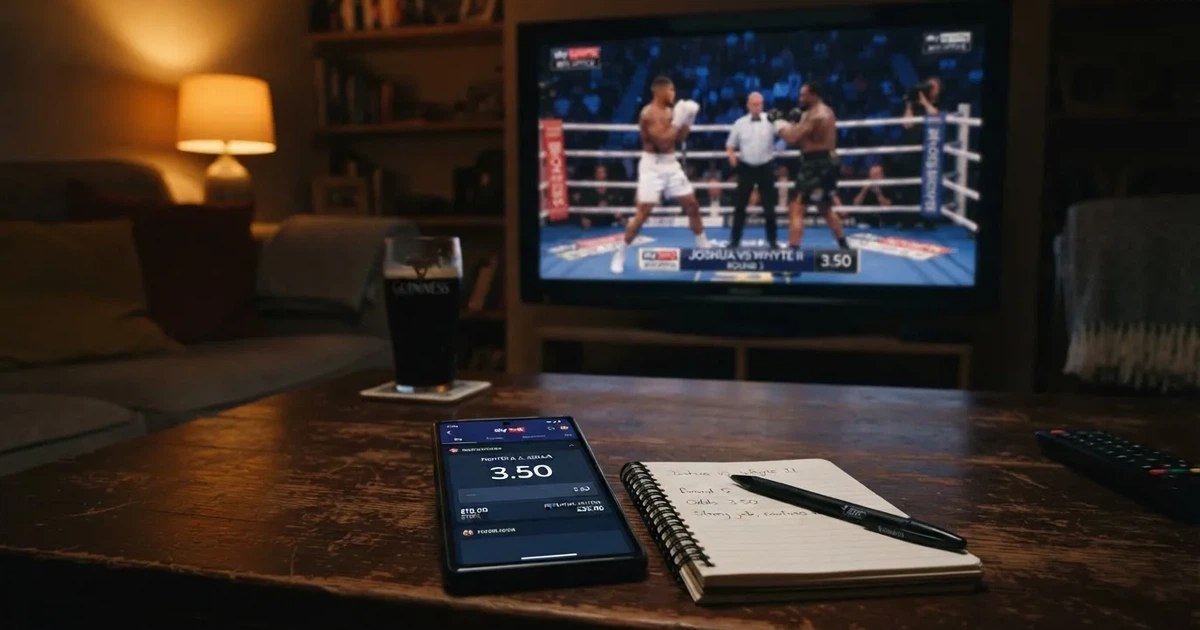
Mobile Betting on Boxing: What a Boxing App Has to Get Right
A boxing match is a slow build by the standards of live sport — two minute rounds, a minute’s rest, the possibility that the contest is over in the first exchange or that it goes the full distance. Athletes only know which one it will be at the closing bell. From a betting perspective that means the price is rarely going to be set and forgotten: it moves between rounds, it moves on a cut, it moves when a trainer pulls a fighter out, and the punter needs to be looking at the same screen the trader is looking at. A boxing betting app is the only practical way to do that.
Three things separate a usable boxing app from a generic sportsbook. The first is price refresh latency — the gap between the trader’s screen and the punter’s, because a bet placed into a stale quote will be rejected or, worse, accepted and then voided. The second is in-play depth — how many markets inside a single fight the app keeps open once the bell has rung, not just the match winner but method of victory, round grouping, total rounds and whether the fight goes the distance. The third is stake control — the ability to lock in a partial payout mid-fight through cash out, set a hard ceiling on what one acca can lose, or pull a stake back before the final round if the picture has changed.

Operators reviewed below approach those three problems differently. Betfred’s app covers 21 sports and over 2,000 casino-style games in a single bundle, useful if the punter wants everything in one place but heavy if the only thing that matters is boxing. DragonBet’s app is published by DragonBet Ltd and concentrates on Welsh football and rugby alongside racing, American football, in-play betting and bet builder markets — narrower but tighter to the markets it does cover. Hollywoodbets’ UK app focuses on accumulator mechanics and refunds the stake as a free bet on a first qualifying losing acca, which is a different bettor problem than the one Bet600 solves with Best Odds Guaranteed on horse racing (a racing-only concession, no direct boxing overlap, but it tells a punter how that operator thinks about price certainty in fast-moving markets).
The browser-based experience is not dead. BoyleSports, Unibet, Coral and the rest of the major UK-licensed brands all run a full responsive site that mirrors the app’s core markets, and that matters when a punter is on a desktop at work or on a phone without the storage to spare for another download. The risk of the browser path is the one already named: a quote that does not refresh fast enough when the round ends, and a bet that misses by a fraction of a second.
Live Boxing Betting and Cash Out: In-Play Markets Round by Round
In-play boxing is unusual among in-play sports because the action is so clearly punctuated. Three minutes on, one minute off, three minutes on. That structure gives the trader a clean break at which to reprice, and gives the punter a clean break at which to place or take back a bet. The question is what each bookmaker does between the breaks — how many markets it keeps live, how aggressively it suspends pricing after a heavy shot, and whether it offers a cash-out button before the next round begins.
Matchbook is the betting exchange in this ranking and operates on different mechanics: punters back and lay against each other, with the platform taking a commission on net winnings, and the bookmaker’s “margin” is replaced by whatever liquidity the exchange has managed to attract on a given fight. Bet Builder, multiples and in-play betting are all part of the Matchbook app, and live streaming of horse racing and greyhounds is included — boxing streams on exchanges come and go with the underlying rights. For a punter who wants to lay a fighter rather than back one — taking the view that a champion is being overrated by the market — an exchange is the only place that trade is real.
Cash out is the other half of the in-play question. Midnite’s site shows in-play events, an acca builder, popular accas and price boosts with maximum-stake limits. Hollywoodbets offers a stake-back free bet on a first qualifying losing accumulator (3+ legs, odds 4/1 or greater, settled within 7 days). William Hill’s Football Acca Boost covers accas of 2 or more legs with each leg at 1/5 or bigger, a boost starting at 3% on a double and rising to 200% on 20+ legs with a £10,000 maximum per online bet, running until 30 May 2027 — a football product, but the architecture (partial payout, boost curve, ceiling on the boost value) is the kind of mechanic a boxing punter should look for if the operator offers it across sports.
The honest reading of cash out in boxing: it is useful when a punter has locked in profit and the picture is shifting, and it is a quiet tax when the punter uses it as a substitute for thinking. The cash-out number is the bookmaker’s number, not the market’s, and on a fighter who is visibly tiring in round eight the cash-out will already reflect the next-round knockout probability. A punter who cashes out at that point has not beaten the market; the market has repriced through them.
Boxing Predictions and Strategy: What Analysis Can and Cannot Do
Boxing has more data than it used to and less of it matters than punters hope. Each fighter’s record, knockout ratio, age, reach, recent opposition, style match-up and weight-class history is freely available. None of it tells a punter which hand will land first in round three on a Saturday night in Riyadh. That gap — between what can be measured and what has to happen — is where most “expert boxing betting tips” content lives, and it is the gap that does not close with more research.
What a punter can do with the available material is narrow the field before the price opens. A few specific signals. Reach differentials of more than four inches between opponents reshape how a fight is likely to play out and therefore how the method-of-victory market should be priced. Age curves in boxing are steep: a fighter in their mid-thirties declining into a younger champion is the most common upset picture in the sport, and the market systematically underprices it because the older fighter’s name still carries the line. Knockout ratio tells a punter how a win is likely to come, which feeds directly into the round-grouping market and the method-of-victory market — a fight between two heavy hands is a different proposition from a fight between two decision merchants, even at the same moneyline. Lay-off length matters: a fighter returning after twelve months or more is a different beast from one fighting on a six-month cycle, and the price rarely reflects the gap until the first evidence is in the ring.
The discipline side is where bankroll management lives, and it is duller than the analysis side but more important. A punter who sizes every boxing bet at one unit, who caps any single acca at a fixed percentage of the bank, and who walks away after a fixed number of bets per card regardless of result will outlast a sharper punter who varies the stake on instinct. The discipline is not the analysis; it is what lets the analysis compound.
None of this is a tip. No model that produces a winner exists, and any service that sells one is selling the appearance of edge rather than the edge itself. What a punter can buy with analysis is a slightly better read on the price — whether the bookmaker has mispriced the method of victory, whether the round grouping is wrong, whether the over/under on total rounds is off given the styles. A small edge, applied often, is the only honest description of what boxing betting strategy produces.
Boxing Bet Types and Odds: Reading What the Price Actually Says
A boxing betting odds line is not one number; it is a small set of markets priced against each other, and the punter who reads only the headline moneyline is reading one corner of a longer document. The headline is the match winner — fighter A, fighter B, and (for some fights) the draw. Underneath sit method of victory — knockout, technical knockout, decision, disqualification — broken out by fighter. Below that, round grouping — which round or band of rounds the fight ends in. Below that, total rounds — over or under a posted line (8.5 rounds, 9.5 rounds, 10.5 rounds depending on the scheduled distance). Below that, fight to go the distance — a yes/no market that pays out if the judges are needed. Each market has its own margin, and the margins are not the same.
Professional boxing bouts usually run 10 to 12 rounds, with four-round fights common for newer fighters. Each round lasts three minutes, with a one-minute rest between rounds. A boxing bout can be won by knockout, technical knockout (stoppage by the referee, doctor or corner), a decision on the judges’ scorecards, or disqualification for fouls. A boxing draw occurs when the judges give both fighters equal scores. The WBA, WBC, IBF and WBO sanction world championships in professional boxing — the four-belt era is what produces the “undisputed” conversations that drive casual interest, and the sanctioning-body fees are part of why big fights get made in particular jurisdictions.
Fractional odds are the British form and the form most UK punters read first. 5/1 means a £1 stake returns £5 profit plus the £1 stake back. Evens (1/1) means a £1 stake returns £1 profit plus the £1 stake back. Odds-on (anything shorter than evens, like 4/6 or 1/2) means the stake is larger than the profit. Decimal odds are the same information in different clothes: 6.00 is the British 5/1, 3.75 is the British 11/4, 2.00 is evens. The conversion a punter can do in their head is fractional a/b → decimal a ÷ b + 1. A punter who shops odds in both forms on the same fight will sometimes find the decimal price at one bookmaker is fractionally better than the fractional at another even when the headline looks identical.
The accumulator is the British punter’s other main instrument: a single bet that links two or more selections, all of which must win for the acca to pay out, with the odds of each leg multiplied together. BoyleSports and Hollywoodbets both build welcome offers around acca mechanics. Hollywoodbets’ first-bet insurance pays the stake back as a free bet (up to £30) on a first qualifying losing acca with 3+ legs at odds of 4/1 or greater, settled within 7 days, one free bet per customer. A punter who reads the small print sees the trade: insurance on the first acca only, a ceiling on the free-bet value, a minimum-odds floor that excludes short-priced favourites. The architecture is the marketing, and the marketing is not the value.
The bet builder — same-game multi in some shops — is the newer instrument that lets a punter combine markets from one event into a single bet. Betfred and Midnite both run acca builders in their apps. The honest framing: a bet builder is convenient and lets a punter express a more specific view (fighter A to win in rounds seven to nine, for example), but the margin inside a bet builder is built up market by market and tends to be higher than the margin on any single one of its legs. The punter pays for the specificity.
Sports and Tournaments: What Boxing Actually Looks Like as a Betting Product
Boxing sits awkwardly in a sportsbook’s catalogue. Unlike football or horse racing, there is no Saturday-after-Saturday fixture list — a major fight happens every few weeks, sometimes every few months, and the rest of the calendar is filled with smaller cards that draw smaller prices and thinner liquidity. The punter’s experience of boxing as a betting product is therefore lumpy: a week of deep markets on a Tyson–Paul undercard, followed by a fortnight of two-fight showcards where the undercard is priced but barely traded.
The four-belt era and the rise of Saudi-funded promotions have stretched the calendar. A world-title fight now happens most weeks somewhere on the schedule, and the WBA, WBC, IBF and WBO each sanction their own champions. Olympic boxing is a separate market: the Paris cycle produced its own betting interest, and the LA cycle will, but the rules (headgear, scoring, round count) are different and the professional form does not translate cleanly. A punter who treats Olympic boxing as a continuation of the professional market is a punter who will be surprised by the scoring and the method-of-victory distribution.
Tournament betting in the traditional sense does not really exist in boxing. The closest analogues are: the World Boxing Super Series (a tournament format that ran for a few cycles before being suspended), the Olympic tournaments at each Games, and the various national amateur championships. Most boxing betting is event betting: this fight, this card, this undercard. A punter who wants tournament-shaped betting is in the wrong sport.
What a punter can do, and what the better UK bookmakers do support, is methodical event-by-event research: each major card broken down fight by fight, with notes carried forward, and the price compared across operators before each fight. Betfred’s app, with its 21-sport catalogue, lets a punter keep boxing research in the same place as everything else. Matchbook’s exchange model, with back and lay available on the same fight, lets a punter take the other side of a price they disagree with. BoyleSports and Hollywoodbets both publish cards early enough for a punter to do the cross-market work.
The pitfall is the temptation to bet every undercard fight because the card is on. A punter who limits themselves to one or two bets per card — the fights where the analysis is strongest and the price looks most off — will end the year with fewer bets and a better record than a punter who fires at every contest. That is the only strategy in boxing betting the analysis supports.
Boxing Betting Sites: A 2026 Comparison of UK-Licensed Operators
The ten operators ranked below are all holders of a Gambling Commission remote licence for general betting on real events, verified against the Commission’s public register. Each is presented on what sets it apart in this comparison — a bare name is the same on every site, so the angle has to come from what the operator actually does differently. Two operators can run under one licensee (Ladbrokes and Coral under LC International, Paddy Power and Betfair under Flutter); the licence holder is the unit of regulation, not the brand, and the table reflects that.
| Operator | Licence holder | Commission account | What the operator’s own terms state on boxing-relevant terms |
|---|---|---|---|
| BoyleSports | Boylesports Enterprise | 39469 | UK sports welcome offer: £20 in free bets for a £10 qualifying bet; €30 in free bets for Irish players on the same mechanic |
| Hollywoodbets | Hollywoodbets International UK Limited | 53028 | First-bet insurance: stake returned as a free bet (up to £30) on first losing acca (3+ legs, 4/1+, settled within 7 days); one free bet per customer |
| Bet600 | Tyche Tech Limited | 44731 | Best Odds Guaranteed on horse racing: starting price paid if bigger than the early or show price |
| Tote | TDCO Limited | 54779 | Pool-based operator under a separate licence category; horse and greyhound pool products are the core |
| Unibet | Platinum Gaming Limited | 45322 | Operated since 1999; £40 in free bets for a £20 qualifying bet at minimum odds of 2.0, free bets expire within 7 days, debit card or instant bank transfer only |
| Coral | LC International Limited | 54743 | £40 in free bets for a £20 qualifying bet at minimum odds of 2.0, free bets expire 7 days after issue, opt-in required for new GB customers |
| DragonBet | DragonBet Ltd | 64908 | App published by DragonBet Ltd; covers Welsh football and rugby, racing, American football, in-play betting and bet builder markets |
| DAZN Bet | DZBT Limited | 48756 | Deposits from £5 by debit card, Apple Pay, Paysafecard, Trustly and Skrill; from £20 by PayPal; no processing fees |
| Matchbook | Triplebet Limited | 39504 | Betting exchange: customers back and lay against each other; Bet Builder, multiples, in-play and live racing streaming included |
| Betfred | Petfre (Gibraltar) Limited | 39544 | App published by Done Brothers (Cash Betting) Ltd; covers 21 sports and over 2,000 casino-style games |
A few observations the table cannot carry. The licence holder is the regulator’s customer, not the brand. A punter who has a dispute with Coral escalates through LC International Limited, the entity named on the Commission’s register; the brand is a trading name. This matters when the punter is reading a marketing email from a brand and trying to work out who they are actually dealing with. Two operators in this ranking are exchanges, not bookmakers. Matchbook is the only exchange in the table; the rest run traditional fixed-odds books (BoyleSports, Hollywoodbets, Bet600, Tote, Unibet, Coral, DragonBet, DAZN Bet, Betfred). The exchange model means a punter can lay a fighter; the bookmaker model means the punter can only back. For a punter who wants both sides of a fight priced in one place, Matchbook is the answer. For a punter who wants the depth of an accumulator insurance or a welcome offer, the bookmakers are where those products live.
Best Odds Guaranteed on horse racing, as offered by Bet600, is not a boxing product. It tells a punter how that operator thinks about price certainty and how disciplined its trading desk is, but the horse-racing concession does not transfer across sports. A punter who likes Bet600’s racing offer and wants to bet boxing on the same platform will not find a parallel boxing BOG; they will find the standard boxing book with the standard boxing margin.
Tote’s licence category is different. TDCO Limited holds a remote general betting standard licence for real events, but Tote’s product set historically concentrates on pool betting on horse and greyhound racing, where stakes are pooled and dividends declared rather than odds fixed against a margin. A punter who treats Tote as a boxing bookmaker will find a thinner boxing card than at the major high-street brands.
Boxing Betting in the UK: The Core Picture
The core picture is simple and has not changed in years. Boxing is a legal betting market in Great Britain. There is no statutory list of permitted sports — a bookmaker licensed by the Gambling Commission can offer whatever real-event markets its licence category and its own trading team support, and boxing sits comfortably inside that envelope. A punter in Great Britain has a wide choice of licensed bookmakers, a narrower choice of licensed exchanges, and an unlicensed offshore market the Commission treats as unlawful to supply but does not criminalise the punter for using.
The choice a punter faces is not whether to bet on boxing but where. The ten operators ranked above are all licensed; many more unlicensed ones advertise in the British market through affiliate channels. The distinction is not theoretical: a licensed operator offers GAMSTOP coverage (a national self-exclusion scheme that blocks the punter from every GB-licensed site for a chosen period), a Commission complaints route, an approved dispute-resolution body, British consumer protection if funds are withheld, the 10x bonus wagering cap that came in on 19 January 2026, and the £150-rolling-30-days financial vulnerability check. An unlicensed operator offers none of those protections, and the punter’s only recourse on a stuck payout is the operator’s own customer service in whatever jurisdiction it is based in.
That is the lens through which every other section of this page reads. A welcome offer is a different animal at a licensed operator (10x wagering cap, opt-in required, identity verified before the first deposit) than at an unlicensed one. A cash-out button is a different animal when the operator behind it is regulated by the Commission than when it is not. A betting exchange is a different animal when it holds a remote betting intermediary licence (Matchbook does) than when it operates as a bookmaker in exchange clothing.
Boxing Betting Legality and Regulation in Great Britain
The Gambling Commission (UKGC) is the regulator, and the Gambling Act 2005 is the statute. The Commission is a non-departmental public body sponsored by the Department for Culture, Media and Sport. The Act covers Great Britain — England, Scotland and Wales. Northern Ireland is outside the Act and runs an older separate law; a GB-licensed operator is licensed for Great Britain, and a punter in Northern Ireland sits under a different regulatory regime.
Since the Gambling (Licensing and Advertising) Act 2014 an operator whose remote facilities are used in Great Britain needs a Commission licence wherever it is based. Sections 33 and 36 of the 2005 Act (as amended) set the test. A Curaçao, Maltese or Gibraltar licence is not a substitute for a Commission licence; it is a separate authorisation under a different regime. There is no state monopoly and no cap on the number of Commission licences issued.
The Commission’s public register is searchable by business name, trading name, domain or account number and is the whole test of whether a brand holds a licence. A punter who wants to check a brand — and the answer to “how is it checked?” sits in the FAQ below — searches the register and reads the entry. The licence categories on the register are: remote general betting standard (real events), the main sports-betting licence; remote general betting standard (virtual events), for virtual sports; remote general betting limited, a more constrained variant; remote pool betting, for pool products on racing; and remote betting intermediary, the licence a betting exchange holds. Each operator in the ranking above holds the first; Matchbook additionally holds the fifth.
Financial spread betting is regulated by the Financial Conduct Authority, not the Commission, and Spreadex is regulated by the FCA for spread betting and by the Gambling Commission for fixed-odds betting, with spread-betting losses able to exceed the deposit. A punter who crosses from fixed-odds boxing into a financial spread bet on a boxing index has switched regulator.
Minimum age is 18 across the board. Name, address and date of birth are verified before a customer can deposit or gamble, since 7 May 2019, and the verification covers free bets and bonuses — there is no anonymous path to a welcome offer at a licensed bookmaker. That is the trade the licensed market asks for, and the unlicensed market does not.
In-play betting is permitted at licensed operators and is governed by the operator’s licence conditions and customer-protection duties. A punter should not read any source claiming in-play is “unrestricted” as a legal conclusion; it is unrestricted in the sense that it is offered, and restricted in the sense that the operator’s trading controls and the Commission’s social responsibility code apply to it. Esports are treated like any other event. Virtual events are a separate licence category. Bets on politics, TV shows and novelty markets are offered by GB bookmakers; no statutory prohibition was found. Spread betting that is not a financial product sits inside General Betting Duty.
Responsible Gambling on Boxing: What the Framework Actually Provides
The framework the licensed market runs on is built around three layers: self-exclusion, financial checking, and help services. The layers are mandatory for the operator and visible to the punter, and a punter who knows they exist uses them differently than a punter who treats them as advertising.
GAMSTOP is the national multi-operator online self-exclusion scheme and a mandatory licence condition for every GB-licensed online operator since 31 March 2020. The punter registers once and is blocked from every participating site and app for six months, one year, five years, or five years with auto-renewal. After the minimum period the exclusion stays in place for a further seven years unless the punter asks GAMSTOP to remove it. Betting shops use a separate service; GAMSTOP itself covers online sites and apps.
The £150 vulnerability check sits in the Commission’s LCCP at 3.4.4 and has been in force since 30 August 2024 for licensed remote betting when a customer’s deposits minus withdrawals exceed £150 in a rolling 30 days (the threshold has applied since 28 February 2025). The check is a public-record check — bankruptcy, county court judgments, similar — and is not an income check or a credit reference check. The punter sees it as a soft interruption during a deposit flow. The financial risk assessments (the “affordability checks” of the press) are announced in a staged plan (a Commission article of 7 July 2026), with no start date; “announced, staged, no start date” is the honest framing.
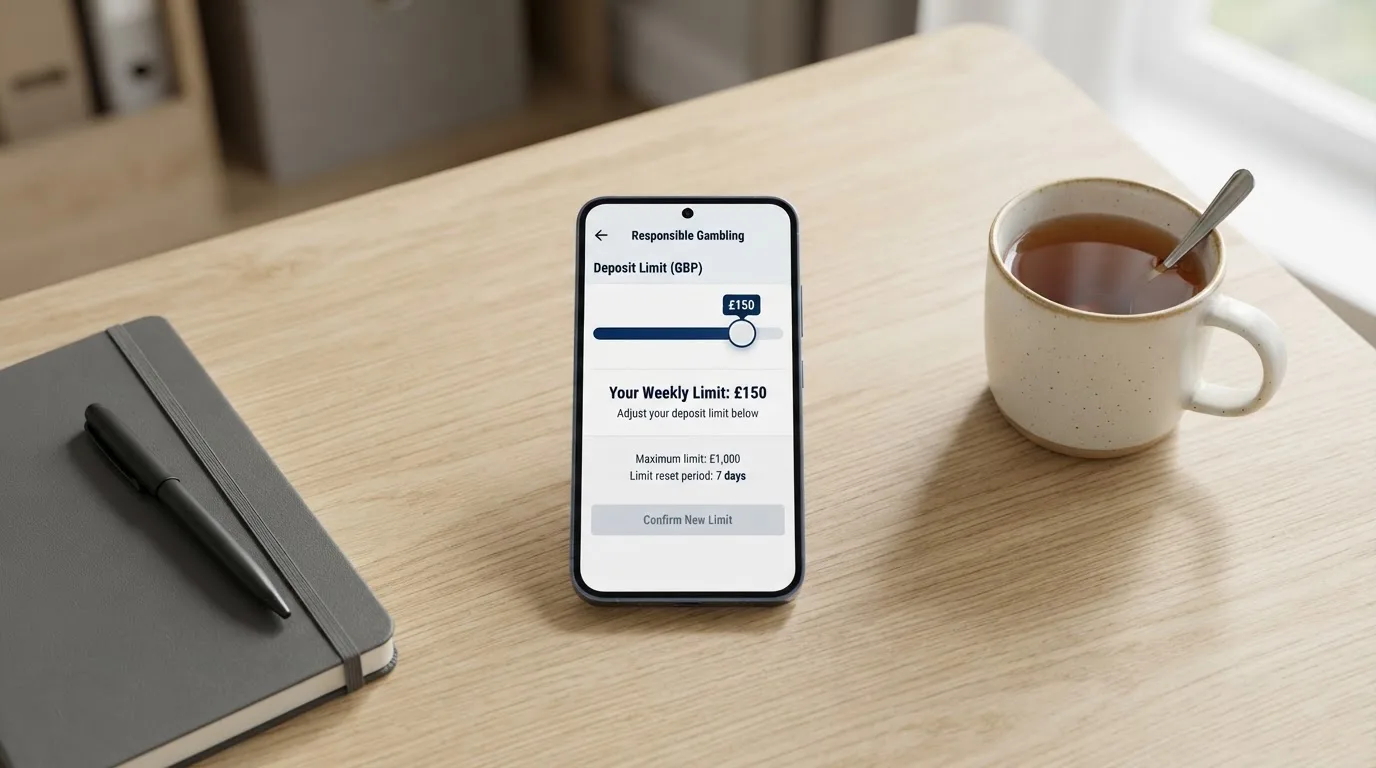
Deposit limits are an RTS 12 requirement: operators must offer a gross deposit limit on a fixed time frame. The first changes have applied since 31 October 2025; a second phase was postponed to 30 September 2026; whether it is live is not established. There is no state-set deposit or loss ceiling — limits are the punter’s choice, set in the operator’s safer-gambling tools.
Help sits outside the regulator: GamCare runs the National Gambling Helpline, GambleAware funds treatment and research, NHS gambling clinics operate in several regions, and Gamblers Anonymous runs peer-support meetings. A punter who is starting to chase losses, betting more than they planned, or hiding their betting from family is a punter who should call the Helpline before the next deposit, not after.
Kalooki Sportsbook is operated by Kalooki Sports Book Ltd (company number 12938274), licensed by the Gambling Commission under account number 57730, and is a GAMSTOP member. Fitzwilliam Sports offers instant deposits, fast withdrawals, timeouts and deposit limits, and links to GambleAware, GamStop and Gamblers Anonymous. The pattern across the licensed market is the same: the safer-gambling tools sit in the account, the third-party help links sit in the footer, and the punter who wants them finds them without leaving the site.
Crypto and Anonymity at Boxing Bookmakers
Crypto is the gap between the licensed and unlicensed markets. Bitcoin, Litecoin, Bitcoin Cash and the rest of the cryptocurrency set are payment methods at unlicensed offshore operators and at some licensed ones that have chosen to accept them as a payment rail without converting them into sterling on deposit. A licensed GB bookmaker does not generally market crypto boxing betting because the identity verification before the first deposit removes the anonymity that crypto punters are usually buying.
The verification regime is the friction. Since 7 May 2019 a licensed operator has to verify name, address and date of birth before a customer can deposit or gamble, and that verification covers free bets and bonuses. A punter who funded an account with bitcoin and walked away without verifying is a punter who cannot withdraw. The licensed market is not designed for pseudonymous play.
A punter who wants to bet on boxing with bitcoin is a punter who is choosing the unlicensed market by definition, because the GB-licensed operators in this ranking do not advertise crypto deposits. The trade is real: anonymity on the way in, no GAMSTOP coverage, no Commission complaints route, no approved dispute resolution, no British consumer redress if funds are withheld, no 10x bonus cap, no £150 vulnerability check. The licensed market offers the opposite trade: verification on the way in, full consumer protection on every other dimension.
The middle ground — a crypto-friendly licensed operator that verifies identity but accepts bitcoin as a payment rail — exists at the margins and is not in this ranking. A punter who finds one should still check the Commission’s register before depositing, because a licensed operator that accepts crypto is a licensed operator that still holds a GB licence and that still runs the safer-gambling framework.
A betting exchange is the other near-anonymous option, in the sense that Matchbook and similar exchanges do not require a punter to identify themselves to the other punters on the platform. The exchange still verifies the punter against the Commission’s requirements before the first deposit; the anonymity is between users, not against the operator.
Boxing Betting Offers and Free Bets: Reading the Welcome Page
The welcome offer is the most expensive sentence on the page, for the punter and for the bookmaker. The bookmaker’s cost is real money paid out as a marketing expense. The punter’s cost is the wagering requirement, the minimum odds floor, the deadline and the cap on free-bet winnings, none of which is visible in the headline.
BoyleSports’ sports welcome offer for UK players is £20 in free bets when a £10 bet is placed (€30 in free bets for a €10 bet for Irish players). Unibet’s sports welcome offer is “Get £40 in Free Bets when you bet £20”: a deposit and sports bet of £20 or more at minimum odds of 2.0 (1/1), with free bets expiring within 7 days of issue, for new GB customers using a debit card or instant bank transfer. Coral’s sports welcome offer is identical, requiring the same £20 qualifying stake at minimum odds of 2.0, with a £40 free-bet return and 7-day expiry for new GB customers who opt in. Hollywoodbets’ sports welcome offer refunds the stake as a free bet of up to £30 on a first qualifying losing acca (stake £10+, 3+ legs, odds 4/1 or greater, settled within 7 days), one free bet per customer.
The honest reading of each: BoyleSports’ £20-for-£10 is the simplest mechanic on the page — place a bet, get four-fifths of the stake back in free bets if it loses, with the wagering requirement and minimum odds stated in the small print. Unibet and Coral’s £40-for-£20 is a bigger headline but requires a £20 stake at minimum odds of 2.0, and the free bets expire within 7 days — a punter who places the qualifying bet and walks away for two weeks finds the free bets gone. Hollywoodbets’ acca insurance pays only on a losing acca, and only on the first qualifying acca, and only up to £30 — a punter who wins the first acca gets nothing, and a punter who loses with a stake above £30 gets only £30 back. The marketing reads “free”; the small print reads “conditional”.
The bonus wagering cap that came in on 19 January 2026 matters here. Wagering requirements on bonuses are capped at 10x: a £10 bonus at 50x needs £500 of bets; under the cap no more than £100 is required of the punter. The cap does not apply to free bets with no wagering condition (whether it does is not established in the current rules) and there is no cap on the money value of a bonus. Mixed-product promotions — an offer that requires gambling on two or more product types such as betting, casino, bingo and lottery — are banned. A boxing betting welcome offer that bundles a free bet with casino free spins is no longer lawful at a GB-licensed operator.
A free bet is not a refund. The stake is usually not paid back with a win: a £10 free bet at 5/1 returns £50 profit, not £60. The arithmetic of value is the calculation the rest of this section supports, and it lands on what a free bet is worth on average rather than what it wins on the day. The punter who treats a free bet as cash discovers the difference on the first withdrawal.
BoyleSports
BoyleSports is one of the longer-established Irish-origin bookmakers in the British market and sits under Boylesports Enterprise on the Commission’s register (account 39469). The sports welcome offer for UK players — £20 in free bets for a £10 qualifying bet — is straightforward and the qualifying threshold is the lowest in this ranking. A punter who is signing up specifically to convert a welcome offer into withdrawable cash and who wants the smallest possible stake at risk will find BoyleSports’ mechanic the easiest to clear, provided the qualifying terms (minimum odds, settlement window, payment-method exclusions) are read first. The same offer applies on the Irish site at €30 for €10.
The boxing coverage at BoyleSports follows the major-card rhythm the rest of the market follows: deep on a world-title fight, thinner on the undercard, and price-competitive on the headline market against the high-street brands. A punter who wants a long-established operator with a low welcome threshold and a familiar interface finds it here.
Verdict: Worth it for the punter whose primary goal is clearing a welcome offer with the smallest qualifying stake, and who does not need the depth of an exchange.
Hollywoodbets
Hollywoodbets is a South Africa-origin operator with a UK-licensed front end under Hollywoodbets International UK Limited (account 53028) and a sports product built around accumulator mechanics. The first-bet insurance is the headline — a stake returned as a free bet (up to £30) on a first qualifying losing acca with 3+ legs at odds of 4/1 or greater, settled within 7 days, one free bet per customer. A punter whose natural bet is a three-leg acca at around 5/1 will find this a natural fit; a punter who backs singles will not.
The architecture is the bettor problem Hollywoodbets has chosen to solve, and the choice tells a punter what to expect from the rest of the product. The deposit-and-bet flow is built around the acca; the safer-gambling tools sit in the standard place; the brand ships a GB app from the App Store with the offer named on the listing.
Verdict: Worth it for the acca-first punter who wants first-bet insurance and is happy with the 4/1 minimum and the £30 cap on the free-bet return.
Bet600
Bet600 operates under Tyche Tech Limited (account 44731) and the brand’s distinctive concession is Best Odds Guaranteed on horse racing: if the starting price is bigger than the early or show price taken, the bet is paid at the SP. The concession is a racing product and does not transfer to boxing; what it does tell a punter is how disciplined the trading desk is and how seriously the operator takes the question of “did you get the price you should have got?”.
A punter who likes Bet600’s racing offer and wants to bet boxing on the same platform will find a standard boxing book with the standard boxing margin. The operator’s boxing card follows the major-fight rhythm; the price on the headline market is competitive without being the standout in the market.
Verdict: Worth it for the punter whose racing betting is the priority and who wants a single account for racing and boxing; not the right fit for the punter whose boxing betting is the priority.
Tote
Tote is a pool-betting operator under TDCO Limited (account 54779) and sits in a separate category on the Commission’s register from the fixed-odds bookmakers. Pool products on horse and greyhound racing are the historical core of the brand, and Tote’s offer on those pools pays a dividend rather than a fixed price. A punter who bets Tote is a punter who is betting into a pool, not against a margin.
The boxing product at Tote is thinner than at the high-street brands and follows the major-card rhythm. A punter who values pool betting on racing and is happy to use a separate account for boxing will find Tote the right fit for the racing side; for boxing specifically, a fixed-odds bookmaker offers more depth.
Verdict: Worth it for the punter whose primary interest is pool betting on racing; for boxing-only betting, the major fixed-odds brands offer more.
Unibet
Unibet has operated since 1999 and the UK site runs under Platinum Gaming Limited, Gibraltar (account 45322). The sports welcome offer is “Get £40 in Free Bets when you bet £20” — a £20 deposit and sports bet at minimum odds of 2.0 (1/1), with the £40 in free bets expiring within 7 days of issue, for new GB customers using a debit card or instant bank transfer. The qualifying threshold is twice BoyleSports’; the free-bet return is twice BoyleSports’. A punter who reads the small print sees the trade: a higher qualifying stake, a higher minimum-odds floor, a 7-day expiry on the free bets, and a payment-method restriction that excludes some e-wallets.
Unibet’s boxing card follows the major-fight rhythm with depth on the headline market and competitive prices against the high-street brands. The brand ships a serious international product into the UK market and the platform carries the weight of a long-established operator.
Verdict: Worth it for the punter who wants a bigger welcome return than BoyleSports’ and is comfortable with the £20 qualifying stake at minimum odds of 2.0; the 7-day free-bet expiry is the constraint to plan around.
Coral
Coral is one of the high-street heritage brands and operates under LC International Limited (account 54743), the same licensee as Ladbrokes. The sports welcome offer is the same headline as Unibet’s (“Get £40 in Free Bets when you bet £20”) with the same £20 qualifying stake at minimum odds of 2.0, the same £40 free-bet return, a 7-day settlement window and a 7-day free-bet expiry, and an opt-in step for new GB customers. A punter comparing Coral to Unibet on welcome terms is comparing two near-identical mechanics; the difference is the platform, the in-play depth, and the boxing card.
Coral’s boxing coverage is one of the deeper ones in the ranking on the headline market, with the kind of method-of-victory and round-grouping depth that reflects a long-established bookmaker’s trading desk. The punter who wants the heritage brand’s depth on a world-title card and is happy to opt in to the welcome offer finds it here.
Verdict: Worth it for the punter who wants the heritage high-street brand’s boxing depth and is comfortable with the £20 qualifying stake and the opt-in step; same welcome trade as Unibet, different platform underneath.
DragonBet
DragonBet operates under DragonBet Ltd (account 64908) and the brand’s app is published by DragonBet Ltd, with a market catalogue that concentrates on Welsh football and rugby alongside racing, American football, in-play betting and bet builder markets. A punter who follows Welsh football or Welsh rugby has a reason to be on DragonBet that the high-street brands do not replicate; a punter whose betting is purely boxing will find the boxing card thinner than the majors.
The narrower focus is the bettor problem DragonBet has chosen to solve, and the choice is honest about it. A punter who wants a tighter, more locally-flavoured product and does not need the broadest boxing card finds DragonBet a different proposition from the majors; a punter whose boxing betting is the priority finds more depth elsewhere.
Verdict: Worth it for the punter whose betting portfolio includes Welsh football and rugby and who wants a tighter product for those markets; for boxing-only, the major brands offer more depth.
DAZN Bet
DAZN Bet operates under DZBT Limited (account 48756) and is the newest brand in this ranking, with a payment-method catalogue that sets it apart. Deposits start at £5 by debit card, Apple Pay, Paysafecard, Trustly and Skrill, and at £20 by PayPal, with no processing fees on any method. The £5 minimum on five of the six methods is the lowest in the ranking and matters for the small-stake punter and the punter who wants to test the platform before committing.
The boxing coverage follows the major-fight rhythm and is built around the live-event schedule the DAZN streaming brand already supports. A punter who is already a DAZN streaming customer has a reason to be on DAZN Bet that no other operator in this ranking offers; a punter whose primary product is boxing betting has no specific reason to choose DAZN Bet over the high-street brands.
Verdict: Worth it for the DAZN streaming customer who wants a single ecosystem and the low £5 minimum deposit on most payment methods; for boxing-only, the major brands offer comparable boxing depth.
Matchbook
Matchbook is the only betting exchange in this ranking and operates under Triplebet Limited (account 39504) on a remote betting intermediary licence. Customers back and lay against each other; the platform takes a commission on net winnings; the “margin” is replaced by whatever liquidity the exchange has managed to attract on a given fight. Bet Builder, multiples, in-play and live streaming of horse racing and greyhounds are all included. Boxing streams on exchanges come and go with the underlying rights.
A punter who wants to lay a fighter — taking the view that a champion is being overrated by the market — has only one option in this ranking. The exchange model is a different product from a bookmaker’s model and requires a different discipline: liquidity matters more than headline odds, commission on net winnings is the cost rather than margin on every bet, and the punter who uses the platform as a bookmaker by only backing will not see the full picture.
Verdict: Worth it for the punter who wants to lay as well as back, and who is comfortable reading exchange liquidity rather than just headline odds; not a substitute for a bookmaker if the punter only wants to back.
Betfred
Betfred is a long-established high-street brand and operates under Petfre (Gibraltar) Limited (account 39544), with the Betfred Sports, Casino & Games app published by Done Brothers (Cash Betting) Ltd covering 21 sports plus over 2,000 casino-style games. The breadth is the bettor problem Betfred has chosen to solve, and a punter who wants everything in one account finds it here; a punter who only bets boxing finds the boxing product on a broader platform with no specific edge.
The boxing card follows the major-fight rhythm with the kind of depth the heritage high-street brands carry on headline markets. The combination of sportsbook and casino under one account is the structural offer, and the punter who uses both halves of it gets more value than the punter who uses one.
Verdict: Worth it for the punter who wants the heritage high-street brand’s sportsbook plus the casino product in one account; for boxing-only, the welcome mechanics at the other operators are sharper.
Reading the Margin in a Boxing Market
The bookmaker’s margin is the cut the book takes from every unit bet on a market, and it sits inside every price a punter sees. The honest way to read it is to take a single market and compute what the prices imply about the true probabilities of each outcome — that is, the payout share, with the margin being the difference between the payout share and 100%.
Take a two-way market at decimal odds 1.90 and 1.90 — an illustrative example, not a quoted price. The implied probability of each outcome is 1 ÷ 1.90, which is roughly 52.6%. The two probabilities add to roughly 105.3%, which means the payout share (the share of every unit bet that would be returned across all outcomes in the long run, if the probabilities were exactly as priced) is roughly 95%, and the margin the book takes is roughly 5%. As a band, the margin on a typical two-way boxing market at a major UK bookmaker sits in the 4% to 7% range on the headline moneyline, with method-of-victory and round-grouping markets wider because the books are harder to make and the liquidity is thinner.
The point of the calculation is not the number; the point is what the number tells the punter. A 5% margin means the punter loses 5p of every £1 bet, on average, before any skill is applied. A 7% margin means 7p. The punter who shops the same fight at three operators and picks the tightest moneyline has done the only thing the arithmetic directly rewards, and even then the reward is small — fractions of a percentage point on a single bet, compounded over a year of betting. The punter who picks the loosest moneyline because the welcome offer attached to it looks generous has paid for the generosity out of the margin on every bet they place while clearing it.
A boxing market at 1.90/1.90 is also the case where the “even money” intuition breaks. Two outcomes priced at evens (2.00/2.00) imply a 100% payout share — a fair book, which no bookmaker offers. Two outcomes priced at 1.90/1.90 imply roughly 95% — a 5% margin. Two outcomes priced at 1.80/1.80 imply roughly 90% — a 10% margin, which is the wagering cap that came in on 19 January 2026 and a useful upper bound for a punter benchmarking what an aggressive book looks like. A punter who sees 1.80/1.80 on a two-way market is a punter who should be looking at another operator.
The Bonus Question: What a Free Bet Is Actually Worth
A free bet is not a refund, and the value of a free bet is not the headline number. The arithmetic runs as follows. A £10 free bet at decimal odds of 4.00 (fractional 3/1) returns £40 in profit (4.00 × £10, minus the £10 stake which is not paid back with a free bet), and the value of the free bet to the punter, averaged across a market with a typical 95% payout share, is roughly £9.50 — not £40 and not £10, but somewhere in between, weighted by how likely the bet is to win. The honest framing: a free bet is worth a fraction of its headline value, the fraction set by the market’s payout share, and a punter who values a free bet at its headline is overpaying for the marketing.
A punter who wants to convert free bets into withdrawable cash picks high-priced singles (where the implied probability is low and the upside per free bet is high), reads the small print on each offer (minimum odds, expiry, payment-method restrictions), and accepts that the welcome-offer economy is small money at the end of a year’s betting. A punter who deposits more to chase a bigger headline bonus pays for it in two ways: the deposit is at risk on the clearing bets, and the bonus’s wagering requirement (capped at 10x since 19 January 2026) is real turnover the punter has to run through.
Frequently Asked Questions
How do you bet on boxing?
Pick a licensed UK bookmaker from the public register, open an account, verify your identity (name, address, date of birth — required before the first deposit), deposit by debit card or bank transfer, and pick a market. The headline market is the match winner; underneath sit method of victory, round grouping, total rounds and fight to go the distance. Stake within your deposit limit and the bet will appear in your bet history.
How does boxing betting work in the UK?
The Gambling Commission regulates the market under the Gambling Act 2005. A bookmaker serving customers in Great Britain needs a Commission licence wherever it is based. Bets are placed at fixed odds (fractional in British form, decimal on most apps), settle when the fight result is confirmed, and pay out at the price taken. No tax is due on winnings; the operator pays General Betting Duty.
How do you bet on boxing online?
The mechanics are the same as betting on any sport online: pick an operator, register, verify, deposit, choose a market, place a bet. The boxing-specific decision is which markets to use — the moneyline is the most liquid, method of victory is the most informative, round grouping rewards a punter who has done the style-match-up work. Live in-play betting requires a fast-refreshing app or browser.
How can it be checked that a bookmaker holds a Gambling Commission licence?
The Commission’s public register is searchable by business name, trading name, domain or account number. Each operator in this ranking is listed against the licence holder and account number shown in the comparison table. A brand whose name does not appear on the register after a search is a brand whose licence should not be assumed.
How is the return on a bet worked out from the stake and the odds?
In decimal odds the return is the stake multiplied by the odds. A £10 stake at decimal odds of 4.00 returns £40; the profit (return minus stake) is £30. For a combination bet the odds of each leg multiply into one price, and the stake is multiplied by the combined odds to give the return. Fractional odds a/b are converted to decimal by a ÷ b + 1; the British 5/1 is the decimal 6.00.
What is the bookmaker’s margin and how can it be seen in the odds?
The margin is the cut the book takes from every unit bet on a market. On a two-way market at decimal odds 1.90 and 1.90, the implied probabilities add to roughly 105%, the payout share is roughly 95%, and the margin is roughly 5%. The punter who shops the same market across operators and picks the tightest prices is picking the lowest margins, which compounds over a year of betting.
Combat & motorsport – Newbookiesuk.com
Content created by the «Newbookiesuk.com» team
