
Where to Place an Accumulator in the UK
 Available in US
Last verified against the Gambling Commission’s public register on October 30, 2026 — checked against each operator’s own published terms.
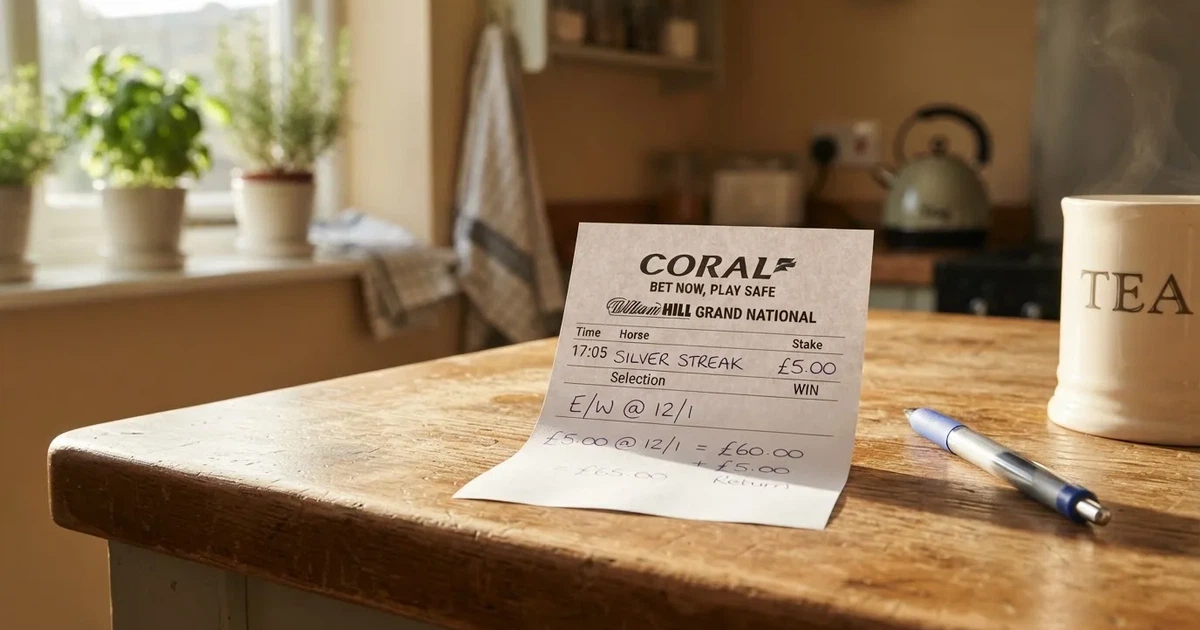
An accumulator is the bet type that looks small on the slip and large on the payout screen, and it is also the bet type most aggressively marketed by British bookmakers. That marketing is worth something and worth nothing at the same time: the headline price is real money, and so is the margin tucked inside every leg of the bet. The page below ranks ten UK-licensed bookmakers that take acca bets, explains what an accumulator actually is, walks through what a free-bet acca costs the punter, and names the rules the Gambling Commission enforces on every brand below — because the licence is the same shape of consumer protection at all of them, and the difference between the brands is what they choose to do on top of it.
Responsible Gambling and the Frame Around an Acca
Before any of the mechanics below: the bets on this page involve real money, real loss and the chance of a streak that turns a small stake into a large payout — and, more often, the reverse. Every brand in the ranking is enrolled in GAMSTOP, the national multi-operator self-exclusion scheme, which means an account at any of them can be set to block new deposits and new bets at any licensed operator in Great Britain for six months, one year, five years, or five years with automatic renewal. The exclusion period, once it ends, stays in place for a further seven years unless the punter asks GAMSTOP to remove it. That is the most useful safety net on this page; if betting stops being a choice and starts being a need, GAMSTOP is the lever.

The Gambling Commission also applies a financial vulnerability check at all licensed remote operators: once a customer’s deposits minus withdrawals exceed £150 in a rolling 30 days, the operator runs a public-record check — bankruptcy registers, county court judgments — not a credit reference check and not an income check. It is the lightest touch the Commission has put in place. The harder form of check, the financial risk assessment that the press calls an “affordability check”, is announced and staged, with no start date.
The promotion rules the Commission enforced on 19 January 2026 are the bit that matters most for the bonus chapters below. Wagering requirements on bonuses are capped at 10x: a £10 bonus at 50x used to need £500 of qualifying bets; under the cap, no bonus needs more than £100 of qualifying bets. Mixed-product promotions — the ones that ask a punter to bet on football to claim free spins, or to play bingo to unlock a sports free bet — are banned outright. The cap covers bonuses. What it does not cover, on the record so far, is a free bet with no wagering condition at all: those still sit outside the cap, and the terms below say so where it matters.
Help lines exist for the cases where GAMSTOP is not enough. GamCare runs the National Gambling Helpline. GambleAware publishes self-assessment tools and signposts treatment. The NHS runs specialist gambling clinics in several regions, and Gamblers Anonymous runs peer-support meetings. None of these are bookmakers, none of them earn commission, and none of them are on the ranking below.
What an Accumulator Is, and What It Costs to Build One
An accumulator is a single bet that links two or more selections. The bet wins only if every one of those selections wins; one losing leg loses the whole stake. A selection that ties — a “push” in the trade — is removed and the payout odds are recalculated from the legs that remain. Two selections make a double; three make a treble; four or more is the accumulator proper. “Acca” is the British shorthand, “parlay” is the American one, and “multi” appears on slips at some brands.

The price printed on an acca is the product of the prices of the legs. That is the bit that does the magic on the payout screen and the bit the bookmaker’s margin lives inside. Each leg carries its own overround — a margin built into each outcome’s odds so that, across the whole market for that event, the implied probabilities add up to more than 100%. Stack three or four of those into the same slip and the margins stack with them. A four-fold acca at fair odds of 4.00 on each leg returns 256.00; the same bet at the bookmaker’s price, with margin built into every leg, returns substantially less. The arithmetic is below in the payout chapter; the conclusion is up here: the larger the acca, the larger the headline price, and the larger the house edge carried inside.
A few named shapes sit alongside the straight accumulator. A Trixie is three selections, four bets: three doubles and a treble. A Yankee is four selections, eleven bets: six doubles, four trebles and a four-fold accumulator. A Heinz is six selections, fifty-seven bets; a Super Heinz is seven selections, one hundred and twenty. The Lucky 15 is the same fifteen bets as four trebles and a four-fold acca, but with four singles added in. Each of these covers more combinations of the same selections at a unit stake per line; the total stake is the unit stake multiplied by the number of lines, and a Lucky 15 at £1 a line costs £15 to place.
The Bet Builder, sometimes called a same-game multi, is a different shape: it combines several markets from a single event — the result, the total goals, the first scorer, a handicap — into one price. It is not an accumulator in the technical sense, because the legs come from one match rather than several. Some brands count it as an acca for promotion purposes; others exclude it. Read the small print before assuming a Bet Builder qualifies for an acca free bet.
The Price of an Acca: What a £10 Stake Returns
The arithmetic for an accumulator is the product of the legs’ decimal odds multiplied by the stake, with the stake added back. A treble at decimal odds of 1.50, 2.00 and 2.50 on a £10 stake returns £10 × 1.50 × 2.00 × 2.50, which is £75. The net profit, separate from the stake returned, is £65. The exact numbers depend on the legs: a 1.50 leg added to a 1.50 leg added to a 1.50 leg, all at £10, returns £10 × 3.375, which is £33.75; a 2.50 leg instead of the 1.50 multiplies the same stake by 6.25, returning £62.50.
For a full-cover bet, the stake is per line, not per selection. A Trixie at £2 a line costs £8 to place and returns the sum of the winning lines at their respective combined odds. A Heinz at £2 a line costs £114; a Super Heinz at £2 a line costs £240; a Lucky 15 at £1 a line costs £15. The unit stake is the multiplier; the number of lines is the divisor when reading the total stake back out of a return.
The bookmaker’s margin is the difference between the price the punter gets and the fair price the market would carry if there were no overround. On a coin-toss market at true 2.00 on each side, a margin of 5% would price each side at around 1.91. The accumulator takes that margin with it leg by leg: a four-fold at 5% margin per leg compounds into roughly 18.5% margin on the accumulator itself, before any one selection has been picked. The payout figures above are stated without margin; the prices the punter sees at any of the brands below are with margin. Read them as a band: at three well-priced legs a £10 acca returns somewhere between £60 and £100, depending on the odds and the margin in each leg; the figure is more a guide than a forecast.
Acca Free Bets, Acca Boosts and What the Headline Omits
The promotion most acca punters meet first is an “acca free bet” or “acca boost” — the brand credits the punter’s account with a free bet token if their acca wins, or boosts the odds on a winning acca by a stated percentage. The headline on the offer is the headline on the offer; the value is in the terms behind it.
A free bet whose stake is not returned with a win pays the winnings only. A £10 free bet at 10.00 returns £100 in winnings, not £110. That is the standard shape of a free bet, and any acca free bet that does not say “stake returned” works the same way. The brand keeps the stake.
A minimum odds requirement filters out the short-priced legs that would otherwise let the punter turn the free bet into near-cash. A free bet that requires each leg at 1.50 or above is much harder to clear than one that allows any price. Acca-specific free bets, where the brand pays out a token on a winning four-fold or larger, typically require minimum odds on each leg and sometimes a minimum number of selections: a four-fold at minimum 1.50 per leg is the common baseline; a five-fold at 1.50 or 1.67 is the cautious version.
A wagering requirement, where it applies, is the multiplier the punter must turn the bonus over before withdrawing. The 10x cap introduced in January 2026 limits that multiplier to ten: a £10 bonus needs at most £100 of qualifying bets before the winnings are withdrawable. The cap covers bonuses. A free bet with no wagering condition, paid out as winnings only with the stake not returned, is a separate beast and sits outside the cap on the current record.
Acca insurance refunds the stake as a free bet if one leg lets down a multi-leg acca. The free bet carries its own terms — minimum odds on the bet it can be used on, an expiry of seven days, stake not returned with a win. The headline reads as “money back if one leg loses”; the small print reads as “another free bet, with the same conditions as the last one”.
The promotion rules are not the only constraint. Bet Builder markets are sometimes excluded from acca free bets, because the brand treats them as a different product. Enhanced odds (boosted odds on a named selection) are usually excluded too, because the price is already inflated and the brand will not stack an acca boost on top. The terms of each promotion are the only safe source on which markets qualify; assume nothing.
Where the Margin Sits, and How to Read It
The bookmaker’s margin is the share of every pound staked that the bookmaker keeps on average across a market. It is the answer to the question, “of every unit bet on this outcome, what fraction does the house keep?” A market priced at 1.91 / 1.91 on a coin-toss has a margin of about 4.7%; the same market priced at 1.85 / 1.85 has a margin of about 8.1%. The margin is the overround, which is the sum of the implied probabilities (1/odds for each outcome) minus 1. For example, a 1X2 market priced at 2.10, 3.40 and 3.60 implies 47.6% + 29.4% + 27.8%, totalling 104.8%; this gives an overround of 4.8%, which is the margin.
For accumulators the margin compounds. A four-fold at 5% per leg is roughly 18.5% margin on the acca; a six-fold at 5% per leg is roughly 26.5%. The headline price looks generous; the implied probability the brand is paying against is less generous by a similar margin. The larger the acca, the more the brand’s edge compounds, and the rarer the payout. A treble is the realistic ceiling for a regular punter; a six-fold is a long shot with the bookmaker’s edge loaded six ways.
The skill in reading an acca is not finding winners — the page does not offer that, and no page can — but reading the price. A four-fold at 25.00 reads about right at fair odds of 2.50 per leg; the same four-fold at 18.00 has roughly a 10% margin compounded into it, which is below average for the market but not free.
Predictions, Tips and What the Page Is Not
A page on “best acca bets” is, on some sites, a list of selections the site predicts will win. This is not that page. No model can know which side will win a Premier League match in three days; no tipster can know which horse will fall at the third fence; no algorithm can know whether the underdog’s goalkeeper will keep a clean sheet. A reader who acts on a predicted acca loses real money on the page’s word, and the page does not have that word to give.
What the page does carry is the framework. It explains how an accumulator works, what the bookmaker’s margin looks like in the odds, what an acca free bet really costs and what each brand on the ranking chooses to do on top of the same Gambling Commission licence. The framework is the same framework on every page of this kind; the brand-specific detail is what the ten operators below carry.
A short reading list for the punter who wants to do better than the headline price: compare the price on the same selection across two or three brands before placing; avoid accumulators with more than four legs as a default, because the margin compounds; read the small print on any acca free bet before claiming it, because minimum odds and excluded markets are where the offer’s value lives or dies.
The Ranking: Ten UK-Licensed Bookmakers with Acca Bets
The ten brands below hold a Gambling Commission remote licence for general betting on real events, and they take accumulator bets. The licence is not a quality mark; it is a regulatory floor. The ranking is ordered as research sets it; the assessments are the page’s own. Where a brand is a poor fit for an acca punter, the page says so; where a brand earns its place on a specific feature, that is what the section closes on.
| Brand | Gambling Commission remote licence number and licence holder | What the operator’s own terms state on the subject |
|---|---|---|
| bet365 | 055148-R-331498-002 — Hillside (UK Sports) ENC | Bet Builder+ combines markets from one event pre-match and in-play; Super Boosts, Winnings Boosts on Bet Builders and selected singles, and daily Bet Boosts are listed on the app |
| Geoff Banks | 054095-R-330366-010 — GB Sports Advisors Limited | The app offers live in-play prices and ante-post prices on future events; the publisher is GB Sports Advisors Ltd |
| Kwiff | 044448-R-323408-017 — Eaton Gate Gaming Limited | The Supercharge feature can instantly boost the odds on a bet, for example from 2/1 to 20/1, on singles or multi bets on any sport |
| Fitzwilliam Sports | 048760-R-335434-009 — SBKI Limited | Prices are based on Oddschecker’s average price for each selection; Apple and Google mobile apps are provided |
| Dabble | 065677-R-340363-005 — Dabble Sports UK Ltd | Welcome offer is “Bet £10, Get £10 in Free Bets” on first deposit, with minimum odds, a 7-day free bet expiry and the stake not returned |
| Swifty Sports | 058957-R-334734-006 — Swifty Global (UK) Ltd | Best Odds Guaranteed, Cash Out on markets including horse racing and football, daily price boosts, live streaming, in-play betting; Bet Builder is listed as coming soon |
| Octobet | 062545-R-337248-006 — Octopus Game Limited | Best Odds Guaranteed on UK and Irish horse racing, up to £150 per customer per race |
| BetGoodwin | 002927-R-327985-008 — Goodwin Racing Limited | Sports welcome offer is “Bet £10 & Get £15 in Free Bets” in three tokens: a £5 sports bet, a £5 acca and a £5 Sub-Cover bet |
| Betfred | 039544-R-319290-010 — Petfre (Gibraltar) Limited | The app lists Bet Builder, Sub Switch, Racing Post data, Extra Places, live casino and bingo |
| BetUK | 039198-R-319450-029 — LeoVegas Gaming PLC | Free bets exclude virtual sports, esports and non-UK/IE horse racing; minimum odds apply |
bet365 — Bet Builder+ and the Largest Live In-Play Catalogue
bet365 sits at the top of the ranking because it sits at the top of almost every other British comparison too. Hillside (UK Sports) ENC, the licence holder, has held a Gambling Commission remote licence for general betting on real events since the earliest days of remote betting in Great Britain, and the brand’s app carries the deepest in-play list of any of the ten below. The acca product is the standard accumulator and the standard Bet Builder: Bet Builder+ lets the punter combine markets from one event into a single bet, and it works pre-match and in-play, which is rare. Super Boosts are price boosts on named selections; Winnings Boosts apply to Bet Builders and selected singles; daily Bet Boosts are an app-led promotion that changes daily.
The acca free bet, where it is offered, sits inside the standard wagering envelope. Minimum odds apply; the stake is not returned on a winning free bet. The acca insurance product, where it runs, refunds the stake as a free bet if one leg lets the punter down. The headline reads well; the terms are the standard British bookmaker’s terms.
What separates bet365 from the rest of the field is the live product, not the acca product. A punter whose accumulator is built from in-play markets — the next goal, the next set, the next wicket — finds more of those markets at bet365 than anywhere else in the ranking. The acca mechanic itself is the same acca mechanic everywhere.
Geoff Banks — Ante-Post and a Smaller In-Play List
Geoff Banks is a smaller name in the ranking, published by GB Sports Advisors Ltd and licensed under Commission account 54095. The app lists live in-play prices and ante-post prices on future events, which is the long-tailed bet type British punters have used for decades on horse racing and increasingly on football. Ante-post is the bet placed before the final declarations: the price is bigger, the field is wider, and the risk of a non-runner is higher (Rule 4 may apply if a runner is withdrawn).
Geoff Banks is a poor fit for a punter who wants the deepest in-play catalogue. The brand is a better fit for a punter who builds ante-post accas from horse racing or from outright football markets: the leagues, the top scorer, the relegation. The acca mechanic is standard; the depth in ante-post is the point of difference.
Kwiff — Supercharge and the Surprise Boost
Kwiff, operated by Eaton Gate Gaming Limited under Commission account 44448, runs the Supercharge feature: the brand can instantly boost the odds on a bet, for example from 2/1 to 20/1, and the boost applies to singles and multi bets on any sport. The boost is the headline, and the brand leans on it hard.
The acca product is the standard accumulator; the Supercharge is what sits on top of it. A punter who values a high headline price more than a consistent edge reads Kwiff the way Kwiff wants to be read. A punter who wants a steady 5% margin reads the same Supercharge as a one-off lottery ticket, and acts accordingly.
The brand carries a 17+ age rating on its app listing and is enrolled in GAMSTOP; the licence covers remote general betting on real events. The surprise boost is the design choice; the licence is the regulatory floor underneath it.
Fitzwilliam Sports — Average Prices and a Thin Acca Catalogue
Fitzwilliam Sports, licensed under Commission account 48760 through SBKI Limited, prices its selections on Oddschecker’s average price for each selection. The brand does not try to beat the market on price; it tries to track it. Apple and Google mobile apps are provided.
For an acca punter, average price is the safer reading than a brand that claims to be best odds guaranteed but cannot back it up. The acca product is standard; the price on each leg is the average of the rest of the market. Fitzwilliam Sports is a fit for a punter who wants a price close to the consensus without spending twenty minutes comparing three apps. It is a solid choice for a punter who prefers price stability over chasing the best in-play or Bet Builder catalogue.
Dabble — A Token-Based Welcome and Social Features
Dabble, licensed under Commission account 65677 through Dabble Sports UK Ltd, runs the welcome offer “Bet £10, Get £10 in Free Bets” on the first deposit for new customers. The free bet carries a seven-day expiry, minimum odds on the qualifying bet, and the stake is not returned with a winning free bet. The free bet can be used on an accumulator; the terms specify which markets qualify.
Dabble’s product includes a social layer that some acca punters use — a feed of bets placed by other customers, a copy-bet function — and the rest of the catalogue is standard. The acca product is standard; the welcome offer is the headline; the social features are the brand’s own twist.
For a punter who likes social features and a simple welcome offer, Dabble fits. The offer is transparent and the social feed adds a layer of engagement that the larger, more conventional brands often lack.
Swifty Sports — Best Odds Guaranteed with Bet Builder Coming Soon
Swifty Sports, licensed under Commission account 58957 through Swifty Global (UK) Ltd, lists Best Odds Guaranteed, Cash Out on markets including horse racing and football, daily price boosts, live streaming and in-play betting. Bet Builder is listed as coming soon on the app listing, which is a meaningful gap for a punter who builds same-game multis.
Best Odds Guaranteed on horse racing is the meaningful British bookmaker’s term: if the starting price is bigger than the price the punter took, the bet is settled at the starting price. The acca product is standard; the BOG applies where horse racing legs are part of the acca.
Swifty Sports is a fit for a punter who values horse racing BOG and a clean in-play product. It is a brand that delivers the basics well, though without the Bet Builder depth of the market leaders.
Octobet — Best Odds Guaranteed on UK and Irish Horse Racing
Octobet, licensed under Commission account 62545 through Octopus Game Limited, offers Best Odds Guaranteed on UK and Irish horse racing, up to £150 per customer per race. The cap is a meaningful ceiling — a punter who wants to place £500 BOG on a single race will be capped at £150.
The acca product is standard; BOG applies where horse racing legs are part of the acca. The cap on the app is the constraint to read before staking; the rest of the catalogue is the standard British bookmaker’s catalogue.
Octobet fits the horse racing punter with a stake at or below the £150 cap. It fits less well the punter with a larger ante-post position on a single race.
BetGoodwin — Three Free Bets in the Welcome
BetGoodwin, licensed under Commission account 2927 through Goodwin Racing Limited, runs the sports welcome offer “Bet £10 & Get £15 in Free Bets” split across three tokens: a £5 sports bet, a £5 acca and a £5 Sub-Cover bet. The acca token is the meaningful one for this page; the other two carry their own terms.
The acca product is standard; the Sub-Cover product is a full-cover bet on a small number of selections. The brand is owned by the same group as a long-standing British racing brand, which shows in the racing catalogue.
BetGoodwin is a fit for a punter who wants three small free bets on a £10 first deposit and a strong racing catalogue. The acca token is a small acca free bet with small minimum odds and a short expiry; read the terms before staking.
Betfred — Bet Builder, Sub Switch and Racing Post Data
Betfred, licensed under Commission account 39544 through Petfre (Gibraltar) Limited, lists Bet Builder, Sub Switch, Racing Post data, Extra Places, live casino and bingo on its app. Sub Switch is a substitute selection feature: if a runner is declared a non-runner, the brand substitutes the favourite in the betting market. Extra Places is the enhanced each-way offer on named horse racing events. Racing Post data is the form data the racing press publishes.
For an acca punter, Betfred is the strongest horse racing acca brand in the ranking: the form data, the Extra Places, the Sub Switch, and the Bet Builder for football and other sports. The acca product is standard; the racing catalogue is what the brand is known for.
Betfred fits the racing-heavy acca punter. It fits the rest of the field less uniquely; the football acca product is the same football acca product elsewhere.
BetUK — Free Bets with Exclusions on Virtuals and Non-UK/IE Racing
BetUK, licensed under Commission account 39198 through LeoVegas Gaming PLC, runs free bets that exclude virtual sports, esports and non-UK/IE horse racing, with minimum odds applying. The exclusions are the constraint; the rest of the catalogue is the standard British bookmaker’s catalogue.
The acca product is standard; the free bet terms specify which markets qualify. A punter who wants to place the free bet on a virtual sports acca or an esports acca cannot.
BetUK fits the punter whose acca is built from real-event football, horse racing and the major sports. It fits less well the punter whose acca leans on virtuals or esports.
Legality, Licensing and the Shape of a UK Bet
In Great Britain, the Gambling Act 2005 is the framework and the Gambling Commission is the regulator. The Commission’s public register lists every operator that holds a remote licence for general betting on real events, and that list is the whole test of whether a brand holds one. The ten brands on the ranking above each hold a remote general betting standard (real events) licence; each is enrolled in GAMSTOP; each is subject to the Commission’s Licence Conditions and Codes of Practice.
Since the Gambling (Licensing and Advertising) Act 2014, an operator whose remote facilities are used in Great Britain needs a Commission licence wherever it is based. A Curaçao, Maltese or Gibraltar licence is not a substitute. The remote betting intermediaries — the betting exchanges — run under a separate licence category, which is why the ten brands above are bookmakers, not exchanges.
There is no statutory list of permitted markets. An operator holds a licence for a category and offers markets under its own rules and the LCCP. Esports are treated like any other event; virtual events are a separate licence category; bets on politics, TV shows and novelty markets are offered by GB bookmakers. In-play betting is offered by GB bookmakers and the controls are the operator’s licence conditions and customer-protection duties. No statutory cap on stakes in sports betting exists; operators set their own maximum stakes and may restrict customers.
Northern Ireland is outside the Gambling Act 2005 and has its own older law, so a GB licence does not regulate Northern Ireland. The brands above do not hold a Northern Irish betting licence on the Commission’s register; if a reader is in Northern Ireland, the local framework applies.
The player pays no tax on betting winnings in Great Britain. General Betting Duty is the operator’s tax on gross profits, currently 15%; from 1 April 2027 a new remote betting rate of 25% applies within it for online sports bets other than on UK horse racing. Whether operators pass duty on through odds is not established on the record.
The minimum age at any licensed remote bookmaker is 18. Name, address and date of birth are verified before a customer can deposit or gamble, including with a free bet or a bonus. Credit cards are banned for gambling in Great Britain, including credit-card-funded payments through an e-wallet. Debit cards and bank-based payments are not covered by the ban.
Reading the Promotion Rules: What Changed on 19 January 2026
Two changes to the Commission’s promotion rules took effect on 19 January 2026. First, wagering requirements on bonuses are capped at 10x: a £10 bonus needs at most £100 of qualifying bets before the winnings are withdrawable. The cap does not retroactively rewrite existing offers; it applies to new offers. Second, mixed-product promotions are banned: an offer that requires a punter to gamble on two or more product types — betting, casino, bingo and lottery — is no longer permitted. The brand that used to give free spins for a football acca can no longer do so. The brand that gave a sports free bet in exchange for a slots wager cannot do that either.
The cap covers bonuses. A free bet with no wagering condition, paid out as winnings only with the stake not returned, sits outside the cap on the current record. The Commission’s published position is that the cap applies to the offering, not to the free-bet envelope. Where research is silent, the page is silent; read the terms of each offer.
A free bet whose stake is not returned is the standard free bet. A £10 free bet at 10.00 returns £100 in winnings, not £110. The expected value of a free bet depends on the odds the punter takes and the margin in the market; the calculation is below.
The Expected Value of a £10 Acca Free Bet at 10.00
The expected value of a free bet is what the offer is worth on average across many uses, not what any single punter wins. For a free bet whose stake is not returned, the value is the free-bet amount multiplied by the odds minus one, divided by the odds, multiplied by the payout share of the market the free bet is placed on. The formula is the punter’s a-priori on a single use, averaged across the probability distribution the market offers.
Take a £10 free bet at decimal odds of 10.00 on a single selection. The formula gives £10 × (10 − 1) ÷ 10, which is £9, multiplied by the payout share of the market. A market with a 95% payout share (a 5% margin) gives an expected value of £9 × 0.95, which is £8.55. A market with a 90% payout share (a 10% margin) gives £9 × 0.90, which is £8.10. The free bet is worth between £8 and £9 on average across many uses, depending on the market it is placed in. The lower the margin, the higher the expected value; the higher the margin, the lower it. A free bet placed in a heavy-margin novelty market is worth less than the same free bet placed in a thin-margin major market.
The expected value is a statistical estimate. It is not a guaranteed return. A single punter either wins the bet — and keeps the £90 in winnings — or loses the bet — and keeps nothing, because the stake is not returned. Across many uses, the average settles at the formula’s output.
Payment Methods and Identity Checks
Identity verification before the first deposit is the rule at every licensed remote bookmaker in Great Britain. The punter’s name, address and date of birth are checked against public records before a deposit or a gamble, including with a free bet or a bonus. Source-of-funds questions at higher spend are normal under the money-laundering rules.
Credit cards are banned for gambling in Great Britain. Debit cards and bank-based payments are not covered by the ban. E-wallet deposits funded from a credit card are banned too; the ban reaches the funding source, not just the card presented at the cashier.
A British named-account rule, a state list of permitted payment methods and any rule for or against cryptocurrency deposits at licensed operators are not established on the record. Payments are described qualitatively and only from each operator’s terms; the page does not name a method the operator’s own terms do not name.
Advertising and the Rules on Who Appears
The Commission does not license advertising; advertising runs through the CAP Code (non-broadcast) and the BCAP Code (broadcast), enforced by the ASA, alongside the LCCP marketing conditions. CAP Code section 16: marketing must be socially responsible, must not be of strong appeal to under-18s, and no one who is or seems to be under 25 may be featured gambling or play a significant role, with an exception for marketing placed where a bet can be made directly. The rule concerns who may appear in the advertisement, not who may bet. “Whistle-to-whistle” is an industry code, not law: betting advertisements are not shown on TV from five minutes before a live sporting event to five minutes after it, before the 9pm watershed, with horse and greyhound racing excluded.
The Premier League clubs’ withdrawal of gambling sponsorship from the front of matchday shirts from the 2026/27 season is voluntary, not law. Sleeve and pitch-side sponsorships remain. The change affects the visible branding around a match, not the betting market itself.
Offshore and the Loss of Protection
A GB licence is compulsory at the point of consumption. An operator whose remote facilities are used in Great Britain needs a Commission licence wherever it is based. Providing gambling facilities in Great Britain without the licence the Act requires is an offence under section 33 of the Gambling Act 2005; on summary conviction up to 51 weeks’ imprisonment, a fine up to level 5, or both. The offence is aimed at the operator. No offence aimed at the customer who merely bets on an unlicensed site was found on the record; the loss is the loss of protection.
The protection lost at an unlicensed site is concrete. No GAMSTOP coverage, so a self-exclusion does not extend. No Commission complaints route and no approved dispute-resolution body, so a dispute has no British forum. No British consumer redress if funds are withheld. Not bound by the 10x bonus cap, so the offer can carry any wagering requirement the operator writes. Not bound by the financial vulnerability check, so no £150 rolling 30-day trigger. The stake limit, the marketing rule, the verification before first deposit — none of the British rules apply, because the British rules only apply to British licence holders.
Enforcement is disruption, not blocking. The Commission issues cease-and-desist notices, refers search results, works with registrars, hosts and payment providers; the Commission has been given, or is about to receive, court-order DNS blocking powers. Never write that ISP blocking is in operation. The honest framing is: licensed means checks, limits, GAMSTOP, the bonus cap and verification before the first bet; unlicensed means none of those protections and possible loss of funds.
Quick Reference: What the Terms Mean
- Stake: the amount risked on a single bet, returned only if stated.
- Return: the total paid out, including the stake if returned. Return = stake × odds.
- Profit: the payout minus the stake. Profit = stake × (odds − 1).
- Margin (overround): the bookmaker’s share of every unit staked on a market. Margin = 1 − (1 ÷ sum of 1/odds across all outcomes).
- Payout share: 1 minus the margin.
- Free bet: a token whose stake is usually not returned with a win.
- Bonus: a credit with a wagering requirement, capped at 10x the bonus under the 2026 rules.
- Acca insurance: a free bet refund if one leg of an acca loses, paid as another free bet.
- Best Odds Guaranteed (BOG): the starting price replaces the taken price if larger, on named markets.
- Each-way: two bets of equal stake; the win part pays at the win odds, the place part pays at the place odds. The stake is doubled.
- Rule 4: a deduction from a winning price if a runner is withdrawn from a race, scaled by the withdrawn runner’s odds.
- Ante-post: a bet placed before final declarations, with non-runner risk.
- GAMSTOP: the national multi-operator self-exclusion scheme.
- UKGC / Gambling Commission: the regulator of commercial gambling in Great Britain.
- LCCP: Licence Conditions and Codes of Practice, the operator’s compliance framework.
What the Free-Bet Free-Bet Value Looks Like at a £10 Stake
The free-bet value formula gives the expected worth of a free bet on average, assuming the free bet is used in a market with a known payout share. For a £10 free bet at decimal odds of 5.00, the calculation is £10 × (5 − 1) ÷ 5, which is £8, multiplied by the payout share of the market. A market with a 95% payout share gives an expected value of £7.60. A market with a 90% payout share gives £7.20.
The free bet is worth more at higher odds, capped at the free-bet amount: a £10 free bet at infinite odds is worth £10 × 1 × payout share, which approaches the free-bet amount. The free bet is worth less at shorter odds, because the (odds − 1) ÷ odds term shrinks towards zero. A £10 free bet at 1.50 is worth £10 × 0.50 ÷ 1.50, which is £3.33, multiplied by the payout share. The punter reads the formula backwards: short odds on the free bet selection waste the offer, and the longer the odds, the closer the free bet’s expected value approaches the free-bet amount itself.
For an acca free bet, the calculation extends to each leg’s payout share, but the simpler reading is the headline odds and the average margin across the legs. A four-fold acca free bet at composite odds of 25.00 on legs with an average 92% payout share gives £10 × 24 ÷ 25 × 0.92, which is £8.83. The figure is the same shape of calculation as the single free bet, applied to a composite odds figure and a margin estimate across the legs.
Frequently Asked Questions
What is an accumulator bet?
An accumulator is a single bet that links two or more selections: the bet wins only if every leg wins, and a losing leg loses the whole stake. Two selections make a double; three make a treble; four or more is the accumulator proper, often called an acca. The payout odds are the product of the legs’ decimal odds. A push on one leg removes it and recalculates the price on what remains.
How is the return on a bet worked out from the stake and the odds?
Return equals stake multiplied by decimal odds. Net profit, separate from the stake returned, equals stake multiplied by (odds minus one). On a £10 bet at decimal odds of 3.50, the return is £35, of which £25 is profit. For an accumulator the odds of each leg multiply into the composite price, and the same formula applies to the stake.
Can an acca freeze be used on free bets?
An acca freeze is a brand-level feature that locks the current price on the legs of an accumulator if the price moves before the bet is placed. Free bet eligibility is set by the terms of each promotion, and most brands do not allow acca freeze to be used on a free bet token. Read the promotion’s terms before assuming the feature carries over; the brand’s own terms are the only safe source.
How can a bookmaker’s Gambling Commission licence be checked?
The Commission’s public register lists every operator that holds a remote licence for general betting on real events. The register can be searched by business name, trading name, domain or account number. Each of the ten brands on this page holds a remote general betting standard (real events) licence, and the account number is listed in the ranking above. A brand not on the register is not licensed in Great Britain.
What is the bookmaker’s margin, and how is it read in the odds?
The margin is the share of every unit staked that the bookmaker keeps on average across a market. It is read by adding up 1 divided by the decimal odds for every outcome — 1 divided by 2.10 plus 1 divided by 3.40 plus 1 divided by 3.60, for example — and subtracting from 100. The result is the margin; the rest is the payout share. The lower the margin, the better the price the punter receives.
Are accumulator tips and “best acca bets today” predictions reliable?
No page or model can reliably predict the outcomes of real sporting events. A page that names a “best acca” is naming a guess, and the reader who acts on a guess loses real money on the page’s word. The framework on this page — how the bet works, what the margin looks like, what each brand’s terms state — is the bit the reader can use.
Bet types & in-play – Newbookiesuk.com
Content created by the «Newbookiesuk.com» team
