
Best Betting Exchange Sites in the UK
 Available in US
Picking a betting exchange in the UK is not the same as picking a bookmaker. A bookmaker sets prices, takes the other side of every wager, and earns a margin on the odds it quotes. An exchange is a marketplace in which customers back and lay outcomes against each other, with the operator taking commission on net winnings instead of baking profit into every price. That single structural difference changes what a bettor should look at: not which firm is promoting the biggest headline, but where the liquidity on the events you actually bet on is deepest, what commission the platform charges on your winnings, how wide the available price range is, and what safety net sits behind the licence. This page is built around those four questions for the British market in 2026.
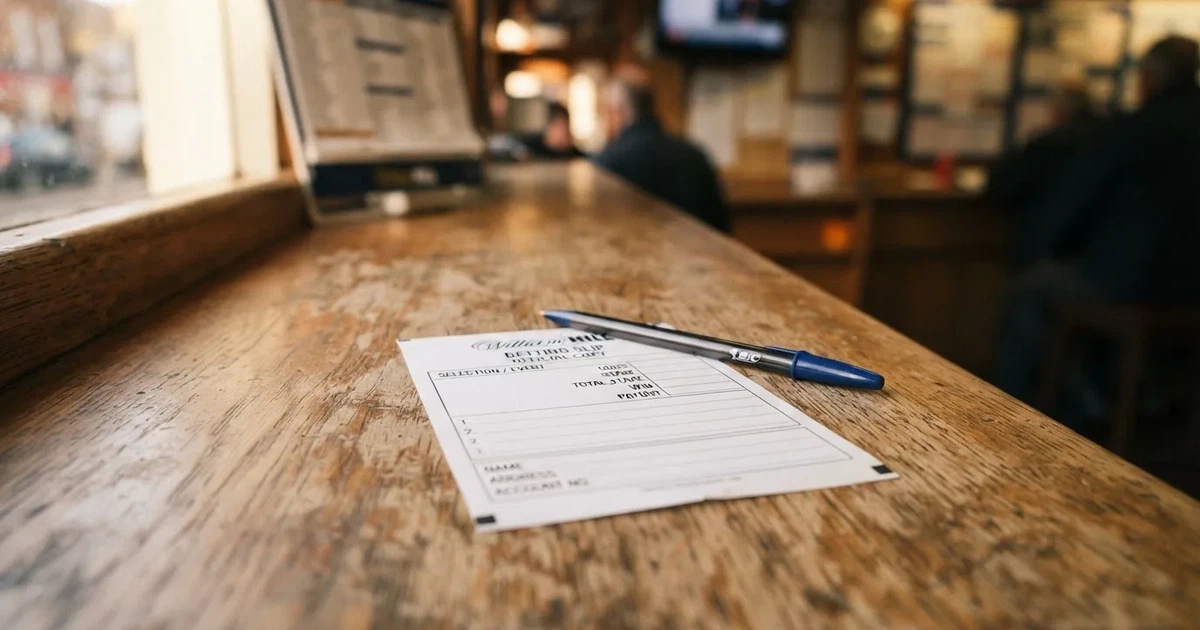
Current as of October 30, 2026 and checked against the Gambling Commission’s public licence register.
How a betting exchange prices a market, and why that matters at the in-play
A betting exchange prices a market the way a stock exchange prices a share: customers bid to back an outcome and offer to lay it, and the platform matches them where the prices overlap. The bookmaker model is the inverse — a single counterparty quotes back-and-lay prices on both sides of every selection, and the gap between those quotes is where its margin sits. On an exchange, the gap is set by the customers trading, and the platform charges commission only on what winners take out.
In practice, the difference shows up as soon as an event starts. On a traditional bookmaker, in-play prices move on the firm’s own feed and a margin of roughly five to eight per cent sits inside almost every selection, so even a sharp-eyed punter pays that tax on every bet. On a betting exchange the equivalent market is usually closer to a two to four per cent overround in the first few minutes of a match, because the people making the prices are also putting real money at risk and cannot afford to quote too generously. By the same token, on a quiet midweek racing fixture the bookmaker will still have a price to offer; on the exchange the screen may simply be empty until enough people show up to back and lay.
That is why live betting is the cleanest place to see an exchange work, and it is the reason this page opens there.
Live betting and cash out on a betting exchange
Live betting on an exchange means trading an event while it is happening. A goal in a football match moves the price on the favourite within seconds because everyone holding a lay position reacts; the next goal, a red card, a wet pitch — each is a market event, and the exchange shows it in the price before the bookmaker’s traders have refreshed their feed. On the most active Premier League matches the screen is dense with activity, with hundreds of pounds matched every minute at almost every price tick. On a League Two game, the same exchange may run dry before kick-off and never pick up.

Cash out is a related but distinct product. It lets a customer close a position for less than full value before the event settles; the bookmaker takes a margin on the cash-out quote, which is usually wider than the margin on the pre-event or in-play price, because the operator is offering a guaranteed payout against an unsettled position. Exchanges generally do not offer cash out in the strict sense. What they offer, under different names, is the ability to lay a back bet off at the prevailing price, which is a true market transaction: the customer locks in a position at the price the screen shows, with commission calculated on the resulting profit. For a bettor who likes cash out’s control over timing, the equivalent on an exchange is more honest about its cost — the price on the lay side, plus commission — but it only works if there is someone willing to take the other side.
The platforms reviewed on this page differ sharply in how each of those works in practice. Matchbook posts in-play lines for football, horse racing and greyhound racing with a cash-out-equivalent feature available on selected markets. Betfair is the deepest market in Britain for Premier League football and major horse racing, and it offers full cash out across many of its sportsbook and exchange selections. Smarkets keeps its exchange in-play markets tighter but charges one of the lowest headline commissions on this list, which keeps cost down for a bettor who trades many small positions rather than a few large ones. Midnite’s in-play feed sits inside a sportsbook wrapper, not an exchange proper, but it carries an acca builder, popular accas, and price boosts with stake caps, which means it serves the live-bettor instinct from a different angle. DAZN Bet covers Cash Out, Bet Builder, daily bet boosts and in-play betting, with the caveat the operator itself states: cash out availability is not guaranteed, and bets stand when it is unavailable.
For the punter who wants to trade rather than place single bets, the live markets on a Betfair or Matchbook exchange screen are the deepest in Britain. For the punter who just wants to react to a goal, a sportsbook with cash out is the simpler tool, and Midnite or DAZN Bet sit on that side of the divide.
Prediction and strategy tools that suit a betting exchange
A betting exchange rewards a different skill than a sportsbook does. A sportsbook punter picks a price the firm offers and accepts the margin baked into it. An exchange punter reads what other customers are willing to pay, decides whether that price is fair, and either backs, lays, or waits. The strategies that work on the first half of that sentence are reading form, weather, injuries and head-to-heads; the strategies that work on the second half are about position sizing, when to take the price offered, and when to lay the same outcome against another selection in a multi-leg trade.
Several patterns appear regularly in the strategies that exchange users describe. One is laying the favourite in a horse race where the price is short and the favourite has already been heavily backed, on the view that the lay side offers better value than chasing a place payout. Another is trading out of a football position at half-time, when the live price has typically moved further than the underlying chance of winning the bet. A third is building a position across multiple events, where each leg is sized so that a partial loss on one does not blow the bank on the others. None of these is a winning system in any rigorous sense, because no public model produces an edge that survives the bid-ask spread and the commission on every trade, but the approach is fundamentally different from the bettor who shops for an accumulator with four short-priced favourites.
What a British bettor should look at before adopting any of these is straightforward. Decide whether the strategy asks you to back a lot of short-priced favourites — which is where bookmaker margin hurts the most, and an exchange therefore helps — or whether it asks you to back outsiders where the bookmaker’s overround is wider still and the exchange screen is often thin. Match liquidity, in other words, matters more than commission rate, and that is a finding this page returns to several times. For punter who places many small bets at short prices on a few big leagues, Smarkets’ 2% standard commission, or its introductory 0% commission for the first 60 days after a first deposit of at least £10, is the headline figure to compare. For punter placing larger but less frequent bets on horse racing, Betfair’s commission structure, with discounts at higher volume, and Matchbook’s competitive commission on net winnings make them more relevant.
Bet types and odds on a betting exchange
A bookmaker offers a fixed menu: 1X2, both teams to score, over and under, correct score, each-way, forecast and tricast on racing, and a long tail of specials on football. An exchange offers the same markets in skeleton form — what the customers decide to match is what gets priced. That makes the range of bets vast in principle and shallow in practice: anything can be priced if someone has the nerve to ask, but most things are not, because the platform only shows what the auction has matched.
A more useful difference is in the bet types themselves. A back bet on an exchange is the same as a back bet on a sportsbook, including a free-bet stake if the platform offers one: the customer risks the stake and wins the profit if the outcome occurs. A lay bet is what makes the exchange exchange-shaped: the customer takes the role of bookmaker, agreeing to pay out the backer’s profit if the outcome occurs, with a liability set by the chosen odds. The most that the layer can lose is the liability, and the most the layer can win is the backer’s stake. Liabilities are not capped at the customer’s deposit in advance; a platform may impose limits on the size of an unbacked lay if it judges that the customer’s position is too large, but the basic rule is that a lay is sized by the price the layer has agreed to back at.
A second practical difference is in accumulator coverage. A sportsbook acca prices each leg and multiplies them into one figure, with a margin baked in. An exchange accumulator requires each leg to be matched separately and the bets to be linked by the customer, which is more work but tends to produce better odds because each leg is priced without a margin. Midnite’s acca builder sits inside its sportsbook and offers the simpler experience of one screen and one stake; Betfair’s exchange offers the deeper experience of independently priced legs with better prices on each. The choice is between a higher headline price on a multi-leg bet that is simpler to place, and slightly tighter prices on each leg that the customer has to compose.
A third difference is in price range. Betting exchanges generally limit odds to between 1.01 and 1000, and bet sizes are not restricted as long as opposing customers match the stake. A 1.01 line is a near-certainty that the platform will tolerate; a 1000 line is the upper edge before the exchange refuses to display the price. On a sportsbook, in contrast, the platform sets both the range and the maximum stake on each selection, with most firms capping top odds at around 1000 on horse racing specials and lower on football.
The relationship between stake, odds and return is worth pinning down here because it is the one calculation that runs across every product on this page. A betting return is the stake multiplied by the odds, and the net profit on a winning bet is the stake multiplied by the odds minus one: a £10 back bet at odds of 3.50 returns £35, of which £25 is profit. A lay bet works the same way from the other side, with profit equal to the backer’s stake and liability equal to the backer’s stake multiplied by the odds minus one. The same arithmetic applies to a combination bet whose legs multiply into a single price, with the cumulative odds driving the return.
The ten UK-licensed operators on this list
The platforms below each carry a remote licence from the Gambling Commission for Great Britain, are checked against the Commission’s public register, and describe themselves in a way that fits the definition of a betting exchange or the closely related sportsbook-plus-exchange offering. The list is ordered by the structure of the market: dedicated exchanges first, sportsbooks with comparable features next, then the operators that round out the comparison and give the punter a fuller picture of the choices available.
Betfair
Betfair is the platform most readers think of when they picture a betting exchange, and the history behind it explains why. Flutter and Betfair merged in 2001, with Betfair chosen as the primary exchange; Flutter ceased operations shortly afterwards. The result is a firm that still leads British exchange liquidity almost twenty-five years later, especially on Premier League football and major horse racing, with UK and Irish racing covered through free live streaming inside the app, plus Bet Builder and a 90 Minute Payout market on the sportsbook side. The Commission account is 39439, the licence holder is PPB Counterparty Services Limited, and the operator’s own category on the register is remote general betting standard for real events, with the exchange running under the same firm’s betting intermediary categories. For a punter who values matched volume and live streaming on racing, Betfair is the benchmark against which the rest of this list is measured.
Smarkets
Smarkets is a betting exchange that competes on price rather than market breadth. The platform applies a standard commission of 2% on eligible exchange bets, and new customers have been offered 0% commission for 60 days from the first deposit of at least £10, a promotional structure that suits a punter who wants to learn the platform at lower cost. The Commission account is 39173, the licence holder is Smarkets (Malta) Limited, and the Commission’s register lists the firm under remote betting intermediary, which is the category the Act reserves for exchanges. For the punter placing many small bets at short prices on a few well-known markets, Smarkets’ commission figure is the most attractive headline on this page.
Matchbook
Matchbook is a betting exchange where customers bet against other users, with Bet Builder, multiples, in-play betting and live streaming of horse racing and greyhounds. The Commission account is 39504, the licence holder is Triplebet Limited, and the platform is registered as both a remote general betting standard and remote betting intermediary, which makes it one of the few operations on this list that is licensed both as a sportsbook and as an exchange from the same firm. That dual registration shows up in the product: a punter can build a same-game multi on the sportsbook side and trade positions on the exchange side without changing app. It is the best structural choice for a punter who wants to stay inside one login for two kinds of betting.
Kalooki Sportsbook
Kalooki Sportsbook is operated by Kalooki Sports Book Ltd, a company registered under number 12938274, licensed by the Gambling Commission under account number 57730, and a GAMSTOP member. The Commission’s register lists the firm under remote general betting standard for real events, with the licence carried on betfair-style bookmaker terms rather than as a betting intermediary. Kalooki is included on this list because the British punter comparing exchange-shaped products benefits from a sportsbook alternative sitting alongside the dedicated exchanges, particularly on the question of identity verification before the first deposit, which all licensed platforms require. It serves as a useful counterweight to the larger names further up the list.
BetTom
BetTom runs a sports welcome offer of 50% back as a free bet of up to £50 alongside a matching 50% back up to £50 in free slot funds for casino play, with full terms applying on both. The Commission’s account number is 64959, the licence holder is Bet Tom Limited, and the firm sits under remote general betting standard. BetTom is on this list because it illustrates how a Commission-licensed sportsbook structures a welcome — cash components are split across sports and casino, with free bet and free slot funds kept as separate balances. For the punter weighing whether to claim a mixed bonus, BetTom’s structure is the clearest example of the form, and the marketing rule banning mixed-product promotions — a bet on football to unlock free spins, for example — does not catch a welcome offer constructed this way because each product is paid in its own currency.
DAZN Bet
DAZN Bet offers Cash Out, Bet Builder, daily bet boosts and in-play betting, with the firm’s own page noting that cash out availability is not guaranteed and that bets stand if the cash-out feature is unavailable. The Commission’s account is 48756, the licence holder is DZBT Limited, and the firm is registered under remote general betting standard. DAZN Bet is on this list because it carries the full cash-out-and-bet-builder shape that competes with a pure exchange on convenience grounds, and because its own caveats on cash out are an honest framing of the product’s limits. It provides a viable alternative to the pure exchanges for those who favour a sportsbook layout.
Midnite
Midnite’s site cites Gambling Commission licence 101839 and shows in-play events, an acca builder, popular accas, and price boosts with maximum-stake limits that the platform publishes per market. The welcome offer pays £25 in free bets and 50 free spins to new customers who place £5 or more on pre-match odds of EVS (2.0) or greater within 14 days of sign-up, with the free bets valid for 7 days. The product sits closer to a sportsbook than an exchange, but the inclusion of an acca builder and price boosts makes it relevant for a punter comparing exchange-shaped accumulator pricing. For the punter who wants the simplest pre-match-to-live path with Commission identity checks in the background, Midnite is the cleanest sportsbook-first choice on this page.
Star Sports
Star Sports offers pre-event and in-play markets with Bet Boosts, Daily Specials and Weekend Enhanced Boosts, plus in-play betting on football, horse racing, golf and US sports. The Commission’s account is 9177, the licence holder is Star Racing Limited, and the firm is registered under remote general betting standard. Star Sports is on this list because its in-play coverage of US sports is a different mix from the European-focused operators elsewhere on the page, and because its boost catalogue — three distinct brands — is a useful counterweight to a single welcome offer. For the punter who wants a Commission-licensed sportsbook with a steady drumbeat of price boosts across multiple sports, Star Sports is the most active promotions schedule on this list.
Fafabet
Fafabet pays Best Odds Guaranteed on UK and Irish horse racing win and each-way bets from 9am on race days: if the starting price is bigger than the price taken, the bigger odds are paid. The Commission’s account is 57385 and the licence holder is Taichi Tech Limited. Fafabet is on this list because its Best Odds Guaranteed structure is the clearest example of a Commission-licensed sportsbook pricing an exchange-style guarantee on racing — the firm commits to paying the bigger of the price taken and the starting price on the day. For the punter placing each-way bets on UK and Irish racing, Fafabet’s racing promise is the headline feature.
Bet600
Bet600 also pays Best Odds Guaranteed on horse racing: if the starting price is bigger than the early or show price taken, the bet is paid at the SP. The Commission’s account is 44731, the licence holder is Tyche Tech Limited, and the firm is registered under remote general betting standard. Bet600 rounds out the list because its racing product is an explicit price-match promise that competes with Fafabet’s and because its platform is one of the smaller Commission-licensed firms still publishing a racing-specific Best Odds Guaranteed policy. For the punter comparing racing-specific guarantees across sportsbooks, Bet600 is the second cleanest example on this page.
How the operators compare on licensing and on the exchanges-versus-sportsbook split
| Brand | Gambling Commission licence | Licence holder | Position on the exchange-sportsbook spectrum |
|---|---|---|---|
| Betfair | 39439 | PPB Counterparty Services Limited | Dedicated exchange with an adjacent sportsbook; the deepest market on Premier League football and major horse racing |
| Smarkets | 39173 | Smarkets (Malta) Limited | Dedicated exchange; commission-led positioning; thinner market on racing, sharper on top-flight football |
| Matchbook | 39504 | Triplebet Limited | Both exchange and sportsbook under one licence; live streaming on racing and greyhounds |
| Kalooki Sportsbook | 57730 | Kalooki Sportsbook Limited | Sportsbook; smaller operator with a plain statement of licence and GAMSTOP on the homepage |
| BetTom | 64959 | Bet Tom Limited | Sportsbook with a mixed welcome offer split across sports free bets and casino free slot funds |
| DAZN Bet | 48756 | DZBT Limited | Sportsbook with cash out, bet builder, daily bet boosts and in-play; the operator publishes caveats on cash-out availability |
| Midnite | 101839 | Midnite Limited | Sportsbook with acca builder, popular accas and price boosts; a £5 qualifying bet unlocks the welcome |
| Star Sports | 9177 | Star Racing Limited | Sportsbook with bet boosts, daily specials, weekend enhanced boosts and in-play across football, horse racing, golf and US sports |
| Fafabet | 57385 | Taichi Tech Limited | Sportsbook; Best Odds Guaranteed on UK and Irish horse racing win and each-way bets from 9am on race days |
| Bet600 | 44731 | Tyche Tech Limited | Sportsbook; Best Odds Guaranteed on horse racing when the starting price exceeds the early or show price taken |
The split in that table explains the rest of this page. Betfair, Smarkets and Matchbook are the dedicated exchanges licensed under the betting intermediary category; Kalooki, BetTom, DAZN Bet, Midnite, Star Sports, Fafabet and Bet600 are sportsbooks whose guarantees, boosts, accumulators or welcome structures are the closest competition to exchange products on key categories. Several brands can run under one licensee, and the licence holder column shows that no two firms on this list share a holder, which is why each gets its own entry rather than being grouped under a parent.
What the odds actually say: a worked illustration of the margin
A bookmaker’s margin is the share of every pound staked that the firm keeps on average across every outcome, regardless of which side wins. It is calculated from the prices quoted on a market: the reciprocal of each set of decimal odds is summed, and one minus that sum is the margin. A market priced at 1.90 and 1.90 on a two-way event sums to 1.053 — that is 105.3% of every pound bet paid back, with the remaining 5.3% the bookmaker’s edge. A market priced at 1.85 and 1.85 sums to 1.081, which is an 8.1% margin; the lower the margin, the more the punters collectively keep, all else equal.
The illustrative two-way market at decimal odds of 1.90 and 1.90 — fractional 9/10 — gives a payout share of 95.0% and a bookmaker’s margin of 5.0%. That is a typical bookmaker margin on a major football match in the live markets. The comparable figure on a betting exchange is usually a lower band, around 2 to 4% on the busiest Premier League matches at kick-off, occasionally higher on quieter markets. That difference is what the marketing words around exchanges usually describe as “better odds”, and the arithmetic behind it is exactly the band above.
No single bookmaker or exchange sits at one figure for every market it offers. Margins on football 1X2 are tighter than margins on correct-score, both because the latter is harder to predict and because fewer punters take the price. Margins on horse racing vary by race type and by time to post. Margins on betting exchanges are tighter at the moment liquidity peaks — minutes before a Premier League kick-off, the second before the stalls open — and wider in the small hours of a midweek racing card. The band the calculation above produces is what to expect across major markets; in a quiet market it is wider, in a frenetic one it is tighter.
How to check a Gambling Commission licence yourself
A licence check is the single most useful thing a punter can do before signing up. The Commission’s public register can be searched by business name, trading name, domain or account number, and it is the only test that establishes whether a brand holds a licence for Great Britain. The process is straightforward and takes a few minutes.
- Search the Commission’s register by the trading name of the operator. The licence holder’s name, not the marketing brand, is the key field on the register.
- Match the domain listed on the register against the site being checked. Licensed platforms use both
.comand.co.ukaddresses, so a domain match is necessary but not sufficient. - Confirm the licence categories listed under the holder. A betting intermediary category indicates an exchange; a remote general betting standard category indicates a sportsbook; both may be on the same record.
- Read the start date of the licence and any conditions or actions against the holder. An action is not a reason to panic — it can be an administrative note — but it is information the operator’s own homepage will sometimes gloss.
A licence number is only as useful as the register entry it points at. The Commission’s public register is the whole test of who holds one.
The legal frame around a UK betting exchange
The Gambling Act 2005 is the statute that licenses the entire commercial market in Great Britain, with the Gambling Commission as the regulator, a non-departmental public body sponsored by the Department for Culture, Media and Sport. Northern Ireland is outside the Act and operates under older legislation, so a GB licence does not regulate Northern Ireland and a GB punter should treat coverage as covering England, Scotland and Wales. Since the Gambling (Licensing and Advertising) Act 2014 an operator whose remote facilities are used in Great Britain needs a Commission licence wherever it is based — sections 33 and 36 of the 2005 Act as amended — which means a Curaçao, Maltese or Gibraltar licence is not a substitute.
For the punter, the minimum age is 18 and identity verification runs before the first deposit or first bet, including with a free bet or bonus. That means no anonymous play at a licensed site, regardless of how the marketing puts it. Source-of-funds questions at higher spend are normal under the money-laundering rules and not a sign that anything has gone wrong.
In-play betting is offered by GB bookmakers under their own licence conditions and customer-protection duties; the law does not declare in-play “unrestricted” as a principle. Spread betting is a different product, regulated by the Financial Conduct Authority rather than the Commission, and on Spreadex for example the firm is regulated by the FCA for spread betting and by the Gambling Commission for fixed-odds betting, with a published caveat that spread betting losses can exceed the deposit. So far no statutory cap on stakes in sports betting has been set: operators set their own maximum stakes and may restrict customers, but no state-set ceiling exists.
The player pays no tax on betting winnings in Great Britain, which is information rather than tax advice — a professional gambler should ask HMRC or an adviser. General Betting Duty is the operator’s tax on gross profits, currently 15%, with a new remote betting rate of 25% applying from 1 April 2027 on remote bets; from the same date, bets on UK horse racing, bets on self-service betting terminals in licensed premises, pool betting and in-person betting stay at 15%.
Responsible gambling on a betting exchange
GAMSTOP is the national multi-operator online self-exclusion scheme and a mandatory licence condition for every online operator licensed by the Commission since 31 March 2020. The exclusion periods are six months, one year, five years, or five years with auto-renewal; after the minimum period, the exclusion stays in place for a further seven years unless the customer asks GAMSTOP to remove it. GAMSTOP covers online sites and apps; betting shops use a separate service.
A financial vulnerability check applies to licensed remote betting when a customer’s deposits minus withdrawals exceed £150 in a rolling 30-day window. The check is a public-record check — bankruptcy, county court judgments and similar — not an income check and not a credit reference check. Operators must offer a gross deposit limit on a fixed time frame; the first changes applied from 31 October 2025, with a second phase postponed to 30 September 2026. There is no state-set deposit ceiling and no state-set loss ceiling, so limits are the customer’s own choice.
Help is available from GamCare (National Gambling Helpline), GambleAware, the NHS gambling clinics network, and Gamblers Anonymous. Each of the platforms on this page lists those routes, often inside a safer-gambling section reachable from the homepage, and a punter who wants to exclude themselves from the British online market altogether can do so through GAMSTOP in one enrolment.
Crypto, anonymity and identity checks
The legal frame above has consequences that run through the whole market. A licensed site verifies identity before the first deposit and again at higher spend under the money-laundering rules, and the same rule applies regardless of whether the operator is an exchange or a sportsbook. That means no licence-holding platform in Great Britain accepts anonymous play, and a bettor who wants pseudonymity at the level a cryptocurrency-only sportsbook used to offer should treat the licensed market as out of bounds on that count.
No published list of permitted payment methods or named ban of crypto funding exists, so the treatment of crypto at a GB-licensed operator is set by each platform’s own payments page. A bettor who specifically wants a betting exchange that funds from bitcoin or another cryptocurrency and offers pseudonymity by design is looking at unlicensed operators, with the consequences set out in the offshore section below.
Bonuses and free bets on a Commission-licensed exchange or sportsbook
A welcome offer on a Commission-licensed operator is structured within rules the regulator and the advertising codes enforce. Wagering requirements on bonuses are capped at 10x — a £10 bonus at 50x needed £500 of bets; under the cap no more than £100 — and mixed-product promotions, where claiming one offer requires gambling on more than one product type, are banned. A welcome offer that pays one free bet for sports and a separate free slot fund for casino, as BetTom’s 50%-back-up-to-£50 in sports and 50%-back-up-to-£50 in casino does, sits within that frame because each product is paid in its own currency and the customer does not have to bet on both to claim either.
A free bet whose stake is not returned with a win has an average value that the headline figure does not state. The arithmetic behind that is the freebet-value calculation: value = free-bet amount × (odds − 1) ÷ odds × payout share of the market. On a market priced with a 95% payout share, a £10 free bet at odds of 3.00 is worth £10 × (3.00 − 1) ÷ 3.00 × 0.95, or £6.33 on average across many settled bets. The free bet cannot exceed that figure on average; advertising it as “£10 free” overstates what a customer will take out, which is the standard puncturing of the marketing word “free”.
A bookmaker’s bonus base is the figure the wagering requirement applies to: the bonus alone, or bonus plus deposit, depending on the operator’s terms. The required turnover is bonus base × wagering factor: a £100 bonus with a 6x turnover requirement on the bonus alone means £600 of qualifying bets. Only bets at or above the minimum price count, and that minimum is published per offer. The expected cost of clearing the offer is required turnover × margin of the market the qualifying bets are placed on, which is where the bookmaker’s edge comes in again. There is no free lunch to a betting requirement; it is a question of whether the bonus exceeds the margin the punter pays to clear it.
A “risk-free” bet is a marketing phrase for a free bet paid when the original bet loses — a refund in free-bet currency rather than money. The risk-free label sells the idea that the punter can bet without risk, but the stake is not paid back with a win and the refund, when the bet loses, is in free-bet currency rather than cash, which means the average value of the offer is the average value of a free bet rather than a cash refund. A “price boost” is a marketing term for a temporarily enhanced price the firm publishes; the underlying market’s margin applies to all bets on the boosted price, including the bet that wins. An “accumulator insurance” pays the stake back as a free bet if one leg of a multi-leg bet loses; the free bet is then subject to the same restrictions as any other free bet from the platform. Each of these phrases promises something different in the marketing and delivers something specific on settlement, and the audit of each offer lives in its own terms page.
Mobile and app: how each exchange presents on a phone
A betting exchange on a phone is the same product as on a desktop, with the screen compressed and the bet slip collapsed into a tab. The difference on a phone is in speed: latency on a touch interface is the difference between catching the price one wanted and missing it by one tick. Most platforms listed on this page publish native iOS and Android apps alongside the browser version, with the browser version adequate for casual use and the app preferred for any punter trading in-play on a regular basis.
Matchbook, Betfair, Smarkets, Midnite, Star Sports, Fafabet, Bet600, BetTom, DAZN Bet and BetMGM all publish apps through the British app stores; the apps have 17+ age ratings as a default because of the gambling content. The browser version of each platform is also worth knowing for the rare markets where the app’s deposit tooling requires the heavier verification flow, with the browser version often the smoother option for a quick price check. Practical note: a punter trading in-play on a phone should ensure the device has a stable connection, since a dropped bid at the wrong moment can leave a position exposed at a worse price than the screen showed on entry.
The offshore alternative, and what is lost by using it
A GB licence is compulsory at the point of consumption, and providing gambling facilities in Great Britain without the licence the Act requires is an offence under section 33 of the Gambling Act 2005. The offence is aimed at the operator, not the customer. No offence aimed at a customer who merely bets on an unlicensed site was found, so the framing for a punter is the loss of protection rather than the criminal risk: no GAMSTOP coverage, no Commission complaints route, no approved dispute-resolution body, no British consumer redress if funds are withheld, and the offer is not bound by the 10x bonus cap or the £150 vulnerability check. Whether the operator is offshore, in a different jurisdiction, or licensed only for an onshore presence in another country, a punter using one of these has access to the games but not to the protections the Act provides.
Enforcement against unlicensed operators is disruption-focused: cease-and-desist notices, search-engine referrals, and work with registrars, hosts and payment providers. The Commission has been given, or is about to receive, court-order DNS blocking powers — never write that ISP blocking is currently in operation. The honest framing is simple. Licensed operators offer identity checks, deposit limits, GAMSTOP coverage, the 10x bonus cap and the dispute-resolution process, alongside the verification requirement before the first bet. Unlicensed operators offer none of those protections, with possible loss of funds if the operator withholds them. Neither is “the safe choice” by default; the choice is between different protections and the trade-offs they entail.
Final read on this market
The British punter in 2026 has more ways to place a bet than at any point in the market’s history, and the dedicated exchanges — Betfair, Smarkets, Matchbook — sit at the centre of the better-priced end of the spectrum. The sportsbook alternatives — Kalooki, BetTom, DAZN Bet, Midnite, Star Sports, Fafabet, Bet600 — offer guarantees, boosts, accumulators and welcome structures that compete with exchange products on specific categories and that suit a punter who wants the simpler sportsbook workflow. The first decision is whether to run both — a dedicated exchange as the primary trading venue and a sportsbook with the right welcome or boost for the punter’s habit — or to settle on the sportsbook alone. For the punter trading in-play on Premier League football or major horse racing, the exchange comes first and the sportsbook second. For the punter placing each-way bets on UK and Irish racing, the sportsbook with the Best Odds Guaranteed promise — Fafabet or Bet600 — comes first and the exchange second. For the punter building accumulators across several leagues, Midnite’s acca builder or Matchbook’s sportsbook side is worth registering, with the exchange reserved for the highest-conviction legs. None of these choices is forced, and the Commission’s public register is the test of who is licensed to offer any of them.
Frequently asked questions about UK betting exchanges
How does a betting exchange work?
A betting exchange is a marketplace where customers back and lay outcomes against each other, with the exchange itself not a party to the bets. A back bet wagers that an outcome will occur, and a lay bet wagers that it will not, with liability the most a customer can lose in the worst case. The platform earns commission on net winnings rather than building a margin into every price, which is why exchange prices are often sharper than bookmaker prices.
How is the return on a bet worked out from the stake and the odds?
A betting return is the stake multiplied by the odds, and the net profit on a winning bet is the stake multiplied by the odds minus one. A £10 back bet at odds of 3.50 returns £35 in total, of which £25 is profit. For a combination bet whose legs multiply into a single price, the same arithmetic applies to the cumulative odds, with each leg multiplied through to drive the return.
What is a bookmaker’s margin, and how is it seen in the odds?
A margin is the share of every pound staked that the firm keeps on average across every outcome, calculated as one minus the sum of the reciprocals of decimal odds. A two-way market priced at 1.90 and 1.90 sums to 1.053, giving a payout share of 95.0% and an overround of 5.3%, which implies a margin of 5.0%. Lower margins mean tighter odds, and exchange margins on the busiest markets are typically lower than bookmaker margins, though they vary by market and by liquidity.
How can I check that a bookmaker or an exchange holds a Gambling Commission licence?
Search the Commission’s public register by business name, trading name, domain or account number, and confirm the licence categories, the licence holder, and the site address listed. A licence category of remote betting intermediary indicates an exchange, while a category of remote general betting standard indicates a sportsbook; both may appear on the same record. The Commission’s register is the whole test of who holds a licence and is updated as licences are granted, varied or surrendered.
Do betting exchanges in the UK accept cryptocurrency deposits?
The treatment of cryptocurrency deposits at GB-licensed operators is set by each platform’s own payments page rather than by a state list of permitted or prohibited methods, so the answer varies by operator and is worth checking on the cashier page before funding. A punter who specifically wants cryptocurrency funding and pseudonymity by design is looking at unlicensed operators, with the consequences set out in the offshore section above.
Betting sites & exchanges – Newbookiesuk.com
Content created by the «Newbookiesuk.com» team
