
Reading a tipster: what a horse racing prediction is really worth
 Available in US
A “tipster” in British betting is a person — sometimes a service, sometimes a friend down the pub — who names horses they think will win. The term covers paid tipsters selling a subscription, free tipsters on social platforms, in-house tipsters inside a bookmaker app, racing journalists whose selections appear in the Racing Post, and matched-betting services who use bookmaker offers to lock in a small mathematical profit regardless of which horse wins. What binds them is the claim that they can find winners more often than chance would, and that the reader should bet accordingly. The honest reading of that claim, after twenty years of racing markets trading inside a margin, is more cautious than the marketing allows. This guide is built around what a tip is worth as a financial proposition: how it is constructed, how the price around it is set, what the bookmaker takes before anyone is paid, and what it costs the bettor to chase the marketing word “expert”. No concrete picks, predicted results or named winners appear below, because nobody — including every paid service ever advertised — can deliver that consistently, and a tip printed into an article is a tip that ages into a liability the moment the stalls open.
The figures in this guide are current as of October 30, 2026 (Gambling Commission public register).

The figures and licence records on this page were verified against the Gambling Commission’s public register and the operator sites themselves on 16 October 2026.
Why a tipster is not a forecast
A tip is one person’s read of a race. A forecast, in the technical sense, is a probability distribution over the runners — the chance each horse has of winning, sized in such a way that the probabilities add to 100%. A tip does not arrive with its probability attached. The bettor has to do the conversion themselves, by comparing the tipster’s selection against the market and asking a simple question: is the price available on this horse bigger than the chance the horse actually wins?

That gap — price versus true probability — is what racing markets call a value bet. The arithmetic behind it is the only thing that turns a tip into something a bankroll can be sized against. A tip at odds that already price the horse to win more often than it can is not a value bet, however confident the tipster sounded. A tip at odds that price the horse shorter than the chance it has is the only kind worth backing, and it is the only kind whose long-run result is positive once the bookmaker’s margin is removed from the equation.
The reason this matters more on racing than on most other sports is the structure of the market. A Premier League match has three outcomes; a 12-runner handicap has eleven different winners and four or five place-paying positions. The margin a bookmaker builds into a 12-runner race is wider than the margin on a football match, because the book has to take a cut on every runner, and the bettor is paying that cut whichever horse they back. A tip that ignores the margin when judging value is a tip that loses slowly, on average, by exactly the overround the bookmaker has priced in.
What the bookmaker’s margin looks like inside the odds
Every decimal odds line carries an implicit margin, because each runner’s implied probability sums to more than 100%. Take an illustrative two-way market priced at 1.90 / 1.90 — a 50/50 contest, the kind of race the bookmaker would only offer on a match between two horses of identical form, in conditions that suit both equally. Implied probability is 1 divided by the decimal odds: 1 ÷ 1.90 = 0.5263, or 52.63%. Two runners at 52.63% each gives a total of 105.26%. The bookmaker keeps the difference: roughly 5.3% of every pound staked. As a band, 5% to 5.5% is the realistic spread for a typical two-way market at that kind of price; the exact figure depends on how the book rounds its lines and how aggressive the price is on each side.
The same calculation on a 12-runner handicap tells a different story. If the favourite is at 4.00, the next at 6.50, the third at 9.00, and so on down to a long shot at 67.00, the implied probabilities sum to well over 110% — the bookmaker’s take on that race is in double digits. A tip that lands on the favourite pays less than the favourite’s true chance of winning, because the favourite is the runner the book has shortened most aggressively to keep the book balanced. A tip that lands on a 20.00 shot pays more than the shot’s true chance, because the book has over-compensated to push liability away from itself. Whether the tip is value depends on which end of the field the tipster has nominated and what the real chance of the horse is.
The punter who reads a tipster’s selections without doing this arithmetic is donating the margin to the bookmaker on every bet, regardless of which horse wins. That is the mechanism behind most paid tipster services that appear to perform well over a short sample: the marketing shows winning days and forgets the cumulative drag of the margin on the losers.
Form, statistics, and the inputs a tip is built from
A racing tip that has any chance of being a value bet is a tip that has done some work on form. The pieces are well known and have not changed in a generation: the horse’s last three or four runs, the going (the condition of the ground — soft, good to firm, heavy, and so on), the distance and the course, the class of the race, the weight carried, the draw, the jockey, and the trainer’s record at the meeting. To that, a modern tip adds sectional times — the splits at various points of the race, which tell the reader whether a horse was flattered or flattered by the result — and pace maps, which project how the race is likely to be run.
What this produces is not certainty. It produces a probability estimate that is more grounded than a hunch, and that is the only thing the price can be measured against. A tipster who publishes the logic, the splits and the pace map gives the reader the means to disagree on the inputs. A tipster who publishes a name and a price gives the reader nothing to test.
In handicap races each horse is assigned a different weight to carry based on its ability, while conditions races give horses the same weight with allowances for younger and female horses. The weight difference is the handicapper’s read on the field and is the single most important variable in assessing whether the favourite is properly handicapped. A tipster who ignores the weights in favour of a name is reading the betting forecast, not the form.
British racing’s three codes, and what each asks of a tipster
British horse racing is not one sport. Flat racing is run directly between two points around a straight or oval track, while jump racing — steeplechasing and hurdling — is called National Hunt racing in Great Britain and Ireland. Flat races range from 440 yards (400 m) to more than four miles (6.4 km), with five to twelve furlongs (1.0 to 2.4 km) the most common distances. National Hunt racing uses longer distances and tests jumping as well as speed. A tipster who specialises on the flat is not, automatically, a tipster on the jumps; the form book reads differently, the going affects horses in different ways, and the racing style required to win is different. The British Triple Crown consists of the 2000 Guineas, the Derby and the St Leger — three flat races, run over a mile, a mile and a half, and a mile and three-quarters respectively, and won by the same horse in a single season only three times since 1900. A tipster selling a “guaranteed” Triple Crown pick is selling the calendar before the season starts; the markets on each leg are open for months, and the odds move for good reasons.
A useful rule of thumb: the more data the form book holds on a race, the harder the tipster has to work to find an edge, because the market is closer to efficient. A maiden at a small all-weather meeting on a Wednesday in February is a race the bookmaker has less information on than a Champion Hurdle — which is not the same as saying the maiden is easier to tip, only that the inputs the tipster is working with are thinner.
Each-way betting, and why the stake is not what it looks like
British racing is unusual among major betting markets for the dominance of each-way betting. An each-way bet is two bets, a win bet and a place bet, so the stake is doubled (a £5 each-way bet costs £10). The place part pays a fraction of the win price, and the fraction depends on the type of race and the number of runners. UK each-way place terms: handicaps with more than 15 runners pay 1/4 odds for 4 places; 12–15 runners 1/4 for 3 places; other races with more than 7 runners 1/5 for 3 places; 5–7 runners 1/4 for 2 places; fewer than 5 runners win only. The place fraction matters, because a tip that wins at 10/1 returns very differently depending on whether the place terms are a quarter or a fifth.
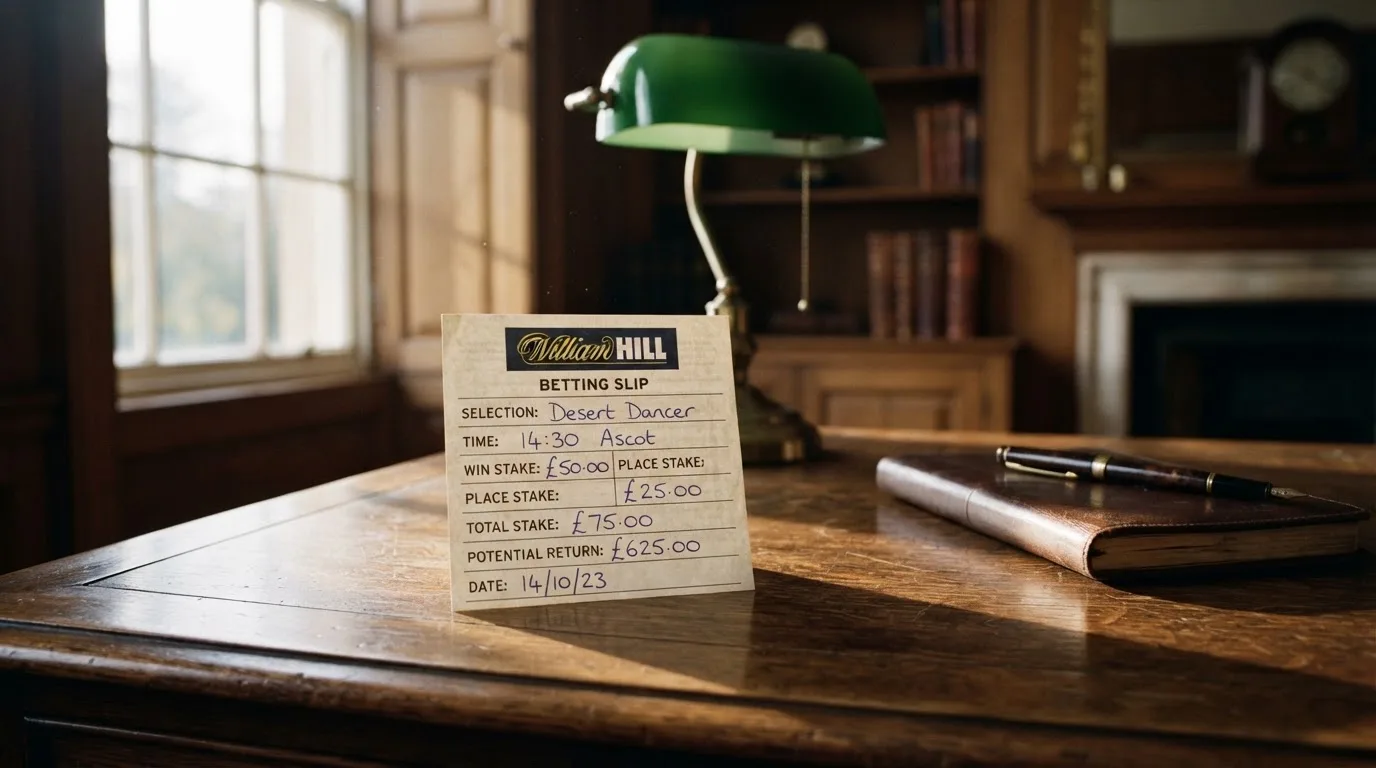
Worked example: a £10 each-way bet on a 10/1 horse at 1/4 place terms (3 places) costs £20, returns £110 for the win part and £35 for the place part, £145 in total if it wins. At 1/5 place terms, the place part returns £22 instead of £35, and the total return drops to £132. The tip did not change; the race conditions did, and the bookmaker’s house rules on place terms are part of what a tipster should be telling the reader when they recommend a horse. A tipster who quotes the win odds and does not mention the place fraction is leaving the reader to discover the gap at payout.
Staking, bankroll discipline, and what a tipster cannot fix
A tip that is right more often than the market thinks is a value bet. A tip that wins one race in three at average odds of 3/1 is a value tip; if the odds were 2/1 instead, it would not be, because the market already priced those winners at the same frequency. The arithmetic that keeps the score consistent is staking. The standard approach — used by serious bettors rather than by the marketing pages of paid services — is to stake a fixed percentage of the bank on every value bet, never to chase losses by staking more after a bad day, and to keep a record of every bet with the closing price, not the price at which the bet was placed.
The closing price is the last price the bookmaker offered before the race. It is the most accurate read the market produced on that horse, because every other bettor has had the same chance to look at the form and place the bet. The Closing Line Value — the gap between the price the bettor took and the closing price — is the standard that racing analysts use to judge whether their work actually added information. A tipster whose selections routinely beat the closing price is genuinely finding value; a tipster whose selections close at shorter odds than the price taken is the one whose record is worth following.
The bankroll is what stops a streak of losers from finishing the bettor. A stake of 2% of the bank per bet gives fifty losers before the bank is gone; a stake of 10% gives only ten. A tipster’s strike rate without the staking plan attached is a marketing number, not a strategy.
Free tipsters, paid tipsters, and matched betting
Free tipsters are everywhere: in the Racing Post, in the racing pages of the broadsheets, in the tipster modules inside bookmaker apps, in Telegram channels, on X, in YouTube videos, in Discord servers. The quality ranges from excellent to noise, and the noise is most of it. A free tipster whose record the reader can verify independently — whose selections, prices and results are published in full, win and lose — is the only kind worth following; a free tipster who posts winners and buries losers is a marketing channel, not a tipster.
Paid tipsters sell access to a private channel or a daily email. The price varies from a few pounds a month to several hundred for the racing season. The honest version of the pitch is: the tipster has put in the work on form, the tipster has a record that beats the closing price, and the tipster is charging for the time. The dishonest version is the same pitch with a back-tested record that excludes losers, a strike rate computed from a small sample, and a “join now” button that pounds more than the service is worth.
Matched betting is a separate activity that uses a different kind of tip. A matched-betting service does not pick horses — it picks bookmaker offers, and locks in a small profit by backing and laying the same outcome at compatible prices. The “tipster” element is the offer, not the runner, and the record is built on the arithmetic of the offer rather than the form of the horse. A punter who treats matched-betting selections as racing tips is gambling on the runner as well as the offer; a punter who treats the offer as the bet and lays the runner off on an exchange is doing matched betting. The two are not the same thing, and the tipsters who blur the line usually have an affiliate motive in the offer.
The legal frame: who is licensed, and what the licence means
A bookmaker serving customers in Great Britain needs a Gambling Commission licence, regardless of where the operator is based. That has been the rule since the Gambling (Licensing and Advertising) Act 2014 took effect, and it means a Curaçao, Gibraltar or Maltese licence is not a substitute for the Commission’s. The Commission’s public register is the whole test of who holds a licence: search by business name, trading name, domain or account number, and the entry on the register tells the reader who is licensed, what categories of licence they hold, and which sites the licence covers. No count of licence holders should appear without the date the register was accessed, because the register changes week to week.
The licences a racing bookmaker typically holds fall under the Commission’s remote general betting standard (real events) category, which permits betting on real sporting events including horse and greyhound racing. A betting exchange — Betfair, Smarkets, the Betdaq of old — runs under a separate remote betting intermediary licence. Pool betting on horse and dog racing has its own category. A bookmaker that holds a remote general betting limited licence is permitted to take bets only at the size the licence sets, and the limit is published on the register; several of the smaller operators in the comparison below hold the limited variant, which is the standard form for a smaller firm. Financial spread betting is regulated by the Financial Conduct Authority rather than the Commission, which is why Spreadex is dual-regulated and warns that spread-betting losses can exceed deposits.
The minimum age to bet with a GB-licensed operator is 18, and identity is verified before a customer can deposit or gamble — name, address and date of birth, since 7 May 2019, including when a free bet or bonus is involved. No anonymous play at a licensed site, and no skipping the verification step for the small-stakes customer. The licensed side of the market is built on the verification step; the unlicensed side is built on its absence. That is the trade-off the punter is making when they choose which side to use.
What may be bet on, and what the bookmaker decides
There is no statutory list of permitted bets or markets. The Gambling Act 2005 sets the framework, and the Commission’s Licence Conditions and Codes of Practice set the conduct rules, but the catalogue of markets — which races, which in-play props, which novelty markets, whether esports or politics — is the operator’s decision under their licence conditions. In-play betting on racing is offered by GB bookmakers, and the controls on it are the operator’s own licence duties; the law does not write in-play as “unrestricted”. Esports are treated like any other sporting event; virtual events are a separate licence category. Bets on politics, TV shows and novelty markets are routinely offered by GB bookmakers, and no statutory prohibition was found.
Betting exchanges run under a betting intermediary licence, and the rates and rules on an exchange — commission, in-play availability, market depth, minimum stake — are set by the exchange itself, not by the Commission. A racing tipster who recommends a bet that is only available on an exchange is recommending a product the reader must already have an exchange account to place. That is part of the recommendation a paid tipster should be making explicit.
There is no statutory cap on stakes in sports betting. Operators set their own maximum stakes, and a stake limit is the operator’s policy, not the law. A maximum stake of £100 on the winner of the Champion Hurdle is a Ladbrokes or a Coral policy; a maximum stake of £10,000 is a different policy at a different firm. Limits can change without notice, and a winning customer is the customer most likely to find their stake cut. The legal frame does not protect the punter from being limited by a successful bookmaker.
Player protection, and what the licensed side is required to do
GAMSTOP is the national multi-operator online self-exclusion scheme and a mandatory licence condition for online operators since 31 March 2020. A punter who has registered with GAMSTOP cannot open a new account with any GB-licensed operator for the period they have chosen — six months, one year, five years, or five years with auto-renewal — and after the minimum period the exclusion stays in place for a further seven years unless the customer asks GAMSTOP to remove it. GAMSTOP covers online sites and apps; high-street betting shops use a separate self-exclusion scheme.
A financial vulnerability check applies to licensed remote betting when a customer’s deposits minus withdrawals exceed £150 in a rolling 30 days (since 28 February 2025). It is a public-record check, looking for markers such as bankruptcies or county court judgments; it is not an income check and it is not a credit reference check. The “affordability checks” reported in the press are a separate, staged set of financial risk assessments the Commission has announced but not yet brought into force; the Commission’s article of 7 July 2026 sets out the plan but gives no start date, and a reader writing “affordability checks are in force” into 2026 would be ahead of the regulation. Deposit limits are a separate obligation: operators must offer a gross deposit limit on a fixed time frame; the first changes applied on 31 October 2025, a second phase has been postponed to 30 September 2026, and whether the second phase is now live is not established. There is no state-set ceiling on deposits or losses — limits are the customer’s choice — but the operator must offer a limit and apply it.
Help is available regardless of whether the customer has self-excluded. GamCare runs the National Gambling Helpline, the NHS operates gambling clinics in several regions, GambleAware funds treatment and education, and Gamblers Anonymous runs peer-support meetings. The licensed bookmakers link to these services from their safer-gambling pages, and the Commission’s rules require them to do so.
Payments, advertising, and the rules the licensed side operates under
Credit cards are banned for gambling in Great Britain since 14 April 2020, and the ban covers credit-card-funded payments through an e-wallet, so a punter who tops up Skrill or Neteller with a credit card cannot route the money into a betting account. Debit cards and bank-based payments are not covered by the ban, and the licensed side of the market is overwhelmingly debit-funded.
Advertising is not licensed by the Commission. It runs through the CAP Code for non-broadcast and the BCAP Code for broadcast, enforced by the ASA, alongside the LCCP’s marketing conditions. The CAP Code’s section 16 sets the social-responsibility standard: marketing must be of moderate appeal only, must not appeal strongly to under-25s, and no one who is or seems to be under 25 may be featured gambling or play a significant role. That rule concerns who appears in the advertisement; it is not a rule on who may bet, and the customer age threshold is 18 across the board.
Promotion rules in force since 19 January 2026 cap wagering requirements on bonuses at 10x (a £10 bonus at 50x needed £500 of bets; under the cap no more than £100), and ban mixed-product promotions — an offer that requires gambling on two or more product types, such as betting, casino, bingo and lottery, for example “bet on football to get free spins”. The cap applies to bonuses; whether it applies to free bets with no wagering condition, and any cap on the money value of a bonus, are not established. The whistle-to-whistle ban on betting ads around live sport is an industry code rather than law: since 1 August 2019, betting advertisements are not shown on TV from five minutes before a live sporting event to five minutes after it, before the 9pm watershed, with horse and greyhound racing excluded. The Premier League’s voluntary withdrawal of gambling sponsorship from the front of matchday shirts from the 2026/27 season is not law either; sleeves and hoardings remain.
Tax: what the punter pays, and what the bookmaker pays
The punter pays no tax on betting winnings in Great Britain. The operator pays General Betting Duty on gross profits, currently 15%; from 1 April 2027 a new remote betting rate of 25% applies within General Betting Duty, while remote bets on UK horse racing, bets on self-self-service betting terminals in licensed premises, pool betting and in-person betting stay at 15%. Until 1 April 2027 the remote rate stays at 15%, and whether operators pass the duty on through worse odds is not established. Spread betting has its own rates — 3% financial, 10% other — and is the operator’s tax on a different base. The Commission’s statutory levy is a separate charge, not a tax. The general-information framing is correct; a professional gambler should ask HMRC or a tax adviser rather than relying on a betting guide.
Offshore, and the calculation the punter actually does
A GB licence is compulsory at the point of consumption. Providing gambling facilities in Great Britain without the licence the Act requires is an offence under section 33 of the Gambling Act 2005, aimed at the operator. No offence aimed at a customer who merely bets on an unlicensed site was found in the law, and the framing that matters is not “legal to use” — it is the loss of protection. An offshore customer has no GAMSTOP coverage, no Commission complaints route, no approved dispute-resolution body, no British consumer redress if funds are withheld, and is not bound by the 10x bonus cap or the £150 vulnerability check. Enforcement is disruption, not blocking: cease-and-desist notices, search-engine referrals, work with registrars, hosts and payment providers, and court-order DNS blocking powers the Commission has been given or is about to receive. ISP-level blocking is not in operation, and the framing “the blocks are up” is wrong on the date this guide was written.
The honest comparison is not “safe vs unsafe”. It is “checks, limits, GAMSTOP, bonus cap, identity verification before the first bet” versus “none of those protections and possible loss of funds if the operator decides to withhold”. Each punter makes their own call on which side of that line they want to sit.
Live betting, cash out, and what the tipster has to add
Live betting on racing is a separate proposition from pre-race tipping. The price moves as the race develops, and a tipster offering live selections is offering a different service: a read of momentum, of positioning, of how the race is likely to be run from the current state of it. That is harder to do well than pre-race tipping, because the form book is one input among several and the bettor is competing against algorithms that price the market inside milliseconds.
Cash out is a bookmaker feature that lets the punter settle a bet before the race is over, at a price the bookmaker sets from the live market. It is not the same as laying the bet off on an exchange, because the bookmaker’s cash-out price carries its own margin on top of the live market, and that margin is not visible in the headline figure. A punter who uses cash out is paying the bookmaker twice for the privilege — once on the original bet, once on the cash-out margin — and the price of that second margin is rarely published. A tipster who recommends a cash-out point at a particular price is recommending a number the bookmaker sets, not a market price.
In-play markets on racing include the next-furlong leader, the in-running match bet, and the in-running price on the winner. Each carries its own margin, and a tipster who specialises in in-play has to publish the closing price of the in-play market they recommended, because the in-play price closes too. Closing Line Value is the standard on the in-play markets as it is on the pre-race ones.
Ante-post betting, Rule 4, and the rules that govern a settled bet
Ante-post betting is betting on a future race before the final declarations are made. The price is bigger, because the field is uncertain; the risk is bigger too, because a non-runner voids the bet at most bookmakers rather than settling it at SP. A tipster who recommends an ante-post bet on the Champion Hurdle in November is recommending a bet that may be void if the horse does not run, and the reader should know it before staking.
Rule 4 is a bookmaker rule that applies when a horse is withdrawn from a race after the betting has started. The deduction is applied to the odds of every other runner, on a scale that depends on the withdrawn horse’s odds, and the deduction is taken from the winnings rather than the stake. A punter whose each-way accumulator has a Rule 4 deduction applied to one leg is paid on the adjusted odds; the original price is gone. A tipster who does not mention Rule 4 when recommending an accumulator is leaving the reader to discover the deduction at settlement.
The ten bookmakers reviewed here
| Brand | Gambling Commission remote licence | What the operator states |
|---|---|---|
| Geoff Banks | 054095-R-330366-010 | In-play and ante-post focus |
| Star Sports | 009177-R-104555-019 | Independent bookmaker status |
| Fitzdares | 000400-R-103839-030 | Premium acca and special markets |
| Octobet | 062545-R-337248-006 | BOG on UK/Irish racing |
| Midnite | 101839-R-342850-001 | Acca builder and price boosts |
| Dabble | 065677-R-340363-005 | Social-first betting approach |
| Fitzwilliam Sports | 048760-R-335434-009 | Service via phone and chat |
| VBet | 044662-R-324273-022 | Live streaming and calendar |
| London Bet | 066162-R-340278-004 | Sports and casino mix |
| Ladbrokes | 054743-R-330863-014 | Market depth and BOG |
The ten operators below each hold a Gambling Commission remote licence for real-event betting, and each is presented on the basis of what its own terms and its own app page state. Several of these licences cover more than one trading brand, and a punter checking the register will see that several operators share a parent. None of them is the only licensed operator in the market, and a place in this list is not a licence and not a recommendation. The list is not ranked by safety, odds or service. The reader’s own shortlist should be built from the columns the punter cares about — ante-post coverage, Best Odds Guaranteed, in-play markets, acca insurance, the welcome offer — and from the punter’s own stake size, because the bigger the stake, the more relevant the bookmaker’s stake ceiling becomes.
Geoff Banks
Geoff Banks’ app is published by GB Sports Advisors Ltd and offers live in-play prices and ante-post prices on future events. The licence on the Commission’s public register sits against GB Sports Advisors Limited, with remote general betting standard (real events) as the licensed category. The Geoff Banks pitch is a smaller, racing-led brand with a published app and an ante-post angle that suits the punter planning weeks ahead rather than minutes.
What the punter is buying into: a racing-focused product from a small firm, with the in-play markets the bigger firms carry and the ante-post specials those firms trim out. The Commission licence is the standard remote real-events licence, and the firm is on the register under the name that appears on the app. There is no welcome offer spelled out on the operator’s own homepage material in the form the reader would recognise from the bigger brands, and a punter planning to take the welcome bet should check the app’s promotions module rather than assume one is running.
The verdict: a reasonable fit for the racing-led punter who wants in-play and ante-post under one roof from a smaller firm, with the licence record as it stands. Less useful for the punter whose racing interest is one of several sports they bet on, because the firm is built around racing rather than around an all-sports product.
Star Sports
Star Sports describes itself as the UK’s leading independent bookmaker, with virtual sports, casino and live casino alongside the sportsbook. The licence sits against Star Racing Limited, which holds the remote general betting licence for real events, and the trading name Star Sports Bet on the register.
What the punter is buying into: a bookmaker that markets itself as independent in a market dominated by the major chains, with virtuals and casino as additional products for the punter who wants them. The independent pitch is genuine — the firm is not part of the major chains — but the punter should read “leading” as a marketing word, not as a market-share claim, and treat the licence register as the test of who is licensed rather than the firm’s own self-description.
Our verdict: this operator suits the racing-led punter wanting in-play and ante-post under one roof from a smaller firm, with the licence record as it stands. Less useful for the punter whose racing interest is one of several sports they bet on, because the firm is built around racing rather than around an all-sports product.
Fitzdares
The Fitzdares app offers cash out, accumulators, Lucky 15s, specials and antepost markets on horse racing, football, tennis, rugby, cricket, golf and American football, with in-play live odds. The licence on the register is held by Fitzdares Limited, under the standard remote real-events category.
What the punter is buying into: a premium-priced product across several sports, with the acca insurance, Lucky 15s and specials that the bigger firms run and a racing desk that carries antepost markets alongside the daily meetings. The “premium” pitch is reflected in the marketing and the product mix rather than in any specific pricing advantage the register would confirm. The punter should treat the marketing language as the marketing language and read the odds rather than the headline.
The verdict: a fit for the acca-led punter who bets across several sports and wants the acca insurance, the specials and the Lucky 15s from a smaller firm with the racing antepost coverage as part of the package. Less useful for the punter looking for a low-margin firm on racing singles, because the premium pitch and the racing specials do not necessarily mean the firm’s margin is below the major chains’ on the everyday meetings.
Octobet
Octobet offers Best Odds Guaranteed on UK and Irish horse racing, up to £150 per customer per race. The licence sits against Octopus Game Limited, which is authorised for real-event remote betting, and the trading domain on the register is the firm’s main site.
What the punter is buying into: BOG on UK and Irish racing with a cap, and a sportsbook product that the firm markets around racing. BOG pays the bigger of the price taken and SP if the SP is bigger, which means a punter who takes an early price on a horse that drifts in the market is paid at the bigger SP rather than the shorter price they took. The cap of £150 per customer per race is the operator’s policy, not a market standard, and a punter planning to stake more than £150 on a single race at the early price should know the cap before staking.
The verdict: a fit for the racing-led punter who takes early prices and wants the BOG cover on UK and Irish meetings, with the standard set of acca and in-play markets in the background. The cap is the term to read before staking — BOG is a useful feature, and the cap is the part of it the marketing does not put on the front page.
Midnite
Midnite’s site cites Gambling Commission licence 101839 and shows in-play events, an acca builder, popular accas and price boosts with maximum-stake limits. Midnite’s sports welcome offer is structured for new customers: a bet of £5 or more on pre-match odds of EVS (2.0) or greater within 14 days of sign-up returns £25 in free bets and 50 free spins, valid for 7 days. The free-bet stake is not returned with a win. The licence sits against Midnite Limited, which holds the licence for real-event remote betting.
What the punter is buying into: a modern sportsbook-and-casino product with a sports welcome offer structured around a small qualifying bet at minimum odds EVS, returning free bets whose stake is not paid back and free spins with a 7-day expiry. The 14-day window to place the qualifying bet and the 7-day window to use the free bets are the two deadlines the marketing rarely puts at the top of the page; the minimum odds of EVS (2.0) is the price floor on the qualifying bet. Price boosts on the platform carry maximum-stake limits, and a punter who wants to take a full-size position on a boosted selection will find the cap rather than the headline.
Our verdict: a good choice for the punter who wants a sports-and-casino product from a smaller firm with a structured welcome offer, with the understanding that the welcome offer’s deadlines and minimum-odds floor are the terms to read before claiming. The price-boost caps are the terms to read before staking on a boosted selection, because the boost is the headline and the cap is the term that costs the bettor who tries to take the full advertised stake.
Dabble
Dabble’s welcome offer is “Bet £10, Get £10 in Free Bets” on a first deposit for new customers, with minimum odds applying, a 7-day free bet expiry and the stake not returned. The licence sits against Dabble Sports UK Ltd, which operates under a licence for real-event betting.
What the punter is buying into: a small-stake welcome offer, structured around a £10 qualifying bet at minimum odds, returning £10 in free bets with a 7-day expiry and the standard free-bet rule that the stake is not returned with a win. The free-bet value on a £10 free bet at odds of, say, 4.00 is £7.50 — £10 multiplied by (4.00 − 1) divided by 4.00 — and the value is higher at bigger odds. The minimum-odds floor is the term the marketing rarely prints in full.
Our verdict: ideal for the punter who wants a small-stake welcome offer from a smaller firm, with the free-bet value tied to the price the free bet is taken at and the 7-day expiry as the deadline. Less useful for the punter whose staking is concentrated on heavy-favourite singles, because the minimum-odds floor excludes the 1.20 / 1.50 / 1.80 prices the welcome offer’s headline implies is the natural use case.
Fitzwilliam Sports
Fitzwilliam Sports offers phone and live chat with the office open 09:00 to 21:00, Monday to Sunday, with messenger replies generally within 90 seconds. The licence sits against SBKI Limited, which holds a real-event remote betting licence.
What the punter is buying into: a phone-and-chat-led bookmaker rather than a website-led one, with a long opening hours window and a messenger reply time that is published rather than hidden. The pitch is service — a punter who wants to talk to a trader rather than fill in a betslip will find the channel here. The licence is on the standard remote real-events category.
Our verdict: a solid option for the punter who wants to deal with a bookmaker by phone or chat, with a published opening hours window and a messenger reply time that is the firm’s own commitment rather than a marketing word. Less useful for the punter whose staking is on the in-play markets with seconds to place the bet, because the phone-led model is built around pre-race and ante-post calls rather than in-play execution.
VBet
The Vbet app is published by SCGO Limited and offers Bet Builder, pre-match and in-play betting, live streaming and a live calendar with results and stats. The licence sits against SCGO Limited, with remote general betting standard (real events) as the category.
What the punter is buying into: a full-acca-product list including the Bet Builder and live streaming on the markets the firm streams, with a live calendar the punter can plan around. The live streaming is the term the marketing puts at the top; the markets covered by the streaming are the term the punter should check, because streaming is selective and the bigger bookmakers’ streaming coverage is not universal.
The verdict: a fit for the punter who wants Bet Builder, in-play and live streaming under one roof from a smaller firm, with the calendar and stats as the planning tools the bigger firms carry. The streaming coverage is the term to check before staking on the live product, because a streamed meeting is a bet the punter can watch settle and an unstreamed one is a bet the punter is taking on trust.
London Bet
The app combines sports betting (football, tennis, horse racing, greyhounds, darts, golf, cricket, NFL, NBA, MLB, snooker) with Pragmatic Play casino slots and live in-play betting. The licence sits against Thistle Bet Limited, which is authorised for real-event remote betting.
What the punter is buying into: a broad sportsbook-and-casino product with a sports list that covers the major British and North American sports, racing and a long tail of others, and live in-play betting as a feature rather than the headline. The casino side carries Pragmatic Play slots, which is the casino-provider name rather than a measure of the casino’s quality.
The verdict: a fit for the punter who wants a broad sportsbook with live in-play and casino from a smaller firm, with the standard acca and in-play products in the background. Less useful for the punter looking for the racing-led product specifically, because the London Bet pitch is broader than racing-focused and the racing coverage sits inside a wider sports list.
Ladbrokes
Ladbrokes offers odds boosts on horse and greyhound bets, Best Odds Guaranteed on UK and Irish horse races, in-play betting and Acca Boosts. The licence sits against LC International Limited, with remote general betting standard (real events) and remote betting intermediary as the licensed categories. The Ladbrokes and Coral brands sit under the same parent, and a punter checking the register will see both names against the same licence holder.
What the punter is buying into: a major-chain product with BOG on UK and Irish racing, odds boosts and acca boosts as standing features, and in-play markets across the sports the firm covers. The BOG is the racing-led punter’s headline term; the acca insurance and the odds boosts are the football-led punter’s. The major-chain pitch carries the wider market depth on the in-running markets — more runners, more props, more in-play specials — and the cost of that depth is the marketing the firm runs across its channels.
The verdict: a fit for the punter who wants the major-chain product with BOG, acca boosts and in-play depth, with the understanding that several brands sit under the same licence holder and the betting-exchange side of the licence is a separate product line. The terms to read are the acca-boost cap, the BOG cap (the firm’s, not Octobet’s £150), and the stake limit on the in-running specials the firm promotes, because those are the terms the marketing rarely puts at the top of the page.
The terms the punter reads
Several terms recur across the operators above, and a punter working through the shortlist should know what each one costs before claiming.
Best Odds Guaranteed. Pays the bigger of the price taken and SP, on UK and Irish racing by default. The cap is the operator’s policy, not a market standard — Octobet’s is £150 per customer per race. BOG is free to the punter at the bigger of the two prices; it is the operator’s hedge against the early-mover price shortening in the market. A punter who takes an early price on a horse that shortens is paid at the bigger SP; a punter who takes an early price on a horse that drifts is paid at the bigger of the two as well. The cap is what the marketing does not say.
Acca insurance. Refunds the stake as a free bet if one leg of an accumulator lets the bet down, usually up to a fixed cap. The free bet returned does not include the stake; the value of the free bet is the free-bet amount multiplied by (odds − 1) divided by odds, multiplied by the payout share of the market the free bet is taken on. The cap is the term the punter should know before staking.
Odds boosts / enhanced odds. A price the firm offers on a specific selection that is bigger than the price the firm would normally offer. The stake limit is the term the marketing rarely prints — Midnite’s boosted selections carry maximum-stake limits, and the cap is what stops the boost being a free option at the bigger punter’s stake.
Welcome offers. Structured around a qualifying bet at minimum odds, returning free bets and/or casino spins with an expiry window. The 14-day and 7-day windows are the deadlines. The minimum-odds floor is the price at which the qualifying bet must be placed. The free bet’s stake is not returned with a win. The free-bet value is calculated as the free-bet amount multiplied by (odds − 1) divided by odds, multiplied by the payout share of the market; a £10 free bet at odds of 5.00 against a market with a 95% payout share is worth around £7.60, and that is the number the punter should be working with rather than the £50 the marketing headline implies.
Why no tip is ever certain
The single sentence the tipster industry does not want the punter to read is that no tip is ever certain. Every tip, free or paid, in-house or independent, is one person’s read on a race, and the market has priced that read against every other read the market has collected. A tip that beats the market more often than it loses is a tip that adds information; a tip that does not is a tip that adds noise. The punter’s job is to tell the two apart over a sample of at least a few hundred bets, because anything smaller is a run of luck one way or the other that the form book cannot see.
This is the framing the rest of this guide is built on. The bookmakers above are licensed, the markets they offer are priced inside a margin, and the tipsters — paid or free, in-house or independent — are selling a probability estimate. The punter who treats each bet as the product of a price and a probability, sized at a percentage of the bank, is the punter whose record compounds. The punter who chases the marketing word — the “expert”, the “guaranteed”, the “best odds” — is the punter the margin is built for.
Frequently asked questions
How does someone become a betting tipster?
A betting tipster is a person or a service that publishes racing selections — usually a horse they think will win — for other punters to back. Becoming one is not regulated; there is no qualification, no licence and no test. Anyone can publish tips, free or paid, and the value of their tips is judged by the record they publish alongside: selections, prices, results, and ideally the closing price of the market for each selection. A serious tipster keeps a written record and publishes it in full, including the losers, because a record without losers is a marketing channel rather than a tipster.
Who is the best betting tipster?
There is no single best tipster, because no tipster wins at a rate that justifies calling themselves the best over a sample the reader can verify. Records are run-dependent: a tipster with a hot month over the summer is not necessarily a tipster with a hot year, and the punter should look at the rolling record across at least a few hundred bets before judging. The Racing Post’s in-house tipsters publish full records; the paid services publish whatever records they choose to publish, and the reader’s job is to compare the closing price to the price taken on each selection.
What is a tipster in betting?
A tipster is a person or service that selects horses (or other runners, in other sports) they expect to win and publishes the selection so others can back it. The word covers racing journalists, in-house tipsters at bookmakers, paid subscription services, free tipsters on social platforms, and matched-betting services that use bookmaker offers. The tipster’s output is a selection; the punter’s job is to judge whether the price available on that selection is bigger than the chance the selection wins, after the bookmaker’s margin has been removed.
What is a value bet, and why is no tip ever certain?
A value bet is a bet whose odds are bigger than the chance the selection wins. A tip at odds of 4.00 that wins one race in three is a value bet; a tip at odds of 2.50 that wins one race in three is not, because the market already prices those winners at 2.50 or shorter. The bookmaker’s margin sits inside every price, so the punter has to back the price against their own probability estimate, not against the marketing. No tip is ever certain because racing is a sport of probabilities rather than predictions, and the favourite loses roughly six races in ten on a typical flat card. The bookmaker’s margin guarantees that the average punter loses slowly; the only way around the margin is to back prices the market has under-priced, which is what a value bet is.
What is the bookmaker’s margin, and how can it be seen in the odds?
The bookmaker’s margin is the cut the book takes on every market, built into the odds so that the implied probabilities of all the runners add up to more than 100%. On an illustrative two-way market priced at 1.90 / 1.90, the implied probabilities are 52.63% each, summing to 105.26% — the bookmaker keeps the 5.26% difference. As a band, 5% to 5.5% is the realistic spread for a typical two-way market at that kind of price; on a 12-runner handicap, the overround is wider, often above 110%, because the book has to take a cut on every runner. The punter who reads the odds as probabilities is being misled by the margin; the punter who reads the implied probability of each runner and judges whether the price is bigger than the chance the horse wins is the one whose record compounds.
How is the return on a bet worked out from the stake and the odds?
The return on a winning single is stake multiplied by the decimal odds; the net profit is stake multiplied by (decimal odds − 1). At decimal odds of 4.00 and a stake of £10, the return is £40 and the net profit is £30. On a combination bet — a double, a treble, an acca — the odds of the legs multiply into one price, and the same formula applies at the combined price. The stake of an each-way bet is doubled, because it is two bets, and the place part pays a fraction of the win price depending on the race conditions and the place terms.
Horse racing & greyhounds – Newbookiesuk.com
Content created by the «Newbookiesuk.com» team
