
The best betting apps in the UK for 2026, ranked by what they actually do
 Available in US
The strongest UK betting apps in 2026 are not the flashiest ones in the App Store chart. They are the ones that get a bet on quickly, settle it without fuss, and tell the punter what the wagering cost looks like before the first deposit goes in. A licensed bookmaker in Great Britain is bound by the same 18+ verification, GAMSTOP participation and safer-gambling code whether the customer signs up through a desktop site or through a touchscreen, so the comparison below focuses on what separates the apps from one another, not on a stamp that every legal operator already carries.
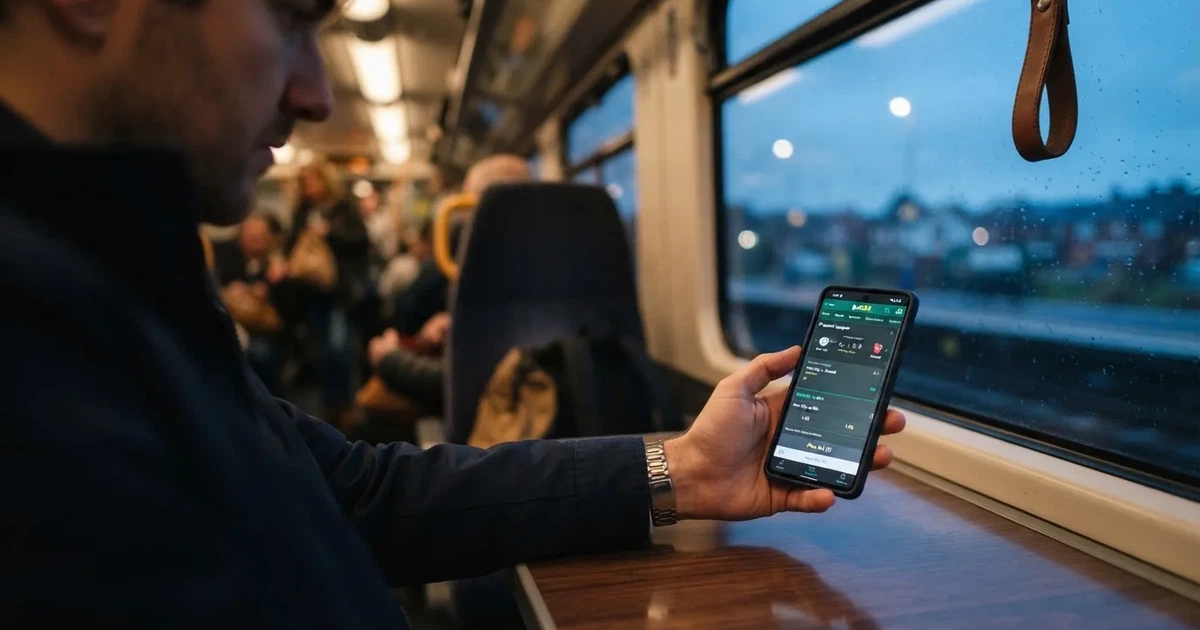
The ten apps reviewed here are the brands whose accounts are live on the Gambling Commission’s public register with a remote general betting licence covering real events, and whose terms and App Store listings were checked against the Commission’s own records on October 30, 2026. Each one is described for what its own terms state, with no working bonus printed anywhere on this page.
Why the licence is the starting line, not the finish
A bookmaker serving customers in Great Britain needs a Gambling Commission licence under sections 33 and 36 of the Gambling Act 2005 as amended by the Gambling (Licensing and Advertising) Act 2014. The licence test is consumption-based: the Commission asks who is taking the bet from a person in Great Britain, not where the operator’s holding company sits. Platinum Gaming in Gibraltar, for example, runs the Unibet UK site under Commission account 45322; a Curaçao or Maltese licence does not, on its own, entitle an operator to take a bet from a British punter.

The Commission’s public register is the test that matters: it can be searched by business name, trading name, domain or account number, and every brand in this comparison is on it. Northern Ireland sits outside the 2005 Act and runs under older law, so this page uses “GB-licensed” or “Great Britain licence” rather than implying that the same framework applies across the whole United Kingdom. No single licensed brand is “the only” licensed one; the register lists many more.
Identity verification happens before the first deposit, not after it. Under strengthened rules in force since 7 May 2019, name, address and date of birth are checked before a customer can fund the account or place a bet, including with a free bet. That cuts out the “sign up, bet, withdraw” pattern the offshore sector is built around. Source-of-funds questions at higher spend are routine under money-laundering rules; they are the normal background of a GB account, not a sign that anything has gone wrong.
Categories of licence, and which one this page covers
The Commission issues remote betting licences in distinct categories: general betting standard (real events), general betting standard (virtual events), general betting limited, pool betting, and the betting intermediary licence that covers exchanges. Every brand reviewed here sits under general betting standard (real events). Pool betting on British and Irish racing sits in its own category — the Tote runs under that kind of licence. Spread betting on financial markets is regulated by the Financial Conduct Authority, not the Commission; Spreadex, which offers both fixed-odds betting and financial spread betting, holds both authorisations, and the FCA register is the place to check that one.
The verification step, and why it is not the same as a credit check
A financial vulnerability check runs against publicly available records when a customer’s deposits minus withdrawals cross £150 in a rolling 30 days; it has applied since 28 February 2025. Bankruptcy records, county court judgments and similar items are what the check looks at. It is not an income check, not a credit-reference check, and not the “affordability check” plan announced by the Commission in its July 2026 staging paper — that plan sets out further financial risk assessments in phases, with no confirmed start date.
Safer gambling on a phone, not as an afterthought
Every GB-licensed remote operator is a GAMSTOP member and offers the safer-gambling controls the Licence Conditions and Codes of Practice require. GAMSTOP lets a customer self-exclude from every UK-licensed online operator for six months, one year, five years, or five years with auto-renewal; after the minimum period the exclusion then continues for a further seven years unless the customer contacts GAMSTOP to have it lifted. That is the length of time the choice sticks for.
Safer-gambling tools in apps are not all the same shape. Unibet’s app exposes deposit limits, a Player Profile test, product restrictions and self-exclusion in the safer-gambling section, with direct links to BeGambleAware, GamCare, GAMSTOP, Gambling Therapy and the Betting and Gaming Council. William Hill keeps customer service on 24/7 in-site messaging and offers time reminders, time-outs and deposit limits from the account menu. Star Sports runs deposit limits, a Play Break facility and self-exclusion through My Account. Dabble publishes its safer-gambling tools and helpdesk contact path inside the app itself.
GAMSTOP covers online sites and apps in Great Britain; betting shops run a separate multi-operator self-exclusion service. Help outside the apps is available through GamCare’s National Gambling Helpline, GambleAware, NHS gambling clinics and Gamblers Anonymous. Quitting tools work best when the customer uses them on the day they decide to, not after a losing run — the message is repeated because it works.
The bonus rules that came in on 19 January 2026
Promotion rules in force since 19 January 2026 cap wagering requirements at 10x. A £10 bonus would need £100 of qualifying bets to clear; a £50 bonus at 50x wagering is no longer compliant with the cap. Mixed-product promotions — an offer that compels the customer to bet on two or more product types, “bet on football to get free spins” being the textbook example — were banned outright from the same date.
The cap and the ban concern the offer that sits in front of a first deposit; they do not cap the value of a bonus itself, and they do not turn a free bet with no wagering condition into a separate category. Free-bet terms still run by the operator’s own rules: QuinnBet’s free bets, for example, are valid for seven days from credit, usable on any market at minimum odds of 1/2 (1.50 in decimal), capped at maximum odds of 50/1, with straight accumulators allowed and the multi-leg combinations known as Trixies, Patents and Yankees excluded.
Crypto, anonymity and the offshore gap
No GB-licensed bookmaker accepts cryptocurrency deposits anonymously. The same name, address and date-of-birth verification that applies to a debit card applies to a crypto deposit at a licensed operator; source-of-funds questions at higher spend work the same way whatever rail the money rides. There is no statutory ban on crypto deposits at the operator level, but the licensing framework makes anonymous play impossible at any licensed brand — the customer is identified before the first bet.
The alternative sits offshore. A Curaçao-licensed or Malta-licensed bookmaker may accept bitcoin or other coins without the GB identity check, and it does not take part in GAMSTOP. That is the trade: the customer trades the safer-gambling protections, the £150 vulnerability-check trigger, the 10x bonus cap and the British complaints route for the option to deposit a coin. The Act itself creates no offence aimed at the customer for placing a bet on an unlicensed site; the loss is the protection layer, not the criminal record.
Enforcement is against the operator. Cease-and-desist notices, search-engine referrals, registrar and host work and payment-provider pressure are the Commission’s tools; court-order DNS blocking powers have been discussed and may be in place, but no formal blanket ISP block has been confirmed. A punt who bets with an unlicensed brand accepts that funds held by that brand sit outside the British dispute resolution route. None of the brands reviewed here sits outside the GB framework.
What “unlicensed” actually costs in practice
The protections stacked behind a GB licence read like a list; what they mean is the difference between a complaint that the Commission can investigate and a complaint that a foreign operator can simply ignore. No GAMSTOP coverage means a self-exclusion decision covers only the sites the customer bothers to register with; no approved dispute resolution means the operator’s own terms are the final word; no British consumer redress means that if funds are withheld the customer’s options narrow to overseas litigation, which is rarely proportionate to the stake in dispute. The bonus cap and the vulnerability check apply to a licensed brand’s marketing in Britain, and an offshore brand is free of both.
What a “free bet” really is worth
A free bet that returns the stake of a winning bet back to the customer as cash is a different animal from one that credits only the winnings. The first pays stake × odds; the second pays stake × (odds − 1). The marketing word “free” usually means the second, so the value of a £10 free bet at decimal odds of 3.00 is £10 × (3.00 − 1) = £20 credited on a win — and that is before the bookmaker’s margin takes its cut.
QuinnBet’s free-bet rules are an example: seven-day validity, minimum odds of 1/2 (1.50), maximum odds of 50/1, accumulators straight in but Trixies, Patents and Yankees out. BetGoodwin’s welcome offer in the App Store listing — Bet £10 & Get £15 in Free Bets, split across a £5 sports bet, a £5 acca and a £5 Sub-Cover bet — is structured across multiple tokens rather than one, which means the customer has to clear each slice on its own merit. Bet600 credits a £10 free bet after the customer places at least five qualifying single bets of £10 or more at minimum decimal odds of 2.00 (Evens) within seven days of registration; that is the qualifying bet count carried as a condition.
A free bet with no wagering condition is the cleanest version of the offer: the customer bets the token, keeps the winnings, and stops. A free bet with a wagering condition multiplies the token by the wagering factor and asks for that volume of bets back at minimum price; the marketing language behind both is identical.
A worked illustration of stake to return
Consider a stake of £10 at decimal odds of 4.00: a winning bet returns £10 × 4.00 = £40, and the profit — return minus stake — is £30. Two bets multiplied into a combined price of 6.00 × 1.80 = 10.80 give a return of £10 × 10.80 = £108 on a winning combination, profit £98. The price the bettor sees is the price that wins, the price that pays the original stake back; the bookmaker’s margin inside it is the same number whichever way the bettor reads it.
For an each-way bet the stake doubles — one half to win, one half to a place — at the place terms the race and operator publish. For a Lucky 15 the total stake is fifteen times the unit stake, because four selections combine into fifteen bets. The “free” framing of any of these is the marketing framing; the stake × odds arithmetic is what the bettor is paid on.
Payments, payout speed and the rules around credit
Credit cards have been banned for gambling in Great Britain since 14 April 2020 under LCCP condition 6.1.2, and the ban extends to credit-card-funded e-wallet top-ups. A debit card or a bank transfer is not covered; the rule forbids the credit rail, not the bank rail. bet365’s app funding list — debit card, PayPal and Apple Pay — is the routine set, and the same shape covers most reviewed brands.
Apple Pay and Face ID or Touch ID login are now common on the App Store side of these apps: NetBet’s app supports Instant Payments to the bank, Apple Pay, PayPal and debit card with biometric login; Fafabet supports Face ID or Touch ID login; bet365 supports Face ID on devices that carry it. Faster Payments rails make same-day withdrawals routine for debit-card and bank-funded accounts; e-wallet withdrawals settle faster than card withdrawals on most operators, though the e-wallet comes first.
Deposit ceilings are operator-set rather than state-set in Britain. The Commission’s deposit-limit framework (RTS 12) is being phased in: the first phase has applied since 31 October 2025 and a second phase was postponed to 30 September 2026, so whether the full regime is live on the day the customer reads this depends on what the Commission has put in force since. No state-set ceiling on stake or loss in sports betting was found; operators set their own maximum stakes and may restrict a customer whose volume sits outside the operator’s risk appetite.
The speed side of the same coin
A payout speed of “instant” in the App Store description usually means debit-card-via-Faster-Payments once the withdrawal is approved, which on a GB-licensed brand has tended to settle in hours rather than days on bank-funded accounts. e-Wallet payouts (PayPal, Skrill, Neteller where offered) clear faster than card payouts because they ride the wallet’s own rails, not the bank’s. Bank transfers that fall outside Faster Payments take longer; no reviewed brand is described here as running outside Faster Payments for GBP withdrawals, but the option exists for non-GBP currencies and for some legacy accounts. Speed claims should be checked at the withdrawal screen, because what looks like a same-day rule in marketing is in practice a request that sits in the operator’s pending-withdrawal queue.
What separates a betting app from a mobile site
A native iOS or Android app is a piece of software installed on the handset, with login through a PIN, biometric check, or saved Face ID, with push notifications for price boosts and bet settlement, and with cached markets for offline browsing. A mobile site is a browser window scaling to a phone screen, with no installation, no notification permission, and no biometrics plug-in beyond what the browser offers.
The app stores also do some of the licence-checking work for the customer: both Apple and Google enforce age rating on gambling apps, and bet365’s listing carries a 17+ age rating in line with the operator’s own “18+ only” rule. Kwiff’s listing carries a 17+ age rating and quotes the Gambling Commission licence; London Bet’s listing carries a 17+ age rating and states UK regulation; BetWright’s listing carries a 17+ age rating. The rating is the App Store’s last-line filter, not a substitute for the Commission’s register, but a brand that omits either mark in its listing is one worth a closer look.
App-store listings also shape the visible surface of these apps. bet365’s listing is the most-downloaded sports-betting app in the UK, per Apple’s own description; Paddy Power’s app lists football, horse racing, boxing, rugby, tennis, golf, darts, snooker and F1 at the top of its sports menu; Betmaster’s app lists football, cricket, horse racing, NFL and eSports (League of Legends, Dota 2) at the top of its menu. The markets a punter sees at the top of the listing shape the menu they see when the app opens.
Live betting, live streaming and bet builders in the same app
In-play betting is the rule for UK-licensed apps, not the exception. Betfair’s app combines in-play betting with a Bet Builder, free live streaming of UK and Irish horse racing and selected football, and a 90 Minute Payout market that pays out on the score at full time. Spreadex combines fixed-odds and spread betting in one app with one-click, auto and partial cash out, Bet Builder across fixed odds or spreads, and live streaming of UK and Irish horse racing, greyhounds, tennis, NFL and selected football. Smarkets’ app offers two-factor authentication, live charts and an order-book view, a quick trade-out and 24/7 live chat support. Midnite’s app shows in-play events, an acca builder, popular accas and price boosts with maximum-stake limits; the acca-insurance market is the place where the operator carries the risk of one leg letting the bet down.
Bet Builder is now the expected shape in a football-betting app: the customer builds a price from player shots on target, total corners, both teams to score, and any other market the operator exposes on the same fixture. Cash out is the symmetric option: it lets the customer lock in a return before the bet has settled. Auto cash out triggers at a threshold the punter chooses; partial cash out splits a stake so that part exits at one price and the rest rides out.
Security on the handset
Two-factor authentication is now standard on the exchange side of the market and common on the fixed-odds side. Smarkets’ app advertises 2FA explicitly; bet365’s Face ID login replaces the password on devices that carry it, and NetBet’s Face ID or Touch ID login plays the same role. A reusable password kept inside an iCloud or Google account is still a weakness that biometrics do not address; the operator’s account-controls screen is the place to switch on every available layer.
The ten apps compared
The following table pulls together what each operator’s own terms and App Store listing state about the licence on the Commission’s public register, and what each operator says about the matters described in the sections above. Cells without a figure from the operator’s own terms use the no-data marker rather than leave the row open to a guess.
| Brand | Gambling Commission remote licence | Licence holder | What the operator’s own terms state on the matter |
|---|---|---|---|
| Dabble | 065677-R-340363-005 | Dabble Sports UK Ltd | Social-betting app with a real-time feed, Copy Bets, group chats and Banter Channels; Dabble pays 10p when another user copies a bet |
| Paddy Power | 039439-R-319330-013 | PPB Counterparty Services Limited | Football, horse racing, boxing, rugby, tennis, golf, darts, snooker and F1 listed at the top of the App Store sports menu |
| Betmaster | 065699-R-339929-002 | BM Solutions GB Ltd | Football, cricket, horse racing, NFL and eSports (League of Legends, Dota 2) covered at the top of the App Store sports menu |
| Bar One Racing | 056516-R-332750-007 | Bar-One Racing Limited | Irish independent bookmaker with shops across Ireland; sponsorships at Dundalk, Fairyhouse, Navan, The Curragh, Curraheen Park and Cork |
| BetGoodwin | 002927-R-327985-008 | Goodwin Racing Limited | Welcome offer in the App Store listing breaks into a £5 sports bet, a £5 acca and a £5 Sub-Cover bet after a £10 qualifying stake |
| London Bet | 066162-R-340278-004 | Thistle Bet Limited | Sports betting (football, tennis, horse racing, greyhounds, darts, golf, cricket, NFL, NBA, MLB, snooker) with Pragmatic Play casino slots |
| Unibet | 045322-R-324275-019 | Platinum Gaming Limited | Operated since 1999; safer-gambling tools cover deposit limits, the Player Profile test, product restrictions and self-exclusion |
| Tote | 054779-R-331321-008 | TDCO Limited | Placepot, Jackpot, Scoop6 and Quadpot bets, World Pool and international pools (French PMU, US, Hong Kong) |
| QuinnBet | 061011-R-335683-004 | QuinnBet (Gibraltar) Limited | Free bets valid seven days from credit, any market at minimum odds 1/2 (1.50), maximum odds 50/1, no Trixies/Patents/Yankees |
| Sporting Index | 027343-R-308898-011 | Sporting Index Limited | Spread-betting app; full spread account carries up to £300 cashback on selected sports spread markets |
The licence numbers and licence-holder names can be verified against the Commission’s public register by the licence number alone. None of the brands reviewed here is “the only” licensed one; the register carries more.
Dabble — social copy betting for the customer who follows tips
Dabble’s bet is that following another punter is more useful than building a bet alone. The app shows a real-time feed of bets placed by other users; the Copy Bet button mirrors the bet onto the customer’s slip at the same price and stake (or at the customer’s stake). The 10p paid each time a bet is copied is a small kicker the customer keeps in mind but does not budget against. Safer-gambling controls run through the same account screens as anywhere else: deposit limits, cooling-off periods, and a helpdesk reachable from the app.
The licence behind it is Gambling Commission account 65677, held by Dabble Sports UK Ltd. The market coverage inside the app is broader than the “social” label suggests, and the licence holder is not a foreign-registered brand — the company’s UK presence is the regulated entity.
For the customer who bets because a tipster’s track record caught their eye, Dabble is the natural fit. For the customer who builds their own prices from statistics, the feed is a distraction; the same person who reads form would do better in a more builder-shaped app.
Paddy Power — football-led App Store heavyweight
Paddy Power’s iOS listing opens with football, horse racing, boxing, rugby, tennis, golf, darts, snooker and F1, and the betting app mirrors that menu when the customer taps through. The licence sits under PPB Counterparty Services Limited, Commission account 39439 — the same wider group whose other UK brand is Betfair. That wider group is shared between Paddy Power and Betfair, so they are not two independent companies for purposes of bonus eligibility or self-exclusion.
For a customer whose weekend is built around the Premier League and whose summer is built around the Galway Festival, Paddy Power is a single app that covers both. The customer who wants an exchange-only experience goes to Betfair. The customer who wants a price-boost without the social feed goes elsewhere.
Betmaster — esports alongside the racing staples
Betmaster’s listing leads with football, cricket, horse racing, NFL and eSports, and the eSports coverage names League of Legends and Dota 2. That menu makes the brand a cleaner fit for the customer who wants an esports line next to a Premier League ticket than a brand whose eSports offering is buried three menus deep. The licence holder is BM Solutions GB Ltd, Commission account 65699.
The breadth of the menu is the selling point. The depth of the price is the question a sharper customer asks — a market the operator covers widely does not always mean the operator prices it tightly against the field.
Bar One Racing — the Irish-shop bookmaker in app form
Bar One Racing rebrand to BAR 1 Betting is recent, and the App Store listing names the sponsorships at Dundalk, Fairyhouse, Navan, The Curragh, Curraheen Park and Cork as the credentials. The bookmaker is Irish-owned and Irish-shopped, which fits the customer whose ante-post form is built from Irish racing. The licence sits under Bar-One Racing Limited, Commission account 56516, and the same holding structure covers both the in-shop and online businesses.
For the customer whose weekly betting sits in the Irish fields, Bar One is a natural fit. For the customer whose calendar is built around the Premier League and the Champions League, the menu is thinner than the football-led apps in this comparison.
BetGoodwin — a token welcome offer with a £10 stake
BetGoodwin’s welcome offer, as the App Store listing states it, breaks a £15 free-bet package into a £5 sports bet, a £5 acca and a £5 Sub-Cover bet after a £10 qualifying stake. Sub-Cover is a horse-racing promotion that refunds losing stakes if a key runner is pulled; the £5 slice sits inside that regime. The licence holder is Goodwin Racing Limited, Commission account 2927.
The qualifying £10 is the cheap part. Reading the small print on what qualifies as the £10 stake, what counts as an acca, and what the Sub-Cover refund actually covers is what costs the customer the offer when it goes wrong.
London Bet — the sports-plus-casino hybrid
London Bet’s listing leads with a sports menu — football, tennis, horse racing, greyhounds, darts, golf, cricket, NFL, NBA, MLB and snooker — alongside Pragmatic Play casino slots. The licence sits under Thistle Bet Limited, Commission account 66162. For the customer whose entertainment sits across both the racing and the roulette wheel, the hybrid saves two app installs.
For the customer whose play is sports-only, the casino floor takes screen space the customer didn’t ask for and is the reason many sports-only customers open a sportsbook-only app instead.
Unibet — the long-established operator with a full safer-gambling suite
Unibet’s UK site has run since 1999, and the operator’s own safer-gambling section is one of the more complete on the GB market: deposit limits, the Player Profile test, product restrictions and self-exclusion, with links to BeGambleAware, GamCare, GAMSTOP, Gambling Therapy and the BGC. The licence sits under Platinum Gaming Limited in Gibraltar, Commission account 45322 — a foreign-domiciled holder that complies with the GB consumption-based framework.
For the customer whose priority is the safer-gambling toolkit, Unibet is a single brand that ticks the layers. The trade is that the Group is the same as several other UK-facing brands; the customer who already runs a Unibet account will run into Bonus eligibility questions that span the group.
Tote — pool betting with international hooks
The Tote runs pool bets — Placepot, Jackpot, Scoop6 and Quadpot — alongside the World Pool and international pools from the French PMU, US racing and Hong Kong. The licence sits under TDCO Limited, Commission account 54779, in the pool-betting category the Act distinguishes from fixed-odds betting. Pools are a different shape of bet from fixed-odds: the dividend is the pool after the operator’s take is removed, divided by the winning tickets, and the dividend is known only at settlement.
For the customer whose weekly bet is a Placepot, the Tote is the natural home. For the customer whose bet is a football accumulator, the Tote menu is the wrong shape and the punter goes to one of the fixed-odds apps in this comparison.
QuinnBet — short-validity free bets with a clear minimum-price rule
QuinnBet’s free-bet rules are unusually specific. The seven-day validity cuts the slip if the customer does not use the token in the week after credit. The 1/2 (1.50) minimum odds rule excludes bets at shorter prices; the 50/1 maximum odds rule caps the upside. Straight accumulators are allowed; Trixies, Patents and Yankees are excluded, which keeps the free bet from riding the multi-leg combinations the brand offers for cash.
The licence sits under QuinnBet (Gibraltar) Limited, Commission account 61011. The customer’s free-bet volume is constrained by the validity window: seven days means seven days, and a credit that has not been used by the end of the window is gone.
Sporting Index — spread betting with a £300 cashback ladder
Sporting Index is a spread-betting brand; its App Store listing is the sports-spread app. The full spread account carries up to £300 cashback on selected sports spread markets. A spread bet is not the same shape as a fixed-odds bet: losses can exceed the stake, and Sporting Index’s own terms carry the FCA-regulated financial-spread caveat beside it. The licence sits under Sporting Index Limited, Commission account 27343.
For the customer who reads the Financial Times alongside the Racing Post, Sporting Index is the natural way to put a number on an opinion about goals, corners, or player performance indices. For the customer whose mental model is stake × odds, fixed-odds is the safer shape.
Where the price sits underneath the marketing
A bookmaker’s margin is the share of every pound staked that the operator keeps on average; it lives inside every price on the betting slip, and it is the same number seen from one of two directions. The “payout share” is the share returned to winning customers; the “margin” is the share kept by the operator; and the two together add up to 100% of the stake volume minus the operator’s take. The published 1X2 prices on a Premier League game with margin of 5% carry a payout share of 95%; a market with margin of 8% carries a payout share of 92%. The bettor wins the same bet at a lower price with the lower margin, before any other consideration.
The formula is the same one used to derive a margin from observed prices: for an outcome with decimal odds o₁ on outcome 1, o₂ on outcome 2, …, oₙ on outcome n of the same market, the payout share is 1 ÷ (1/o₁ + 1/o₂ + … + 1/oₙ), and the margin is 1 minus that figure. A two-outcome market with decimal odds of 1.91 on either side carries a payout share of 1 ÷ (1/1.91 + 1/1.91) = 95.55% and a margin of 4.45%; a market with prices of 1.85 and 1.95 carries a payout share of 1 ÷ (1/1.85 + 1/1.95) = 94.21%, margin 5.79%. The numbers move because the prices move.
The sharper bettor reads the margin before the bet. Lower margin means more of the stake stays in the bettor’s pocket over time, at the cost of giving up the long-odds windfalls the wider-margin bookmaker pays out. The wider-margin book is more generous on the upset; the tighter-margin book is more generous on the average bet. A reader who only bets the favourite needs the tighter margin; a reader who bets the outsider needs the bigger price; the same bettor reading both books at once reads both margins.
What the “best” really means for the punter
The best UK betting app is the one that fits the bet the customer actually places, not the one that markets itself hardest. The customer whose weekend is built around a Premier League accumulator reads the bet-builder menu and the acca-insurance offer, looks at which apps show the in-play menu without three taps, and checks what the brand’s safer-gambling controls look like in the account area. The customer whose calendar is built around placepots reads the Tote menu. The customer who reads the Financial Times for sport and the Racing Post for form reads Sporting Index alongside a fixed-odds app. The same customer does not need ten apps; they need the two or three that fit.
The Commission register is the layer below the apps, and the layer below that is the Act itself. A punt is a GB-licensed app, sees the 18+ verification on the first deposit, accepts the source-of-funds question when the volume crosses £150 of net deposits in a rolling month, and reads the free-bet small print before clicking claim. None of those layers is a tax the customer pays for being careful; together they are the cost of using a market that gives the customer back what it should when a bet wins, and that takes the operator’s complaints seriously when it does not.
For the offshore alternative: a GB licence is compulsory at the point of consumption; an operator whose remote facilities are used in Great Britain needs the licence under sections 33 and 36 of the 2005 Act. The customer who places a bet with an unlicensed brand trades the safer-gambling protections and the British complaints route for the option to deposit without the verification step. The Act’s penalty sits against the operator, not the customer, and the trade reads as a trade, not a risk-free shortcut.
Frequently asked questions
Which apps are best for esports betting?
The bettor’s esports menu sits inside the broader sports menu of every GB-licensed app. Betmaster lists League of Legends and Dota 2 at the top of its sports catalogue; the other reviewed brands expose esports markets under a “Specials” or “Esports” tab rather than at the top of the menu. The depth of market (player props, map handicaps, live odds on each round) varies by brand and is checked at the operator’s esports page before staking.
Is it best mobile apps for online betting?
Mobile apps and mobile sites deliver the same markets under the same GB licence when the operator is licensed, and the difference is the delivery channel. A native app installs onto the handset, exposes biometric login and push notifications, and loads faster on a slow connection; a mobile site needs no installation but draws every page from the server. App-store age ratings and the operator’s own “18+ only” sign-off apply equally to both channels.
What are the best apps for mobile sports betting?
The reviewed brands differ less on the licence and verification than on the markets they specialise in: Paddy Power for football, Betmaster for esports alongside the racing staples, the Tote for pool bets, Sporting Index for spread betting, Smarkets for the exchange view, Unibet for the more complete safer-gambling suite, Spreadex for the combination of fixed-odds and spread in one app. The read of “best” depends on the shape of the bet the customer places most weeks.
How can it be checked that a bookmaker holds a Gambling Commission licence?
The Commission’s public register is the place; it can be searched by business name, trading name, domain or Commission account number, and the access date is on every entry. The register also names the licence holder and the licensed site, both of which should match the operator’s own statements. A search at the register is the test that survives a marketing claim.
How is the return on a bet worked out from the stake and the odds?
On a single bet, return = stake × odds and profit = stake × (odds − 1). On a combined bet, the odds of the legs multiply into one price before the stake multiplies into the return. The fractions used in British odds (5/1, 11/4, evens) convert to decimal as a ÷ b + 1; “evens” is 2.00 in decimal, “5/1” is 6.00, “11/4” is 3.75. The same arithmetic works for an each-way bet, where the stake doubles, and for a multi-leg combination like a Lucky 15, where the total stake is unit stake × number of bets.
What is the bookmaker’s margin and how can it be seen in the odds?
The margin is the share of every pound staked that the operator keeps on average; the payout share is what is returned to winning customers, and the two add up to one market’s full volume. For odds o₁ … oₙ on every outcome of one market, payout share = 1 ÷ (1/o₁ + … + 1/oₙ); margin = 1 − payout share. Tighter margins favour the customer who bets favourites; wider margins favour the operator when the long shots land. A 1X2 market with decimal odds of 1.91 on either side carries a margin of about 4.45%, while a market priced at 1.85 against 1.95 carries closer to 5.79%.
Payments & apps – Newbookiesuk.com
Content created by the «Newbookiesuk.com» team
