
Greyhound racing betting tips in 2026: how to build a real edge
 Available in US
Greyhound racing moves in two-minute bursts where one mistake at the first bend costs the race. That speed is what makes the sport attractive to bettors — meetings run through the day, races finish before a kettle boils and the books refresh within minutes. It is also what makes the sport expensive to bet on badly. Tips promise winners; what actually pays the bills is a method for deciding that this dog at this price on this card is worth backing, and that the rest of the card is not. The pages that follow lay out that method: how to read form and sectional data, how to spot a price that beats the market once the bookmaker’s margin is stripped out, how to size the stake, how to handle offers without letting the rollover dictate the betting, and how the GB-licensed brands that price the sport actually compare.

Live data as of October 30, 2026, verified against the Gambling Commission’s public register of remote operating licences.
Building a greyhound racing tip from form, not from hunches
A greyhound betting tip is an argument, not a name. The argument runs from form to fitness to conditions to price, and every step can be checked against a public source. Strip any one of those steps out and the tip becomes a guess dressed in data.
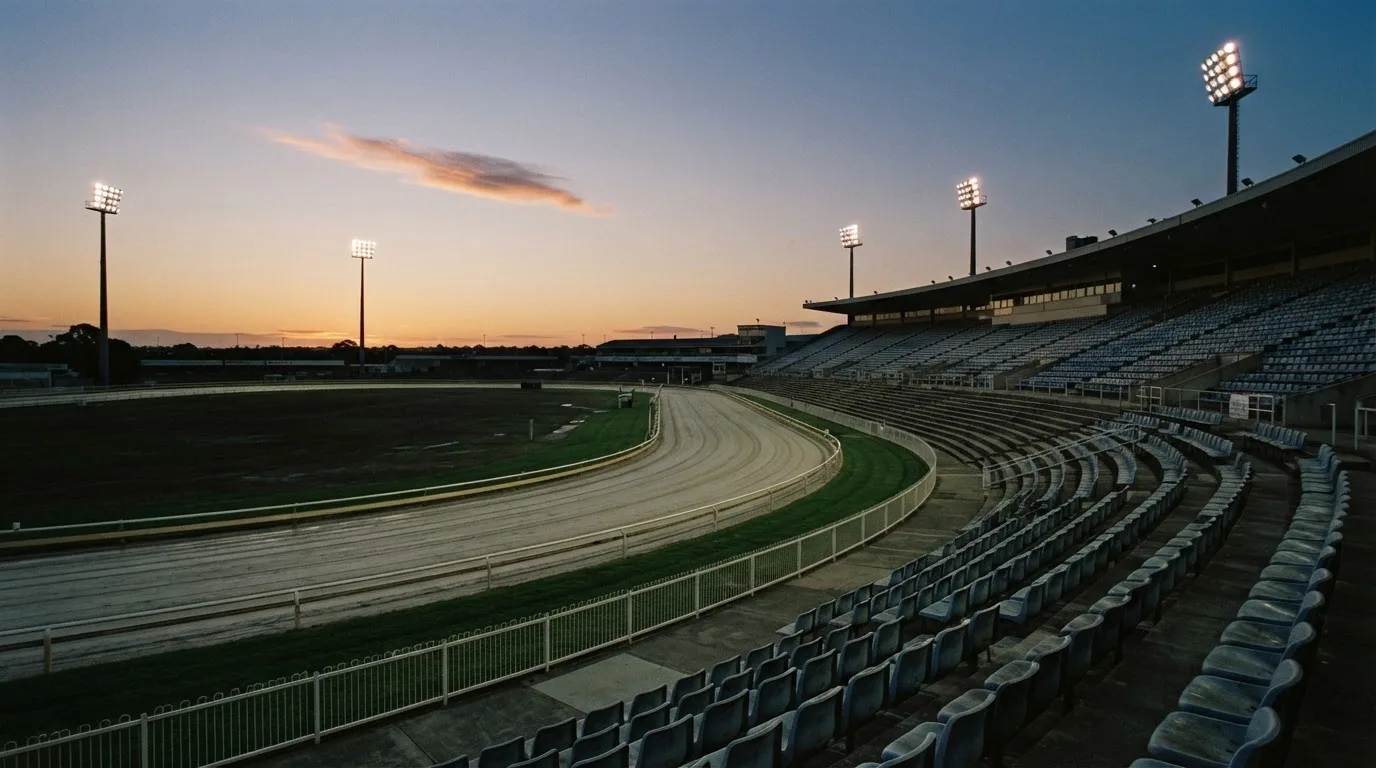
Form is the published record of recent runs: finishing position, beaten distance, weight carried (a greyhound’s race weight, not a handicap) and the going (the track surface and its state). The Racing Post, the Greyhound Board of Great Britain (GBGB) records and each stadium’s own form book all carry it. A dog whose last three runs look like a slide down the field is rarely about to win, and one whose times have tightened against similar grade is a candidate worth pricing. Sectional data — split times at the first bend, middle and home — beats sectional-free form on tight tracks where the first turn decides the race, because a dog that traps slowly but finishes fast tells a different story at Romford than at Kinsley.
Fitness sits underneath form. Whelp history (a greyhound’s age and breeding record), the gap between runs, and any return from injury matter more than the headline last-three-finishes line. A dog resuming after a six-week break can finish placed without being fit; a dog running its third race in a fortnight at the top of its grade can be a tired favourite. Tracks vary too: a wide, galloping 500-metre circuit suits long-striding greyhounds; a tight 400-metre circuit favours early pace and trap-one specialists. Reading the race card and the stadium notes is part of the tip. Skipping that step is how a method starts producing tips that lose on Saturdays.
The pieces of a tip, and the order to weight them
A reasoned pick sits the following pieces in order, with the most contestable first:

- the dog’s recent form and any sectional pace at this grade;
- its fitness, including any layoff, its race weight history and any reported niggles;
- the card — the race distance, the trap draw, the field size and the going;
- the trainer and kennel’s strike-rate at this track and grade, read across enough runners to smooth out variance;
- the price the market is offering on the dog, compared to the price the dog should be.
The last item is where most slippage happens. A method that prices every selection before checking the market turns into an exercise in justifying favourites. A method that ignores form and looks only at odds becomes a price-tracker that backs whatever drifts. The cleanest routine prices the race from form first, then asks what the book is offering, and only then asks whether the size of the edge justifies the stake.
Value bets, “sure things” and why no tip is ever certain
A value bet is a price that is bigger than the true probability of the selection winning, after the bookmaker’s margin is taken out. If a dog has a 40% chance of winning a race and the best price available is 3.50 (decimal) or 5/2 (fractional), the bet clears 1.00 (a bet that returns £3.50 for every £1 staked yields 40p expected value per pound over many similar bets) — the price is fair. If the best price is 4.00 (3/1), the bet has positive expected value and is worth taking. If it is 2.50 (6/4), it is a bet to lay off, not to back. Expected value is an average across many similar bets under those assumptions — no individual bet is guaranteed to win.
That is the whole framework. It is also why no tip is ever certain: a 60/40 shot loses 40% of the time on the long run, and a 90/10 shot loses one in ten. Streaks of losers do not mean the method is broken; they mean the variance is showing through. A staking plan sized to survive them is the discipline that separates a working method from a savings account being slowly emptied.
The failures look the same from the inside. A tip claimed as a “favourite to bank on” — usually a short-priced favourite whose trainer has won this race three years running — is just one perspective, as every bet carries a risk until the trap fails or the dog gets crowded at the first bend. A “system” tip — anything promising winners on a fixed rule such as “always back trap one in grade A2” — looks free until the sample size gets large enough to expose the margin. The bookmaker’s margin lives in every market on the card, and any rule that beats it in backtesting usually does not beat it in live betting once the sportsbook has had time to update prices.
The shape of a working selection routine
Day-by-day, a routine that produces value bets looks ordinary: form read at the desk, prices checked early because dogs whose prices shorten late are usually dogs the market has seen something the public has not, the card graded from most raceable to least, and only then the stake worked out. Favourite-blind routines and lock-of-the-day routines skip steps and call the result a tip. A value-betting routine admits when the price is wrong and leaves the race alone.
Greyhound bet types and how the odds are built
Greyhound meetings run on a market roster that wider sports betting never sees. Win and each-way are the spine; place betting (top two or three depending on field size) is the safer backer’s friend; forecast and tricast bets ask for the exact order of the first two or three home; ante-post bets are placed before a meeting’s final declarations and lose the stake if the dog is declared a non-runner. The greyhound bet calculator every serious punter keeps does the same arithmetic faster, but the arithmetic itself is plain.
A greyhound win bet pays the stake times the decimal odds, and the profit is stake times (odds minus 1). A £10 bet at 4.00 (3/1) returns £40 and pays £30 profit if the dog wins (£10 profit if it places, on a market that offers place terms). Each-way doubles the stake: one stake on the win market and one matching stake on the place market, with the place terms set by the race and the operator. A forecast pair (first and second in order) compounds the two prices; a tricast (first, second and third in order) compounds three. A combination bet multiplies the odds of each leg into one price — a 4.00/3.00/5.00 tricast has combined odds of 60.00 and a £1 stake returns £60 if the order lands.
In-running prices and the “best odds guaranteed” effect
In-running prices are live odds offered between the dogs leaving the traps and the race being settled. They exist because a dog’s price changes the moment the trap springs, and they reward punters who can read pace. The bookmaker’s margin sits inside them as surely as it sits on the morning card; an in-running price of 2.10 (11/10) on a dog that should be 1.80 (4/5) is not generosity, it is a market over-exposing to early action.
Best Odds Guaranteed (BOG) is the term for a promise that if the starting price (SP) — the on-course fixed-odds price when the race begins — is bigger than the price taken, the punter is paid at the bigger price. Several GB brands apply it to UK and Irish greyhound racing without a stake ceiling. BetGoodwin runs BOG on all UK and Irish greyhound racing up to £1,000; Fafabet publishes a horse-racing BOG from 9am on race days. The marketing word is generosity; the effect is that the early-mover price and the late-SP price carry the same value, which removes one reason to wait and bet.
Spread betting: a different book on the same race
A spread bet is not a bet on a winner but on a number the bookmaker quotes a range around (the spread) — the number of lengths by which the favourite wins, the time of the fastest trap, the total winning distances in a meeting. The punter’s profit or loss is the difference between the quoted spread and the realised number, multiplied by a stake per unit. Spread betting losses can exceed the deposit; Spreadex, the main UK spread-betting firm on racing, is regulated by the Financial Conduct Authority for the spread book and by the Gambling Commission for any fixed-odds product it runs alongside. A greyhound spread bet has a wider tail than a fixed-odds win bet because the punter does not know in advance how far the favourite will win — a one-length win and a six-length win settle very differently. This is the same sport and a different job.
The tournament calendar, fixtures and where the meetings actually run
Greyhound racing in Great Britain is regulated by the Greyhound Board of Great Britain (GBGB), which licenses 18 stadia around the country. Meetings run most evenings and several afternoons, with fixture density peaking around Saturday evenings and the major events. The calendar divides into three layers: weekly graded cards at the larger stadia, which carry the form book the tip method relies on; the classic races such as the English Greyhound Derby and the Scottish Greyhound Derby, which attract ante-post betting weeks in advance; and minor meetings at smaller tracks, which offer volume but thin form and wider bookmaker margins.
Ante-post greyhound betting is the wagering before the final declarations are made. The price is fatter and the stake is lost if the dog is declared a non-runner or is not entered when the final declarations are published. That is the trade a punter is making for the bigger price, and it should be made with a stake the punter can afford to lose on the chance. Ante-post tips without that disclosure are a familiar form of bad advice.
Greyhound racing beyond Britain
Greyhound racing was effectively ended in New Zealand by the Racing Industry (Closure of Greyhound Racing Industry) Amendment Act 2026, which was passed on 2 April 2026 with the phase-out set for 1 August 2026. The closure announcement had been made by Winston Peters on 10 December 2024. Before the ban, Greyhound Racing New Zealand organised seven affiliated clubs: Auckland, Waikato, Whanganui, Palmerston North, Canterbury, Otago and Southland. For a UK-focused punter the New Zealand closure is a market note, not a betting opportunity: the betting volume has moved on, and any NZ racing carrying prices after the phase-out is to be left alone on any unlicensed book that has lifted them.
The ten brands pricing greyhound racing in Great Britain
The ranking below is built from one rule and one test. The rule is that a brand offering fixed-odds betting to customers in Great Britain must hold a Gambling Commission remote licence wherever it is based; the test is the Commission’s public register of remote operating licences, against which every brand in this list has been matched. A place in the ranking is not a licence, and no single brand is “the only” GB-licensed bookmaker. Several brands can run under one licensee, but each brand below operates under its own Gambling Commission account.
| Brand | Gambling Commission remote licence | What the operator’s own terms state on greyhound markets |
|---|---|---|
| BetGoodwin | 002927-R-327985-008 (Commission account 2927), Goodwin Racing Limited | Pays Best Odds Guaranteed on all UK and Irish greyhound racing, up to £1,000 |
| Bar One Racing | 056516-R-332750-007 (Commission account 56516), Bar-One Racing Limited | Irish independent bookmaker with shops across Ireland and racing sponsorships at Dundalk, Fairyhouse, Navan, The Curragh, Curraheen Park and Cork |
| Star Sports | 009177-R-104555-019 (Commission account 9177), Star Racing Limited | UK leading independent bookmaker with virtual sports, casino and live casino alongside the sportsbook |
| 888sport | 039028-R-319297-014 (Commission account 39028), 888 UK Limited | Pre-match and in-play betting, Cash Out, Bet Builder, racing streams, BetFinder form tools, a live bet feed and daily boosted odds |
| Fitzwilliam Sports | 048760-R-335434-009 (Commission account 48760), SBKI Limited | Phone and live chat with the office open 09:00 to 21:00, Monday to Sunday, and messenger replies generally within 90 seconds |
| BetTom | 064959-R-339314-003 (Commission account 64959), Bet Tom Limited | Sports welcome offer of 50% back as a free bet up to £50, with a matching 50% back up to £50 as free slot funds for casino play |
| Unibet | 045322-R-324275-019 (Commission account 45322), Platinum Gaming Limited | Operating since 1999, with deposit limits, a Player Profile test, product restrictions and self-exclusion as safer-gambling tools |
| London Bet | 066162-R-340278-004 (Commission account 66162), Thistle Bet Limited | App combines sports betting on football, tennis, horse racing, greyhounds, darts, golf, cricket, NFL, NBA, MLB and snooker with Pragmatic Play casino and live in-play betting |
| Betfred | 039544-R-319290-010 (Commission account 39544), Petfre (Gibraltar) Limited | App carries Bet Builder, Sub Switch, Racing Post data, Extra Places, live casino and bingo |
| Fafabet | 057385-R-333191-006 (Commission account 57385), Taichi Tech Limited | Best Odds Guaranteed on UK and Irish horse racing win and each-way bets from 9am on race days: starting price is paid if bigger than the price taken |
Why these ten, and what the table cannot say
Every brand here is on the Gambling Commission’s public register against a remote general betting standard (real events) licence, and no GB-facing bookmaker should be considered without that test. The table leaves out three things the prose has to carry: how each brand prices greyhounds live and how quickly it suspends a market after a non-runner, how its offers interact with the wagering cap now in force, and how thin or deep its each-way and forecast markets look on a weekday card. Those are the things a punter checks on the betting slip and in the terms page, and they are not the same across all ten.
BetGoodwin leads the greyhound-specific row because its BOG ceiling — £1,000, on UK and Irish greyhound racing, with the bigger of the early price and the SP paid — is the cleanest greyhound-specific term in the set. Fafabet’s BOG is horse-racing-focused and starts at 9am on race days, so a Saturday-night greyhound meeting partly misses it. Bar One Racing and Star Sports sit close to BetGoodwin in the greyhound-specialist slot but with no published BOG; their edge is track-sponsorship and pricing depth on the Irish and Southern English cards. The other six brands are stronger on greyhounds as part of a fuller sportsbook than as greyhound specialists; their lists of markets are wider, and the greyhound card shares the screen with horse racing, football and the rest of the book.
The choice of brand often rests on what the comparison table cannot capture: whether the operator’s strengths align with the reader’s own betting habits. London Bet and Betfred offer greyhound markets inside a much larger sportsbook; a reader who came for greyhound tips and stays for the casino games is well served by them. A reader who came for tips and only tips, on UK and Irish meetings, with the same BOG treatment as horse racing, is better served elsewhere. The page writes for the second reader first.
BetGoodwin — Best Odds Guaranteed specialist
Goodwin Racing Limited holds Commission account 2927 (remote licence 002927-R-327985-008), a general betting standard (real events) licence that authorises fixed-odds betting remotely. Its greyhound offer is built around BOG on all UK and Irish meetings, capped at £1,000 per winning bet, with the better of the price taken and the starting price paid. For a punter whose method prices the early card before the SP firms up, BOG removes the asymmetry between betting at 8pm and betting at 9.55pm. The brand runs the typical GB card of win, place, each-way, forecast and tricast markets on graded meetings and accepts ante-post bets on the bigger festivals. The narrower book — fewer sports, deeper form on racing — fits the greyhound specialist.
Bar One Racing — Irish independent, racing-sponsorship-led
Bar-One Racing Limited holds Commission account 56516 (remote licence 056516-R-332750-007) and runs the Bar One Racing brand, now rebranded BAR 1 Betting, as an Irish independent bookmaker with shops across Ireland. The brand carries racing sponsorships at Dundalk, Fairyhouse, Navan, The Curragh, Curraheen Park and Cork, and the greyhound card mirrors that on the Irish tracks. For UK-based punters the appeal is pricing depth on Irish greyhound meetings and a clean betting slip, plus the kind of in-shop credit terms that indie brands sometimes extend on big ante-post bets. One limitation is the sportsbook size: punters who also look for a deep football market may find the selection more limited than at a multi-sport specialist.
Star Sports — independent UK book with virtuals on the side
Star Racing Limited holds Commission account 9177 (remote licence 009177-R-104555-019) and markets Star Sports as the UK’s leading independent bookmaker. The site pairs the greyhound card with virtual sports, casino and live casino, which is a fuller product than the pure-indie books and a thinner greyhound specialist than the racing-led independents. The trade-off is choice: a punter who wants depth on greyhounds and a casino tab for half-time can do both here. Live greyhound betting and streaming are available subject to race and rights, and the form tools are the standard racing press rather than the brand’s own.
888sport — full sportsbook with Cash Out and bet builders
888 UK Limited holds Commission account 39028 (remote licence 039028-R-319297-014) and runs 888sport as a full-service sportsbook. The greyhound card runs alongside pre-match and in-play football, tennis, basketball and the rest of the major sports, and the in-house tools are wide: Cash Out, Bet Builder, racing streams where rights permit, a BetFinder form tool, a live bet feed and daily boosted odds. The trade-off is greyhound depth: 888sport offers the standard graded card but is not positioned as a greyhound specialist, and the promotional cadence is the wider-sportsbook kind. For a punter whose method only needs a competitive price on the greyhound card, the brand is strong; for one whose method needs deeper forecast and tricast markets, the racing-indie books ahead of it in the table are stronger.
Fitzwilliam Sports — phone-led service with 09:00 to 21:00 hours
SBKI Limited holds Commission account 48760 (remote licence 048760-R-335434-009) and runs Fitzwilliam Sports as a phone-and-live-chat bookmaker, with the office open from 09:00 to 21:00, Monday to Sunday, and messenger replies usually within 90 seconds. The brand is positioned for the punter whose bet is placed over the phone rather than through a self-service click. Pricing on the greyhound card is competitive on graded meetings and the ante-post list extends to the major festivals. One limitation to consider is the brand’s office hours: as the desk operates only until 21:00, any meeting finishing after that hour leaves the live-betting window inaccessible.
BetTom — fresh brand with a back-half welcome offer
Bet Tom Limited holds Commission account 64959 (remote licence 064959-R-339314-003) and runs BetTom as a newer GB-facing bookmaker. The sports welcome offer is 50% back as a free bet up to £50, matched by a 50% back up to £50 as free slot funds for the casino tab, and the offer carries the standard wagering conditions in the terms. The greyhound card runs the usual markets; the appeal is the matched welcome structure across sport and casino for a punter who uses both. The brand is too new to be a greyhound specialist, but for a reader just starting out on the sport it gives a low-cost entry to the wider book.
Unibet — established brand with the strongest safer-gambling tools
Platinum Gaming Limited holds Commission account 45322 (remote licence 045322-R-324275-019) and runs Unibet, in operation since 1999. The greyhound card is part of a deep sportsbook; in-play betting, an acca builder, popular accas and price boosts with maximum-stake limits all run on the home page. The sports welcome offer is a £40 free-bet package for a £20 qualifying bet at minimum odds of 2.0 (1/1), with the free bets expiring within seven days of issue, for new GB customers using a debit card or instant bank transfer. The safer-gambling tools are the strongest on the page: deposit limits, a Player Profile test, product restrictions and self-exclusion, alongside links to BeGambleAware, GamCare, GAMSTOP, Gambling Therapy and the BGC. The trade-off is again the wider sportsbook: a punter who bets greyhounds only will pay for the breadth. For a punter who values consumer-protection depth, the brand is the clearest choice in the table.
London Bet — greyhounds plus casino on a smaller book
Thistle Bet Limited holds Commission account 66162 (remote licence 066162-R-340278-004) and runs the London.bet app, a smaller-format sportsbook paired with Pragmatic Play casino slots. The greyhound card sits inside a wider list of sports — football, tennis, horse racing, greyhounds, darts, golf, cricket, NFL, NBA, MLB and snooker — and the app carries live in-play betting alongside the casino games. The sport-casino blend is the brand’s pitch. The trade-off is greyhound depth: the card is competitive on the major graded meetings but not as deep on the smaller stadia as the indie racing books above.
Betfred — full-feature app with Racing Post data
Petfre (Gibraltar) Limited holds Commission account 39544 (remote licence 039544-R-319290-010) and runs Betfred, the largest UK high-street bookmaker on the GB-facing online list. The app carries the full feature set: Bet Builder, Sub Switch (substitute-player markets on football), Racing Post data for the racing cards, Extra Places on the bigger horse-racing festivals, live casino and bingo. Greyhound markets run alongside horse racing as part of the racing card; Betfred is the largest customer base for ante-post greyhound bets and is, for that reason, often the first to suspend on a non-runner. The trade-off is the GB high-street cadence: weekly rugby, midweek football specials and an aggressive offers schedule that the racing-only punter does not need.
Fafabet — BOG on horse racing from 9am
Taichi Tech Limited holds Commission account 57385 (remote licence 057385-R-333191-006) and runs Fafabet on a sportsbook app with a strong racing focus. The published BOG covers UK and Irish horse racing win and each-way bets from 9am on race days — if the SP is bigger than the price taken, the bigger price is paid. The greyhound card runs alongside the horse card on race days and from the mid-afternoon card onwards; before 9am and on the early-meeting greyhounds, BOG does not apply. The trade-off is the BOG cut-off. For a punter who bets mostly on the morning greyhound card, Fafabet’s BOG is a partial product; for one who bets on the evening meetings across both sports, it is a clean value-add.
The bookmaker’s margin, seen inside the odds
The margin is the cut the bookmaker takes from every market on the card. It is the same number seen from two sides: a payout share of 95% is the same market as a 5% margin, and the difference is which side of the equation the bettor is on. The math is straightforward. For a two-way market at 1.90 / 1.90, the payout share is 1 ÷ (1/1.90 + 1/1.90) = 0.95 — 95% of every pound staked is returned to punters across the long run, and the remaining 5% is the bookmaker’s margin. On a three-way market at 3.20 / 3.50 / 2.10 (1/2.50 / 5/2 / 11/10, say), the share is 1 ÷ (1/3.20 + 1/3.50 + 1/2.10) ≈ 0.86, a 14% margin.
The illustration matters because margins do not lie to the reader, only around them. A greyhound card with a 5% margin is competitive for a tighter market; a card with a 10-12% margin is the routine bookmaker line on smaller meetings; a card with a 15-20% margin is the line a punter should leave alone unless the price on the selected dog beats the margin by an unmistakable edge. The condition that makes the band useful is that it is the band’s average across the long run — a single meeting can deliver a margin well above the band on slow nights and below it on busy ones.
What the margin shows up as in real odds
A £10 win bet at 4.00 (3/1) returns £40 and pays £30 profit if the dog wins. The 25% implied probability (1/4.00) is what the book says; the margin is what the book gets across all runners. Compare two books on the same race where the favourite is 3.00 (2/1) with Book A and 3.20 (11/5) with Book B: the bigger price at Book B is the cleaner bet, even though Book A’s card may look tidier. The arithmetic — implied probability versus realised probability — is the same on a 12-runner handicap at Central Park as it is on a six-runner sprint at Romford. The margin is always inside.
Legality, regulation and what a GB licence guarantees
The Gambling Commission is the regulator for the whole commercial betting market in Great Britain (England, Scotland and Wales). Northern Ireland sits outside the Gambling Act 2005 and runs on its own older framework, so a “GB licence” does not authorise a Northern Ireland customer to bet and vice versa. Since the Gambling (Licensing and Advertising) Act 2014 an operator whose remote facilities are used in Great Britain must hold a Commission licence regardless of where it is based; a Curaçao, Maltese or Gibraltar licence is not a substitute for the GB one. The Commission’s public register is the test of who holds one, and any operator without a listing there is offering a GB-facing product without the licence the Act requires.
Betting in Great Britain is licensed under categories. The category a brand carries determines which products it can offer remotely: remote general betting standard (real events) for ordinary sports and racing; remote general betting standard (virtual events) for simulated events; remote general betting limited for smaller-scale operations; remote pool betting for the off-course pool book; and remote betting intermediary for the betting exchanges (where punters back and lay against each other). The brands in this article carry remote general betting standard (real events) licences, which is the right slot for greyhound racing. There is no cap on the number of licences and no state monopoly. Minimum age 18, and identity is checked before the customer can deposit or bet (since 7 May 2019), including with a free bet or bonus — a GB-licensed site is not anonymous.
Financial spread betting and the FCA
A greyhound spread bet on a UK-facing firm is not the Gambling Commission’s primary regulator. Spreadex, the main UK spread book on racing, is regulated by the Financial Conduct Authority for the spread book and by the Gambling Commission for the fixed-odds book it runs alongside. Spreadex states that spread betting losses can exceed the deposit. Spread bets are a different product from fixed-odds bets, and the public register does not substitute for the FCA’s authorisation on the spread side.
What may be bet on, and how the controls work
There is no statutory list of permitted bets or markets. An operator holds a category licence and offers markets under its own rules and the Commission’s Licence Conditions and Codes of Practice. In-play betting is offered by GB bookmakers; the controls are operator licence conditions and consumer-protection duties, not a statute. Esports are treated as ordinary events; virtual events are a separate licence category. Politics, TV shows and novelty markets are offered by GB bookmakers and no statutory prohibition was found. Off-course pool betting on horse or greyhound racing is a separate category and duty. No statutory cap on stakes was found: operators set their own maximum stakes and may restrict customers above them.
Advertising, bonuses and the wagering cap
Advertising is not licensed by the Commission; it runs through the CAP Code (non-broadcast) and BCAP Code (broadcast), enforced by the ASA, alongside the Commission’s marketing rules. The CAP Code requires gambling marketing to be socially responsible, not of strong appeal to under-18s, and no one who is or seems to be under 25 may be featured gambling or play a significant role (the rule concerns who appears in the advert, not who may bet). Promotion rules in force since 19 January 2026 cap wagering requirements on bonuses at 10x — a £10 bonus at 50x wagering, which would have needed £500 of bets, becomes at most £100 of required bets under the cap. Mixed-product promotions — betting on football to claim free spins, or casino play to claim a sports free bet — are banned. Whether the cap applies to free bets that carry no wagering condition and any cap on the bonus money itself are not established.
Player protection, GAMSTOP and the offshore question
GAMSTOP is the national multi-operator online self-exclusion scheme and a mandatory licence condition for online operators since 31 March 2020. Self-exclusion periods are six months, one year, five years, or five years with auto-renewal; after the minimum period the exclusion stays for a further seven years unless the customer asks GAMSTOP to remove it. GAMSTOP covers online sites and apps; betting shops run a separate service. A financial vulnerability check applies at licensed remote bookmakers when a customer’s deposits minus withdrawals exceed £150 in any rolling 30 days — the check is a public-record search, not an income check and not a credit reference search. Deposit limits (RTS 12) are an operator obligation: operators must offer a gross deposit limit on a fixed time frame; the first phase has applied since 31 October 2025, a second phase was postponed to 30 September 2026, and whether it is live is not established. There is no state-set deposit or loss ceiling for betting; limits are the customer’s choice, not a regulator’s ceiling.
Help is available. GamCare runs the National Gambling Helpline. GambleAware funds treatment and education. The NHS runs gambling clinics. Gamblers Anonymous runs mutual-aid meetings. Gambling Therapy runs online support outside the UK.
What an unlicensed offshore brand costs the punter
An unlicensed offshore brand can keep its books attractive because it does not bear the Commission’s costs — but the protection it cannot offer is the protection the licensed brand has to. There is no GAMSTOP coverage, no Commission complaints route, no approved alternative-dispute-resolution (ADR) provider, no British consumer redress if funds are withheld, no 10x bonus cap, no £150 vulnerability check. Providing gambling facilities in Great Britain without a Commission licence is an offence under section 33 of the Gambling Act 2005, aimed at the operator; no offence aimed at the customer who merely bets on an unlicensed site was found. The honest frame is licensed checks, limits, GAMSTOP coverage and a bonus cap, but also verification before the first bet; unlicensed none of those protections and possible loss of funds, not “legal to use”.
Offers, free bets and what a welcome package actually costs
The offer matters less than the rollover. A £20 free bet package that needs the same £20 to be turned over twenty times at minimum odds of 2.00 is a £400 betting requirement to claim £20 of value, and the price the punter pays is the margin of the market they are forced to bet on at minimum odds 2.00 — a market most often priced in the heavy-margin range. A clean welcome offer is one in which the rollover, the minimum odds and the qualifying period are stated up front; a noisy one buries the same information in the small print. Comparing offers is mostly reading the small print; comparing value after rollover is comparing expected cost, not headline figure.
The cleanest offers pair a transparent rollover with a deposit match that does not force a second product on the punter. The mixed-product promotions now banned by the Commission removed the second-product pad; what remains is single-product rollover and free-bet credits. Free-bet credits are usually not paid back with a win: a £10 free bet at 4.00 returns £40, not £50, because the £10 stake is forfeit. The value of a free bet whose stake is not paid back is the free-bet amount times (odds minus 1) divided by odds times the payout share of that market — for a £10 free bet at 4.00 on a 95% market, that is roughly £7 of expected value. The number is an average across many such bets and is no promise of a payout.
The promotional calendar on greyhound racing is narrower than on football. BOG on UK and Irish meetings is the most common promotion; boosted odds on feature races; acca insurance on multi-leg bets; price boosts on short-priced favourites as ante-post racing approaches. The promotions a brand runs on greyhound racing are usually quieter than the headline welcome offer.
Reading the small print on greyhound offers
The clauses that cost the most are the ones that rarely draw attention. Minimum odds: bets at shorter prices than the floor do not count toward the wagering requirement. Qualifying period: free bets expire within a stated number of days (Unibet’s free bets expire within seven days of issue) and any unconverted credit is lost. Market restrictions: bets on certain markets — sometimes outrights, sometimes acca-builder legs — do not count. Payment-method exclusions: a welcome offer may exclude deposits by Skrill, Neteller or some prepaid cards. Withdrawal during rollover: a withdrawal before the rollover completes usually forfeits the bonus and any winnings tied to it. Each clause is rational from the operator’s point of view; what it means for the punter is that the headline offer is the start of the calculation, not the answer.
Mobile apps, in-play betting and the cash-out question
The greyhound betting app is now the betting shop. GB-facing bookmakers publish apps for iOS and Android with the same markets, the same in-play feed and the same bet slip as the desktop site. Apps are how most bets get placed at the major brands in this article; the app and the desktop are not separate products. The form tools live in the app the same way they live on the desktop, and the betting slip behaves the same way in both. Whether a punter uses the app or the desktop is a workflow choice, not a feature choice.
The greyhound betting app for Android and the iOS equivalent should be downloaded only from the operator’s own site or from the official app store. A greyhound bet app from an unknown domain is not a useful product, and an APK from a third-party site does not carry the licence the brand carries.
In-play betting and Cash Out on greyhound markets
Live greyhound betting is the same offering as in-play on any other sport: prices change after the trap springs, the betting slip adjusts within seconds and the bet is placed against the live price. The cleanest live feeds are the ones that suspend quickly after the start and re-open at the SP-equivalent figure; the worst are the ones that stay live for too long and invite bets the race has already settled. Greyhound in-play betting is a sharper product than football in-play because the race is short and the price moves sharply, and the punter has less time to over-bet.
Cash Out is a feature that closes a bet before the race settles for a value the bookmaker quotes. It exists because the bookmaker can quote a tighter range than the punter can wait for, and the price the bookmaker quotes reflects that range. A punter who uses Cash Out on a green-running bet routinely locks in less than the bet would have returned at full settlement; a punter who uses Cash Out on a bet going wrong often gives back stakes the bookmaker would have returned in full. Used as a discipline against chasing losses or over-exposing on a multi-leg acca, Cash Out has a place; used as a routine on every bet, it gives the bookmaker a margin on both sides of every trade.
What the operator comparison cannot tell a punter
Three things the table cannot show. First, how fast a book suspends a market after a non-runner or a scratching. Six-runner races are more sensitive than twelve-runner handicaps, and ante-post markets are sensitive to declarations weeks in advance. Second, how thin or deep each-way terms get at a meeting outside the festivals: place terms vary by race and operator, and the punter reads them on the betting slip. Third, how the offers interact with the wagering cap on bonuses — a brand whose offer structure is mostly free-bet credit with no rollover sits cleaner under the 10x cap than a brand whose offer requires turnover.
How a routine user picks from this list
A green punter with a method can pick on what the table shows: BOG ceiling, ante-post depth, racing market variety. A greyhound specialist with a 12-month record of small, value-led bets will tend toward BetGoodwin and Bar One Racing; a multi-sport punter who bets greyhounds occasionally will tend toward Betfred and Unibet for the wider product. The brand with the strongest safer-gambling tools is Unibet; the brand with the most complete racing-data feed is Betfred (Racing Post data on the app); the brand with the cleanest phone-led service is Fitzwilliam Sports. None of those choices is exclusive; each punter’s method picks the brand whose mix fits the method.
Where the data starts to age
The figures and licence verifications on this page are current as of October 30, 2026 against the Commission’s public register. The register updates without notice and a brand can lose a licence, change a personal-licence holder or move its licence under a new entity. The 10x bonus cap and the £150 financial vulnerability check are recent enough that a returning reader should refresh the terms against the relevant Commission notices; in particular, the deposit-limit phase that was postponed to 30 September 2026 should be checked before relying on the limit structure described above.
Staking discipline: bankroll, units and the streak problem
Staking is where value edges turn into banking edges. A staking plan that does not survive a 10-bet losing streak is not a staking plan — it is a savings account being slowly emptied. The cleanest unit-staking approach is a fixed percentage of bank per bet (say, 2%), which shrinks the stake as the bank shrinks and grows it as the bank grows, and which forces the punter to survive the streak in order to keep betting. The flat-stake approach (a fixed amount per bet) is simpler but does not protect the bank; the Kelly-style approach (a stake proportional to the edge) is more aggressive than most punters want and is best left to professional syndicates with the sample size to use it.
Bankroll discipline means the punter has a betting bank separate from the household budget, that the bank is sized to survive at least 100 losing bets at the chosen unit, and that the punter does not deposit more at the licensed bookmaker because the bank has run short. The deposit limit the operator offers is a guard, and the punter who hits it without a betting plan is the one the tools are designed to catch.
Stops, sessions and the day’s race card
A betting session has a stop. The stop may be a unit cap (no more than three bets on a card), a time cap (an hour after the last race begins) or a loss cap (a day’s bank hits a floor and is not topped up). Without a stop, the punter drifts into late races the method did not price, and late races are where the highest-margin books live. With a stop, the punter ends a session when the work is done and not when the bank has run out.
Frequently asked questions
How do I bet on greyhound racing?
Place a win, place or each-way bet on a graded meeting through a bookmaker licensed by the Gambling Commission, sized as a percentage of a separate betting bank. Read the form, check the trap draw and going, then check the price the bookmaker is offering rather than the favourite’s name. Close the session at the stop you set at the start.
How do I bet on greyhound dogs in the UK?
Pick a brand that holds a remote betting licence on the Gambling Commission’s public register, register and verify identity, deposit by debit card or bank transfer (credit cards are banned for gambling), find the greyhound card under the racing or sports tab, and place a bet on the race. Set a deposit limit on the safer-gambling page before placing the first bet.
How do I win at greyhound betting?
You don’t, reliably. The bookmaker’s margin lives in every market on the card, and value bets exist only when the price the book is offering exceeds the price your method has calculated for the selection. The edge compounds over many bets; it does not show up on any single race. Plan for a losing streak, size the stake as a percentage of the bank, and stop when the day’s stop is reached.
What is a value bet and why is no tip ever certain?
A value bet is a price that is bigger than the true probability of the selection winning, after the bookmaker’s margin is taken out. No tip is certain because a 60/40 shot loses 40% of the time across the long run, and a 90/10 shot loses one in ten. The shape of value is the average over many bets, not the outcome of any one.
What is the bookmaker’s margin and how can it be seen in the odds?
The margin is the cut the book takes from every market on the card; it is the same market seen from two sides — a 5% margin is the same as a 95% payout share. For a two-way market at 1.90 / 1.90, the share is 1 ÷ (1/1.90 + 1/1.90) = 0.95, a 5% margin. On a three-way market at 3.20 / 3.50 / 2.10 the share is around 86%, a 14% margin. The margin is always inside the odds the book publishes.
How is the return on a bet worked out from the stake and the odds?
Return equals stake × decimal odds. Profit equals stake × (decimal odds − 1). On a combination bet the prices of the legs multiply into one; on an each-way bet the stake doubles with one stake on the win and one on the place. Free-bet credits typically return profit only, with the free-bet stake not paid back on a win.
Horse racing & greyhounds – Newbookiesuk.com
Content created by the «Newbookiesuk.com» team
