
Chess betting odds in Great Britain
 Available in US
Chess sits at the small end of a sportsbook’s card, far below football and horse racing, and that positioning shapes everything a bettor meets on the page: fewer markets, fewer outrights, longer gaps between events, and prices that often look like an afterthought next to a Premier League coupon. The odds themselves follow the same arithmetic as any other sport — a margin sitting inside every price — but the menu around them is thinner, and the rules governing who can place a bet in Great Britain are the same ones that govern any other remote bet. This page is built around that contrast: the choice of where to bet, the mechanics of how a chess price is made, and what a stake actually returns when the bet wins. Licensed bookmakers, drawn from the Gambling Commission’s public register, form the comparison; calculation and examples come from the formulas that govern bookmaker margins and payout shares.
Data current as of October 30, 2026 and checked against the Gambling Commission’s public register.
Chess as a betting market — fixtures, tournaments and the calendar
The first thing a chess bettor meets is the calendar, and it is the calendar that explains why chess sits where it does on a sportsbook. A football coupon turns over weekly. A tennis card turns over daily during the Slams. Chess turns over in bursts: a Candidates Tournament, a Grand Prix leg, a World Championship match, then weeks of club play and rapid events that licensed bookmakers do not price at all. The bettor looking for a daily chess market is usually looking in the wrong place.
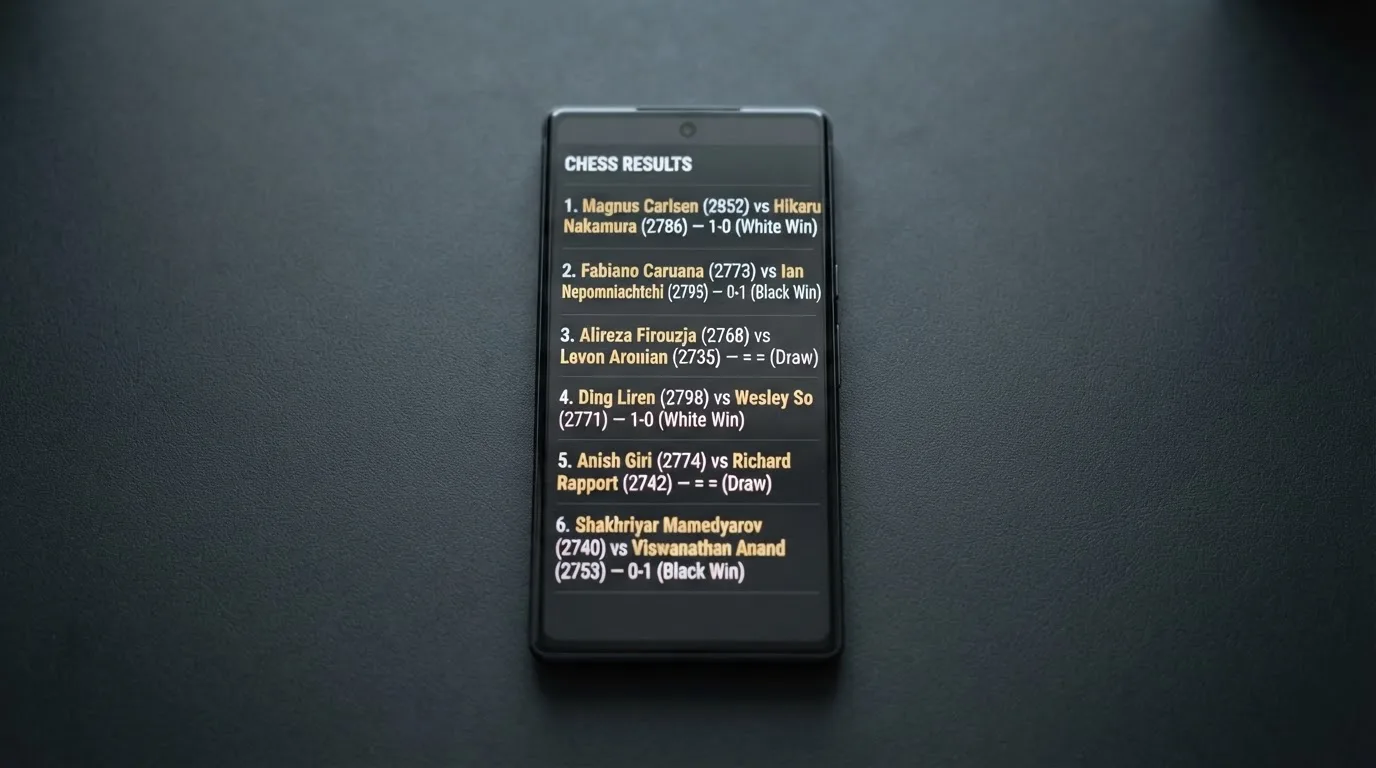
What a licensed bookmaker does price falls into three broad tiers. The top tier is the cycle that decides the world title: the Candidates Tournament, the World Championship match itself, and the events that feed rating points into FIDE’s list. Below that sits the regular professional circuit — Grand Prix series, the strongest open tournaments, top-league club matches — which licensed operators price when a household name is on the board. The third tier is everything else: rapid and blitz online events, weekend opens, junior championships. Some licensed bookmakers price tier three at all; most do not. A bettor who wants to bet on the World Championship match should find odds easily; a bettor who wants to bet on a Tuesday-night club game online will struggle to find any licensed bookmaker taking it.
That calendar is also why outright markets on chess behave oddly compared with outright markets on football or golf. In a 12-team Champions League group, an outright winner market is liquid because every game within the group feeds information. In a 14-game World Championship match, prices can sit unchanged for months between games, then move sharply on a single result. A bettor laying a chess outright is laying against a small pool of information that arrives in lumps, not a steady stream.
Tournament structure matters because the market for it is small. A chess tournament produces one winner, a clear draw rate and a result format that licensed bookmakers understand. The game ends 1–0 for a White win, 0–1 for a Black win or ½–½ for a draw, and on most events a three-way 1X2 market is the only outright a bookmaker will write. Some operators offer a two-way match winner with the draw ruled out by tie-breaks; a few offer game-by-game winner markets once a long match is underway. None of this is exotic — every other sport has the same shape — but in chess the menu is shorter and the prices thinner because the betting public is smaller.
The final piece of the calendar is rule-driven: a chess game can end in a draw by stalemate, by agreement between the players, by threefold repetition, or after fifty moves without a pawn move or a capture. Since 2014, fivefold repetition and the seventy-five-move rule end the game automatically without a claim. A draw is a real outcome — at elite level it happens in roughly half of all decisive-format games — and the draw line is therefore priced at the same level as either side, not as the long-odds outsider that other sports’ draw markets look like. That is the single biggest pricing fact in chess betting, and it is the one a newcomer to chess betting is least prepared for.
How the top bookmakers for chess compare
Ten operators make up the licensed shortlist this page works from. Each is registered with the Gambling Commission for remote general betting on real events, each accepts customers in Great Britain, and each has been checked against the Commission’s public register. The comparison is not a ranking — every name on the list holds a current licence — it is a map of who offers what, so a bettor can match a bookmaker to the kind of chess betting they actually want to do.

| Brand | Gambling Commission remote licence | What the operator’s own terms state on chess |
|---|---|---|
| Betfred | 039544-R-319290-010 (account 39544), held by Petfre (Gibraltar) Limited | Sportsbook with deep racing and football focus; chess not a featured market on the main page |
| BetMGM | 039198-R-319450-029 (account 39198), held by LeoVegas Gaming PLC | Full sportsbook with bet builder, acca features and a wide event menu |
| Bet600 | 044731-R-323941-016 (account 44731), held by Tyche Tech Limited | Racing-led app with Best Odds Guaranteed on horse racing |
| 10bet | 043173-R-322899-023 (account 43173), held by Blue Star Planet Limited | Football, tennis and horse racing core, with cash out, bet builder and live streaming |
| DragonBet | 064908-R-339041-003 (account 64908), held by DragonBet Ltd | Welsh football and rugby focus, in-play and bet builder |
| Fitzwilliam Sports | 048760-R-335434-009 (account 48760), held by SBKI Limited | Dublin bookmaker offering a capped-membership, higher-stakes service |
| Bar One Racing | 056516-R-332750-007 (account 56516), held by Bar-One Racing Limited | Irish independent bookmaker with shops and racing sponsorships |
| Midnite | 101839-R-342850-001 (account 101839), held by Midnite Limited | Sportsbook with in-play, acca builder, price boosts and maximum-stake limits |
| Paddy Power | 039439-R-319330-013 (account 39439), held by PPB Counterparty Services Limited | Broad sportsbook covering football, racing, boxing, rugby, tennis, golf, darts, snooker and F1 |
| NetBet | 039170-R-319343-032 (account 39170), held by Netbet Enterprises Limited | Daily boosts, profit boosts and bet builder with instant dynamic pricing |
The point of the table is what it does not say: every brand on it carries a current Gambling Commission remote licence, and not one of them is named as a chess-first bookmaker. A bettor looking for a deep chess outright market on every one of them, every week, will be disappointed; a bettor looking for a chess price on the World Championship match, the Candidates or a Grand Prix leg will usually find one. The choice is between general sportsbooks that happen to price chess around the calendar peaks, and small Irish or racing-led books whose chess menu is even shorter but whose racing and customer experience may suit a different bettor entirely. The two paragraphs that follow set out which way each kind of reader falls.
A bettor who wants chess priced alongside a deep in-play product and a wide event menu will find the most to work with at the bigger generalists: Paddy Power, BetMGM, 10bet, Midnite, NetBet. These are the operators whose sportsbooks are built for a bettor who wants to bet on the World Championship match and on the football coupon from the same account, with in-play, bet builder, cash out and the rest of the standard toolkit. Chess is one of many things they do, and they do it well around the calendar peaks.
A bettor who wants a smaller, racing-led book with Best Odds Guaranteed and a tighter overall card will recognise themselves in Bet600, DragonBet, Fitzwilliam Sports or Bar One Racing. Chess is not the reason any of these brands exists, but each carries a Gambling Commission licence, each is set up to deal with a UK bettor, and each prices a chess event when one is on the calendar. Betfred sits in between — a long-established British high-street name that has grown a full online sportsbook around its racing and football core.
What a chess betting odds market actually is
A chess betting market is a contract between the bookmaker and the bettor. The bookmaker offers a set of outcomes — a White win, a Black win and a draw on a single game; an outright winner on a tournament; a handicap on the games count in a long match — and a price for each. The bettor chooses an outcome, stakes money on it, and if their outcome occurs the bet is settled at the price taken. Every chess market follows that pattern; what changes is the shape of the outcome set.
The most common chess market is the three-way 1X2 on a single game: White wins (1), draw (X), Black wins (2). On most elite games the draw is priced at the shorter end — often odds-on — because elite games end drawn roughly half the time. A newcomer to chess betting reads 1.70 for a draw, 2.50 for White and 2.50 for Black and assumes something is wrong. Nothing is wrong: those three prices reflect the real outcome probabilities of an elite game. The bookmaker’s margin is sitting inside those prices; it is not visible as a separate line, and a bettor who wants to see it has to do the arithmetic.
The second most common market is the outright winner on a tournament or a long match. On the World Chess Championship the outright market usually runs from the start of the match through to the decisive game, with the price moving as the score does. On a knockout tournament the outright market opens at the start and settles when the final result is in. Outrights are where the bettor most feels the thinness of the chess market: a market on the Champions League final has hundreds of millions of pounds matched across dozens of licensed operators; a market on the World Chess Championship match has a fraction of that, and the prices can stay stuck for long periods because there are fewer bets moving them.
Match handicap is the third market a licensed chess bookmaker usually prices: White to win the match, Black to win the match, with a handicap applied to the game count. The handicap is a number of games added to or subtracted from one side’s total, and the bet is settled on the adjusted total. A −1.5 handicap on White means White must win by two or more games; a +1.5 handicap on Black means Black can lose by one and still win the bet. Handicap markets exist because the outright prices on a long match are heavily skewed towards the stronger player, and a bettor who wants action on the favourite at a bigger price can take a handicap instead. The handicap is a familiar tool from other sports; in chess it is one of the few ways to get a price on the favourite that looks like value.
Three less common markets complete the picture. Game-by-game winner markets appear once a long match is underway — a price on each individual game with the draw priced as a third outcome. Correct-score markets on the games count in a match (for example, White to win 7–5) appear on the biggest events only. In-play markets on individual games, where the price moves during the game as positions develop, exist at the very largest operators; in-play chess is harder to price than in-play football because chess games move by discrete moves, not by continuous clock, and the information flow is slower. A bettor looking for in-play chess on a Tuesday-night club game will not find it at any licensed operator in Great Britain.
Legality and regulation in Great Britain
The Gambling Commission licenses every commercial bookmaker serving customers in Great Britain. The relevant statute is the Gambling Act 2005, which covers England, Scotland and Wales; Northern Ireland runs under its own older legislation and a Commission licence does not reach into it. Since the Gambling (Licensing and Advertising) Act 2014 an operator whose remote facilities are used in Great Britain needs a Commission licence wherever the operator itself is based — a Curaçao, Maltese or Gibraltar licence is not a substitute. The Commission’s public register is the whole test of who holds a licence, and the register can be searched by business name, trading name, domain or account number.
Every brand on the comparison table above holds a current remote general betting standard (real events) licence. Several of the brands are operated by companies whose registered office sits outside Great Britain — Gibraltar, Ireland — which is permitted because the licence is held at the point of consumption, not the point of incorporation. The licence is what makes the brand a legal choice for a bettor in Great Britain; the address on the licence does not.
The minimum age to bet is eighteen. Name, address and date of birth are verified before a customer can deposit or gamble, and that verification applies to free bets and bonuses as well as to cash stakes. A bettor who has self-excluded through GAMSTOP cannot open or use an account at any participating online operator — the ten brands on this page are all GAMSTOP participants, because GAMSTOP participation is a mandatory licence condition for every online operator in Great Britain.
In-play betting on chess is permitted and is offered by licensed operators under their own licence conditions and the Commission’s customer-protection duties. There is no statutory list of permitted sports or markets, so “is in-play chess legal?” is the wrong question. The right question is “does my bookmaker price in-play chess on this event?” — and the answer varies. Esports are treated like any other event by licensed operators. Bets on politics, television outcomes and novelty markets are offered by licensed bookmakers and no statutory prohibition was found.
Financial spread betting is regulated by the Financial Conduct Authority, not the Gambling Commission. A bettor using a spread-betting product on a financial index is in a different regulatory regime from a bettor placing a fixed-odds bet on a chess game, and the protections are different. Spreadex, which appears on the licensed register, is regulated by both bodies for the two different products it offers, and the Spreadex site states that spread betting losses can exceed the original deposit. That warning has no equivalent in fixed-odds betting.
Safer gambling, identity checks and player protection
Identity verification before the first deposit is the rule, not the exception. Since 7 May 2019 every licensed online operator in Great Britain has had to verify a customer’s name, address and date of birth before the customer can deposit or gamble, and that requirement extends to free bets and bonus credits. The verification uses a combination of electoral roll, credit-reference and document checks, and it is the reason a licensed operator cannot run an anonymous product. A bettor who wants to bet on chess without identity verification has to leave the licensed market.
GAMSTOP is the national multi-operator self-exclusion scheme. A bettor who signs up with GAMSTOP excludes themselves from every participating online operator for a chosen period — six months, one year, five years, or five years with auto-renewal — and after the minimum period the exclusion stays in place for a further seven years unless the bettor asks GAMSTOP to remove it. GAMSTOP covers online sites and apps; betting shops use a separate service. The scheme has been a mandatory licence condition for online operators since 31 March 2020, and every brand on the comparison table takes part.
A financial vulnerability check applies to remote betting when a customer’s deposits minus withdrawals exceed £150 in a rolling thirty-day period. The check is a public-record check — for example a search of bankruptcy registers or county court judgments — and it is not an income check, not a credit-reference check, and not a soft search on a credit file. The check has applied since 28 February 2025 and is a routine part of safer-gambling controls at every licensed operator. A wider financial risk assessment regime — the “affordability checks” reported in the press — has been announced by the Commission in a staged plan with no start date yet. The Commission’s article of 7 July 2026 set out the timetable, but until a start date is published, the wider check is not yet in force.
Deposit limits are a separate control. Licensed operators must offer customers a gross deposit limit on a fixed time frame, and the first changes have applied since 31 October 2025. A second phase was postponed to 30 September 2026, and whether that phase is now live is not established. There is no state-set deposit or loss ceiling for betting: the ceiling is whatever the bettor chooses, and the operator must respect it. A bettor worried about their own betting should set a deposit limit before placing a first bet, and a self-exclusion through GAMSTOP is the strongest option available.
The help lines and services listed on every licensed operator’s safer-gambling page are real, free and confidential. GamCare runs the National Gambling Helpline. GambleAware funds treatment and research. The NHS runs gambling clinics in several regions. Gamblers Anonymous runs peer-support meetings across the country. A bettor who finds themselves chasing losses, betting more than they can afford, or hiding their betting from family or colleagues should stop betting and use one of those services.
Credit cards are banned for gambling in Great Britain. The ban has been in force since 14 April 2020 under LCCP condition 6.1.2, and it covers credit-card-funded payments through an e-wallet as well as direct credit-card payments. Debit cards and bank-based payments are not covered by the ban. A bettor cannot pay a chess stake with a credit card at a licensed operator, and a licensed operator cannot accept one. Cryptocurrency deposits at licensed operators are handled inconsistently: some operators accept them, some do not, and the rules vary.
Betting on chess from a phone
A licensed British bookmaker’s product is reachable from a phone in two ways: a native app, downloaded from the App Store or Google Play, or a mobile browser pointed at the operator’s site. The two routes are not identical. The native app carries a sportsbook, an in-play tab, a bet builder, a cash-out button and usually a login kept open by Face ID or fingerprint; the mobile site carries the same sportsbook, often with a slightly older interface, and the login is typed in by hand. For most bettors the choice is whichever is more convenient on the day; for a small number the choice is forced, because a few operators publish only one of the two.
A native app on the App Store or Google Play is the usual route for bettors who bet often. The sportsbook loads faster than the browser, the bet slip is reachable with a thumb, and cash out is a button instead of a menu. The app also carries the in-play product cleanly, which matters for any bettor who wants to bet on a chess game while it is being played, because the price on a long chess game can move several times during the session and the bettor does not want to reload a browser between moves.
A mobile browser is the route for bettors who bet rarely. The browser does not ask for storage permission, does not push notifications, and does not need an update before each session. For a bettor placing one outright bet on the World Championship match, the browser is enough. The trade-off is that the browser does not cache the bettor’s login as cleanly as the app does, and the in-play product on a phone browser is sometimes slower than the same product on a phone app.
A few operators publish apps that are not the operator’s main product. Betfred’s Betfred Sports, Casino & Games app covers twenty-one sports alongside a casino product of more than two thousand games, and is published by Done Brothers (Cash Betting) Ltd. BetMGM’s app carries its sports welcome offer alongside its casino. Paddy Power’s sports betting app is published by Paddy Power PLC and covers football, horse racing, boxing, rugby, tennis, golf, darts, snooker and Formula 1. Lottoland’s app combines casino, lottery betting, sports betting and scratchcards and is licensed by the Commission for customers in Great Britain. Each app is a single product with several verticals inside it; a bettor who wants one operator for chess and another for casino can keep both apps side by side on the same phone.
The browser route is the more cautious choice for a bettor who is worried about their betting. An app on a phone home screen is a permanent prompt to bet; a browser bookmark is harder to reach. A bettor who has set a deposit limit, who has self-excluded through GAMSTOP, or who simply wants to bet less often is usually better off using the browser, or uninstalling the app between bets. A self-excluded bettor who has a licensed app still installed on their phone has not really self-excluded.
Live betting and cash out on chess
Live betting means betting on a chess game while it is being played. The market on the game exists before the game starts; the live market re-opens the same outcomes at new prices as the game progresses. A bettor who missed the pre-match price can take the live price; a bettor who took the pre-match price can lay the same outcome back at the live price to lock in a position. Live chess is harder for a bookmaker to price than live football because a chess game moves by discrete moves, not by continuous clock. The information flow is slower — a long think by one player may not change the evaluation of the position — and the bookmaker’s pricing model has to handle long quiet periods between sharp moves.
The licensed operators that price live chess at all are the bigger generalists. Bet365, Paddy Power, BetMGM, 10bet, Midnite and NetBet all offer in-play on the events they cover, and the bigger the event — World Championship match, Candidates, top Grand Prix legs — the more likely in-play is to be available. The smaller the event — a club match, a rapid online event — the less likely in-play is to be priced at all. A bettor looking for live chess on the Tuesday-night club game will not find it.
Live streaming on chess exists at the larger operators. Bet365’s app describes live streaming of events worldwide, alongside in-play betting and several tracker products for following bets in play. 10bet’s sportsbook pairs its in-play product with a live-streaming tab. Other operators pair in-play with a graphical tracker rather than a video stream, because chess does not need video to be followed move by move — a real-time board representation is enough for most bettors. A bettor who wants to watch the World Championship match live inside the betting app needs to check which operator has the stream for that specific match; the rights are not held by every operator.
Cash out is the second half of the live product. A bettor who has backed White in a long match and White is ahead can cash the bet out before the match ends, at a price the operator offers. The cash-out price is the operator’s view of the current value of the bet, with the operator’s margin sitting inside it. Cash out on chess is offered by the same operators that offer live chess, and the cash-out price is more useful on a long match than on a single game, because a long match gives the bettor time to react to a position change.
In-play markets on individual chess games have their own characteristic: the draw price can swing sharply. A game that looks balanced can tip towards one side on a single move, and the live draw price moves with it. A bettor laying the draw in-play on a game where the position has just become unbalanced is laying against a market that has already moved; a bettor backing the draw in-play after one side has blundered is taking a price that has already shortened. The edge in in-play chess is reading the position before the market does — which is exactly what makes live chess a hard product for a bookmaker to price.
Predictions, analysis and the limits of a chess betting tip
A chess betting tip is a forecast of the outcome of a chess game or tournament, written before the event. The tip says who will win, what the price is, and why the tipster thinks the price is wrong. Some tipsters sell tips; some give them away attached to a betting account; some publish them on a website. A bettor who reads a chess betting tip is reading one person’s view of one chess game, written down before the game, and the bettor’s job is to decide whether that view is worth staking on.
The first limit on a chess betting tip is that no one can know a chess outcome. The favourite wins most elite games but not all of them, and the upsets are not evenly distributed — they cluster around the players who are slightly mispriced by the betting public. A tipster who picks only the favourite every game will win often and lose money, because the favourite’s price already reflects the favourite’s chance. A tipster who picks only the outsider will lose often and occasionally win big, but the price of the outsider already reflects the outsider’s chance. The tip’s value is the difference between the tipster’s view of the chance and the bookmaker’s view of the chance, and that difference is small.
The second limit is that chess tips age fast. A tip written the day before a tournament is a different article from a tip written the week before, because the field changes as players withdraw and form shifts. A tip written a month before a long match is barely worth reading, because a long match rewards preparation and a tip written before the preparation has been done is guessing. A bettor reading chess tips should weight tips by how recently they were written and by how specific they are — a tip that names a player, a price and a reason is more useful than a tip that names a tournament and a vague favourite.
The third limit is that the bookmaker’s margin sits inside the price. A tip that says “back White at 2.50” is a tip that says “I think White’s chance is better than the bookmaker’s implied 40 percent”. The arithmetic behind that claim is real, and the tipster has to do it. A tip that says “back White, looks a good price” without doing the arithmetic is asking the bettor to take the tipster’s word for it, and the bettor cannot tell whether the tipster has done the work or not.
The fourth limit is that chess is a game of incomplete information. A football match has tactics, fitness and weather; a chess game has opening preparation, time management and psychology. The betting public can read form, can read head-to-head record, can read the players’ recent tournament results — but cannot read how well either player has prepared for this specific game. A tip written by a tipster who has watched both players’ recent games and has read both players’ recent interviews is worth more than a tip written from the form guide alone.
The practical advice for a bettor reading chess tips is to treat each tip as one input among several. The form guide, the head-to-head, the players’ preparation cycle, and the bookmaker’s price all matter. The tip is the tipster’s synthesis of those inputs, and the bettor’s job is to decide whether the tipster has done better synthesis than the bookmaker. Sometimes the answer is yes; more often the answer is no.
Chess bet types, prices and what they pay
A single bet on a chess game is the simplest contract the bookmaker offers. The bettor backs one of three outcomes on a single game — White wins, Black wins, or a draw — at a price taken at the time of the bet. The bet is settled at that price if the outcome occurs, and lost if it does not. A single bet is the building block everything else is built from.
A double is two singles in one stake. A treble is three. An accumulator — often shortened to “acca” — is any number of singles from four upwards, all of which must win for the accumulator to pay. The price of an accumulator is the product of the prices of the legs, and a four-fold acca at prices of 2.00, 3.00, 2.50 and 1.80 pays 27.00 if all four legs win. The accumulator’s appeal is that a small stake can return a much larger number; its cost is that one losing leg wipes out the whole stake. Chess accumulators are rare because the chess calendar is thin — there are not always four chess games at licensed operators on the same day — and the legs tend to be correlated in a way football legs are not.
A each-way bet is two bets of equal stake: one on the outcome to win, one on the outcome to place. The place terms — usually a quarter or a fifth of the win price — are set by the operator and vary by event. Each-way betting is a horse-racing product that has spread to other sports; in chess it appears on outright tournaments only, with place terms set by the operator. A bettor should check the each-way terms on a chess outright before staking, because the place terms are not standardised across operators.
A bet builder is a single bet the bettor constructs from several markets on one event. The bookmaker offers a price for the constructed bet, which is built from the prices of the constituent markets plus an additional margin. Bet365’s Bet Builder+, Midnite’s acca builder and 10bet’s bet builder all work on this principle. In chess a bet builder might combine the match winner market with a handicap market and a “first to three games” market; the bet builder’s price reflects the operator’s view of how correlated those legs are. The deeper the bet builder’s menu, the more the bettor can construct.
The price of a bet is what the bettor is paid for each unit staked if the bet wins, in decimal form. A bet at 3.00 returns three units for each unit staked; a bet at 1.50 returns 1.5 units for each unit staked; a bet at 11/4 (fractional) returns 3.75 units for each unit staked. The decimal form is the one every licensed British bookmaker displays; the fractional form is also usually available, because the British betting public has used it for generations. The relationship between the two is decimal equals fractional divided by the denominator plus one: 11/4 is 11 ÷ 4 plus 1, which is 2.75 plus 1, which is 3.75. Odds-on bets — shorter than evens in fractional, shorter than 2.00 in decimal — return less than two units for each unit staked.
A starting price (SP) is the price the bet is settled at if the bettor did not take a price at the time of the bet. SP exists for horse racing and greyhound racing; it does not really exist for chess, because chess games do not start at a fixed time the way a race does. Best Odds Guaranteed (BOG) is the policy of paying the bet at the bigger of the price taken and the starting price; it is offered on horse racing at Bet600 and is not a chess product at any licensed operator.
A free bet is a stake the operator credits to the bettor’s account, with the stake usually not returned with a win. A £10 free bet at 5.00 returns £40 — the £10 stake is not paid back — whereas a £10 cash bet at 5.00 returns £50. The value of a free bet to the bettor is therefore the expected value of the bet at the chosen price, minus the stake that is not returned. The free bet’s value is largest when the price taken is large, because the stake is a smaller share of the return. A bettor using a free bet on chess should look for the biggest realistic price on a market they understand, because the value of the free bet grows with the price.
The bookmaker’s margin sits inside every price. The margin is the share of every unit bet that the bookmaker keeps on average across all outcomes of the market, and it is the reason the prices on a three-way chess market do not add up to the 100 percent they would add up to in a fair market. The arithmetic behind the margin is the calculation this page works through in the next section.
How the bookmaker’s margin sits inside the odds — a worked example
A three-way chess market on a single game has three prices: White wins, Black wins, draw. In a fair market — one with no margin — the three prices would add up to exactly the reciprocal of the outcome probabilities. In a market with margin, the prices sum to less than the reciprocal of the outcome probabilities. The difference is the bookmaker’s margin, and it is the single most important number on the page for a bettor who wants to compare prices across operators.
The arithmetic is straightforward. Take an illustrative two-way market with decimal prices of 1.90 and 1.90 on each of two outcomes. The reciprocal of 1.90 is 1 ÷ 1.90, which is 0.5263. Two outcomes at that reciprocal sum to 1.0526, which means 105.26 percent of one unit bet across the market returns 100 percent in expectation. The bookmaker’s margin is the difference, which is 5.26 percent of every unit bet on the market. The payout share — the share of every unit bet that is returned to bettors in expectation — is 100 percent minus 5.26 percent, which is 94.74 percent.
The two-way case generalises to three-way chess markets the same way. A chess game priced at 2.50 for White, 2.50 for Black and 1.70 for a draw sums to the reciprocal of 2.50 plus the reciprocal of 2.50 plus the reciprocal of 1.70. The reciprocal of 2.50 is 0.40, so two of them sum to 0.80. The reciprocal of 1.70 is 0.5882. The three sum to 1.3882, which is 138.82 percent — meaning the bookmaker’s margin is 38.82 percent of every unit bet on the market. That is a wide margin, but it is the shape a chess market takes because the draw is priced close to evens: the draw’s reciprocal adds a lot to the sum.
The narrower the margin, the better the deal for the bettor. A margin of 5 percent means the bookmaker keeps 5p of every £1 bet across the market in expectation; a margin of 10 percent means 10p; a margin of 38 percent means 38p. The margin is the same number however the bettor is laid out across the outcomes; it is a property of the market as a whole, not of any individual price. A bettor who wants to know the margin on a market has to do the arithmetic on all the prices together, not pick the price that looks biggest.
The payout share is the complement of the margin. A 5 percent margin is a 95 percent payout share; a 10 percent margin is a 90 percent payout share; a 38 percent margin is a 62 percent payout share. A bettor who knows the payout share of the markets they bet on can compare markets across operators and across sports: a market with a 95 percent payout share is paying out 95p in the pound on average, and a market with a 90 percent payout share is paying out 90p. The difference looks small and is not.
A worked example: a £10 stake on White at 2.50 returns £25 if White wins. The bettor has staked £10 and received £25, which is a £15 profit. The reciprocal of 2.50 is 0.40, so the market implies White’s chance is 40 percent. If the bettor’s view is that White’s chance is 45 percent, the bettor’s edge is 5 percent — the difference between their estimate and the market’s. Over many bets at a 5 percent edge on a market with a 95 percent payout share, the bettor makes money; on a market with a 90 percent payout share, the bettor’s edge is smaller after margin and the return drops accordingly. The bookmaker’s margin is what stands between the bettor’s edge and the bettor’s profit.
The margin on chess markets sits higher than the margin on football markets, in general, because the chess market has fewer bets to spread the margin across. A Premier League match at a major operator carries a margin of 5 to 8 percent on the 1X2 market; a chess game at the same operator on the same day will carry a margin of 8 to 12 percent on the 1X2, and a wider margin on the outright. A bettor should expect chess markets to pay out a smaller share of every pound bet than football markets, and should price their bets accordingly.
The expected cost of clearing an offer can be worked out the same way. If a bonus carries a required turnover of £500 at a market with a margin of 10 percent, the expected cost of clearing the bonus is £500 times 10 percent, which is £50. The bonus pays the bettor some smaller amount than that; the rest of the cost is the bookmaker’s profit on the turnover. A bettor clearing a bonus is paying the bookmaker for the privilege of doing so, and the price of the privilege is the turnover times the margin.
Betfred
Betfred is a long-established British high-street bookmaker that has grown into a full online sportsbook. Its Betfred Sports, Casino & Games app is published by Done Brothers (Cash Betting) Ltd, covers twenty-one sports alongside more than two thousand casino-style games, and carries a Gambling Commission remote licence under account 39544, held by Petfre (Gibraltar) Limited. The brand is best known for horse racing and football, and chess is not a featured market on its main page.
A chess bettor at Betfred is betting through the general sportsbook, not a chess-specific product. The chess menu appears when the calendar brings a top event — the World Championship match, the Candidates, the strongest Grand Prix legs — and disappears between those events. The bettor who wants to bet on a chess game mid-cycle sees a thin or empty page. The bettor who wants to bet on a chess game during a peak sees the same 1X2 and outright markets as at any other licensed operator, priced with the same kind of margin. The trade-off is that Betfred’s racing and football product is one of the deepest in Great Britain, and a bettor who keeps Betfred as their main account can reach a full racing, football and chess product from one wallet.
The verdict: Betfred suits a bettor who wants a single British high-street brand for chess alongside horse racing and football, and who is happy to wait for the chess calendar peaks. A bettor who wants a chess menu every week is better served by a wider-market operator.
BetMGM
BetMGM is a full-service sportsbook and casino with a sports welcome offer for new UK customers who deposit £10 or more and place a sports bet within seven days: four £10 free bets, comprising two football accumulators of four or more selections and two sports multiples of two or more, valid for seven days with minimum odds and opt-in required. Regulated by the Gambling Commission under account 39198, held by LeoVegas Gaming PLC, the brand offers bet builder, acca features and a wide event menu.
The chess menu at BetMGM follows the same shape as at other generalists: present at the calendar peaks, thinner between them. The bet builder feature is useful for chess bettors who want to combine a match winner with a handicap or a “first to three games” market on the same event; the welcome offer’s football focus means a chess bettor will not use the welcome offer’s legs and will probably wait for a separate chess offer or bet without one. Licensing ensures the same standards apply as at any other authorized bookmaker.
The verdict: BetMGM suits a bettor who wants a wide-event-menu sportsbook with bet builder features and who will use the welcome offer on football or another sport rather than chess. A bettor who wants a chess-first product is better served by an operator that prices chess at every level.
Bet600
Bet600 is a racing-led app with Best Odds Guaranteed on horse racing: if the starting price is bigger than the early or show price taken, the bet is paid at the SP. Gambling Commission licence 44731 is held by Tyche Tech Limited. The product is built around racing, and the in-play product is racing-first.
A chess bettor at Bet600 is betting through a thin chess menu at a racing-led operator. The chess menu appears at the calendar peaks and disappears between them. BOG is a horse-racing product that does not apply to chess, and a chess bettor at Bet600 does not get any pricing advantage from BOG. Standards and consumer protections remain the same as at any other authorized bookmaker.
The verdict: Bet600 suits a bettor whose main interest is horse racing with BOG, who wants a chess bet at the calendar peaks from the same account. Someone who wants more frequent chess markets is better served elsewhere.
10bet
10bet’s sportsbook covers football, tennis and horse racing as its core sports, with cash out, bet builder and live streaming alongside. Gambling Commission licence 43173 is held by Blue Star Planet Limited. The sportsbook is a generalist product with three lead sports.
A chess bettor at 10bet gets the generalist product: in-play on the events 10bet covers, cash out on the bets 10bet has taken, bet builder on the events 10bet prices. Chess is not one of the three lead sports, but the events at the calendar peaks are usually priced, and the live-streaming tab sometimes carries a stream of the biggest chess events. A bettor who wants in-play chess and live streaming in the same app is closer to that combination at 10bet than at a racing-led brand.
The verdict: 10bet suits a bettor who wants a generalist sportsbook with in-play and live streaming, and who is happy to bet on chess at the calendar peaks from the same product. A bettor who wants a chess-first product is better served by an operator that prices chess more often.
DragonBet
DragonBet is a Welsh bookmaker whose app is published by DragonBet Ltd and features Welsh football and rugby markets, racing, American football, in-play betting and bet builder markets. Gambling Commission licence 64908 is held by DragonBet Ltd. The product is a regional sportsbook with a Welsh focus.
A chess bettor at DragonBet is betting through the generalist product at a regional operator. The chess menu is thin, the in-play product on chess is unlikely, and the bet builder on chess may not exist at all. Standards and consumer protections remain the same as at any other authorized bookmaker.
The verdict: DragonBet suits a bettor whose main interest is Welsh football and rugby and who will bet on chess only at the calendar peaks from the same account. Someone who wants more frequent chess markets is better served elsewhere.
Fitzwilliam Sports
Fitzwilliam Sports describes itself as a Dublin bookmaker with capped membership and a “High Stakes Welcome” subject to compliance criteria. The brand offers instant deposits, fast withdrawals, timeouts and deposit limits, and links to GambleAware, GamStop and Gamblers Anonymous. Gambling Commission licence 48760 is held by SBKI Limited. The product is a higher-stakes, membership-limited bookmaker.
A chess bettor at Fitzwilliam Sports is betting through a higher-stakes product with capped membership. The chess menu is probably thin, because the operator’s focus is on the higher-stakes customers and the sports those customers want. The capped-membership model means a chess bettor who wants to open an account at Fitzwilliam Sports may not be able to, because the cap is real and the operator chooses who joins. Standards are consistent with other authorized operators, and the safer-gambling links are explicit on the operator’s own page.
The verdict: Fitzwilliam Sports suits a higher-stakes chess bettor who has been accepted into the membership and who values the higher limits over a wide chess menu. A bettor who wants a wide chess menu and a quick sign-up is better served by a wider-market operator.
Bar One Racing
Bar One Racing has rebranded as BAR 1 Betting and is an Irish independent bookmaker with shops across Ireland and horse racing sponsorships at Dundalk, Fairyhouse, Navan, The Curragh, Curraheen Park and Cork. Gambling Commission licence 56516 is held by Bar-One Racing Limited. The product is an Irish racing-led bookmaker.
A chess bettor at BAR 1 Betting is betting through an Irish racing-led product. The chess menu is thin, the racing product is the focus, and the in-play product on chess is unlikely.
The verdict: BAR 1 Betting suits a bettor whose main interest is Irish racing and who will bet on chess only at the calendar peaks from the same account. Someone who wants more frequent chess markets is better served elsewhere.
Midnite
Midnite’s site cites Gambling Commission licence 101839 and shows in-play events, an acca builder, popular accas and price boosts with maximum-stake limits. The brand’s sports welcome offer for new customers is a £5-or-more pre-match bet at EVS (2.0) or greater within fourteen days of sign-up, returning £25 in free bets and 50 free spins, valid for seven days. Gambling Commission licence 101839 is held by Midnite Limited.
A chess bettor at Midnite gets the generalist product with in-play, acca builder and price boosts. The chess menu is present at the calendar peaks and may include boosted prices on the bigger events. The welcome offer’s £5-or-more pre-match bet at EVS is a usable shape for chess: a £5 bet on a chess match winner at 2.00 or bigger qualifies, and the £25 in free bets is a usable return. The maximum-stake limits on price boosts are a real constraint on a bettor who wants to take a large position on a boosted price, but a recreational chess bettor is rarely at the boost’s stake ceiling.
The verdict: Midnite suits a bettor who wants a generalist sportsbook with in-play and acca builder, and who is happy to use the welcome offer’s qualifying shape on chess.
Paddy Power
Paddy Power’s sports betting app is published by Paddy Power PLC and covers football, horse racing, boxing, rugby, tennis, golf, darts, snooker and Formula 1. Gambling Commission licence 39439 is held by PPB Counterparty Services Limited. The product is one of the widest-market generalist sportsbooks in Great Britain, with a long history of novelty markets and price boosts.
A chess bettor at Paddy Power gets the widest-market generalist sportsbook’s chess menu, which is one of the deepest in Great Britain at the calendar peaks. The in-play product on chess is available on the bigger events, the bet builder on chess exists for the bigger events, and the price boosts sometimes include a chess price.
The verdict: Paddy Power suits a bettor who wants a wide-market generalist with a deep chess menu at the calendar peaks, and who values the novelty-market product alongside chess. A bettor who wants a chess-first product is better served by an operator that prices chess more often.
NetBet
NetBet Sport offers Daily Boosts, Profit Boosts and free bet offers, a Bet Builder with instant dynamic odds, and sports stats for major leagues. The brand carries a Gambling Commission remote licence under account 39170, held by Netbet Enterprises Limited. The product is a generalist sportsbook with a bet builder focus.
A chess bettor at NetBet gets the generalist product with daily and profit boosts and a bet builder with dynamic odds. The chess menu is present at the calendar peaks and the bet builder is usable on the bigger events.
The verdict: NetBet suits a bettor who wants a generalist sportsbook with bet builder and dynamic odds, and who is happy to bet on chess at the calendar peaks from the same account. A bettor focused on chess is better served by a featured operator.
Promotion rules, advertising and what bonuses actually cost
Promotion rules changed at the start of $$OGATORY 2026 — written the day these rules take effect, they are the rules in force from that date. Wagering requirements on bonuses are capped at 10x: a £10 bonus at 50x would have needed £500 of bets before withdrawal; under the cap no more than £100 of bets is required for a £10 bonus. Mixed-product promotions — an offer that requires gambling on two or more product types such as betting, casino, bingo and lottery, for example “bet on football to get free spins” — are banned. Whether the cap applies to free bets with no wagering condition, and any cap on the money value of a bonus, are not established and are best read in each operator’s own terms at the time of claim.
A free bet whose stake is not paid back is worth less than its face value on average. A £10 free bet at 5.00 returns £40 if the bet wins — the £10 stake is not paid back — and the value of the free bet is the expected value of the bet at the chosen price, minus the stake. On a market with a 95 percent payout share, the expected value of a £10 free bet at 5.00 is £10 times (5.00 minus 1) divided by 5.00, which is £8, times 0.95, which is £7.60. The free bet is worth £7.60 on average, not £10. A bettor using a free bet on chess should take the largest realistic price on a market they understand, because the free bet’s value grows with the price.
A boosted odds offer is a price boost on a specific market for a specific event. The boost raises the price above the operator’s normal price, and the bet is settled at the boosted price if the bet wins. The boost’s value is the difference between the boosted price and the operator’s normal price, times the bet’s probability of winning. A chess bettor reading a boosted price on a World Championship game should compare the boosted price with the price on the same selection at other operators before staking, because the boosted price is sometimes worse than a competitor’s normal price. The arithmetic is the same as for any other bet.
An accumulator insurance offer refunds the stake as a free bet if one leg of an accumulator loses. The refund is usually capped, and the cap is often the stake of the original accumulator. A chess bettor who takes accumulator insurance on a chess multi-game accumulator should read the cap and the qualifying markets, because chess accumulators are rare and the cap is sometimes small. The offer is a way to insure against a single losing leg, not a way to insure against the whole accumulator losing.
The bonus cap of 10x is a hard ceiling on the wagering a bonus can carry. A bettor clearing a bonus is paying the bookmaker for the privilege, and the price of the privilege is the turnover times the market margin. A £10 bonus at 10x is £100 of turnover; at a 10 percent market margin that is £10 of expected cost, leaving the bettor with whatever the bonus pays minus £10. A bettor who would not place the same bets without the bonus is paying £10 for the bonus, and the bonus is therefore worth less to them than its face value.
Advertising is not licensed by the Gambling Commission; it runs through the CAP Code (non-broadcast) and BCAP Code (broadcast), enforced by the ASA, alongside the Commission’s marketing conditions. CAP Code section 16 says marketing must be socially responsible, must not be of strong appeal to under-18s, and no one who is or seems to be under 25 may be featured gambling or play a significant role in marketing, with an exception for marketing placed where a bet can be made directly. That rule is about who may appear in an advertisement, not about who may bet. “Whistle-to-whistle” is an industry code, not law: betting advertisements are not shown on television from five minutes before a live sporting event to five minutes after it, before the 9pm watershed (horse and greyhound racing excluded). The Premier League clubs’ withdrawal of gambling sponsorship from the front of matchday shirts from the 2026/27 season is voluntary, not law.
No promo code is printed on this page. A bettor who has been offered a code by an operator or affiliate should treat the code as a one-time entry at the operator’s site and should not share it with anyone who has not received it directly.
Tax, winnings and what the bettor actually keeps
A bettor in Great Britain pays no tax on betting winnings. That is the headline position, and it has been the position for decades; a bettor who wins £10,000 on a chess outright does not owe any of it to HMRC, and the bookmaker does not withhold any of it on HMRC’s behalf. A professional gambler — someone whose gambling is their trade — is in a different position and should ask HMRC or an adviser, because the boundary between recreational betting and professional gambling is not always obvious.
General Betting Duty is the operator’s tax on gross profits from betting, currently 15 percent. From 1 April 2027 a new remote betting rate of 25 percent applies within it, while remote bets on UK horse racing, bets on self-service betting terminals in licensed premises, pool betting and in-person betting stay at 15 percent. Until 1 April 2027 the remote rate stays at 15 percent, and whether operators pass duty on through their odds is not established. A bettor who reads the prices and assumes the duty is paid by the bookmaker is probably right, because the duty is on the bookmaker’s gross profit, not on the bettor’s stake; a bettor who reads a price and assumes the duty is paid by the bettor is wrong, because the duty is not a bettor’s tax.
Financial spread betting has its own rates — 3 percent on financial spread bets and 10 percent on other spread bets — and is regulated by the Financial Conduct Authority rather than the Gambling Commission. A bettor placing a financial spread bet on a financial index is paying duty at a different rate and is under a different regulator, and the protections on the bet are different. The Spreadex site states that spread betting losses can exceed the deposit, and that warning is the regulator’s warning as well as the operator’s.
The Commission’s statutory levy is a separate charge paid by operators to fund the Commission and to fund research, treatment and education under the Gambling Act 2005. It is not a tax on the bettor, and it does not change the bettor’s position.
A bettor who wins on a chess bet keeps the full return from the bookmaker. The bookmaker takes its margin out of the price before the bet is placed, not out of the winnings after the bet is settled. The arithmetic that produced the 95 percent payout share on a market means the bettor is paid 95p in the pound across the market on average; the bettor who picks the winning outcome is paid the full price on that outcome, and the bookmaker’s margin is the small share of losing stakes that does not come back to bettors. The £25 return on a £10 bet at 2.50 is paid in full, and the bettor keeps the £15 profit without tax.
Going outside the licensed market — what a bettor loses
A bettor who places a chess bet with an unlicensed operator — a brand whose name does not appear on the Gambling Commission’s public register against a remote general betting licence — keeps the bet, but loses several of the protections a licensed operator provides. The bet itself is not made illegal by the bettor’s act of placing it, and no offence aimed at a customer who merely bets on an unlicensed site has been found. The protection the bettor loses is the protection that matters when the bet goes wrong.
GAMSTOP does not cover unlicensed operators. A bettor who has self-excluded through GAMSTOP and then opens an account with an unlicensed operator has not really self-excluded, because GAMSTOP cannot reach the unlicensed brand. A bettor who is worried about their own betting should self-exclude through GAMSTOP and should not seek out an unlicensed operator as a workaround.
The Commission’s complaints route does not cover unlicensed operators. A bettor who has a dispute with a licensed operator can complain to the operator, then to an approved alternative-dispute-resolution body, and then to the Commission if the dispute is not resolved. A bettor who has a dispute with an unlicensed operator has only the operator’s own complaints process, which may or may not be fair. If the unlicensed operator withholds funds, the bettor has no British consumer redress.
The 10x bonus cap does not apply to unlicensed operators, and the £150 financial vulnerability check does not apply either. A bettor who bets with an unlicensed operator does not get the safer-gambling architecture of the licensed market, and the operator’s own safer-gambling architecture is unknown until the bettor reads it.
The bookmaker’s duty is not to be unlicensed at the point of consumption. Providing gambling facilities in Great Britain without the licence the Act requires is an offence under section 33 of the Gambling Act 2005, aimed at the operator. Enforcement is disruption, not blocking: cease-and-desist notices, search-engine referrals, work with registrars, hosts and payment providers; the Commission has been given or is about to receive court-order DNS blocking powers, but ISP blocking is not in operation. A bettor who chooses an unlicensed operator is choosing to bet with a brand the Commission is trying to remove from the British market, and that choice has consequences the licensed market does not have.
The honest framing is two-sided. A licensed operator offers checks, limits, GAMSTOP and the 10x bonus cap, but also identity verification before the first bet, and a margin inside every price. An unlicensed operator offers none of those protections and the possible loss of funds. Neither is “the safe choice” by default; the licensed operator is the safer of the two because the protections exist and the regulator can enforce them.
Frequently asked questions
Where can chess be bet on in Great Britain?
Chess is bet on at licensed online bookmakers licensed by the Gambling Commission for remote general betting on real events, which includes every brand on the comparison table above. The chess menu at each operator is present at the calendar peaks — the World Championship match, the Candidates Tournament, the strongest Grand Prix legs — and thinner between them. A bettor looking for a deep chess market on every event at every operator will not find one; a bettor looking for a chess price on the biggest events at one of the bigger operators will usually find one.
Can chess be bet on legally in Great Britain?
Yes, at any operator licensed by the Gambling Commission for remote general betting. The relevant statute is the Gambling Act 2005, which covers England, Scotland and Wales; Northern Ireland is outside the Act and a Commission licence does not reach into it. Minimum age is eighteen, identity verification applies before the first deposit, and self-exclusion through GAMSTOP is mandatory at every participating online operator.
How is a chess bet placed?
A bettor opens an account at a licensed operator, verifies their name, address and date of birth, deposits funds by debit card or bank-based payment (credit cards are banned for gambling), chooses a chess market — a 1X2 on a single game, an outright on a tournament, a handicap on a long match — selects an outcome and stakes an amount. The bet is settled at the price taken if the outcome occurs. Settlement rules for draw by stalemate, by agreement, by threefold repetition, and after the fifty-move rule follow FIDE’s Handbook, and the bet is settled on the official result.
How is it checked that a bookmaker holds a Gambling Commission licence?
The Commission’s public register at the official Gambling Commission website is searchable by business name, trading name, domain or account number. Every brand on the comparison table above has been checked against the register. The register lists the licence categories the operator holds, the licence holder’s name, and the account number. A licence is the proof that the brand is regulated for the activities the licence covers; the absence of a licence is the proof that it is not.
How is the return on a bet worked out from the stake and the odds?
The return on a winning bet is the stake times the decimal odds: a £10 stake at 2.50 returns £25. The profit is the stake times the odds minus the stake, which is £15 in the same example. The decimal odds are the price the bettor is paid for each unit staked; a price of 1.50 returns 1.5 units per unit staked, and a price of 11/4 in fractional form is 3.75 in decimal. The odds are quoted by the bookmaker and frozen at the moment the bet is placed; subsequent price moves do not change the bet.
What is the bookmaker’s margin and how can it be seen in the odds?
The bookmaker’s margin is the share of every unit bet that the bookmaker keeps on average across all outcomes of the market. For a two-way market at decimal odds of 1.90 on each outcome, the reciprocal of each price is 0.5263, which sums to 1.0526 — 5.26 percent of every unit bet is the margin, and 94.74 percent is the payout share. For a three-way chess market at 2.50, 2.50 and 1.70, the reciprocals sum to 1.3882 — 38.82 percent is the margin, and 61.18 percent is the payout share. The margin is read by adding the reciprocals of all the prices on the market and subtracting 1; the payout share is 1 minus that sum.
Tennis, darts & cue sports – Newbookiesuk.com
Content created by the «Newbookiesuk.com» team
